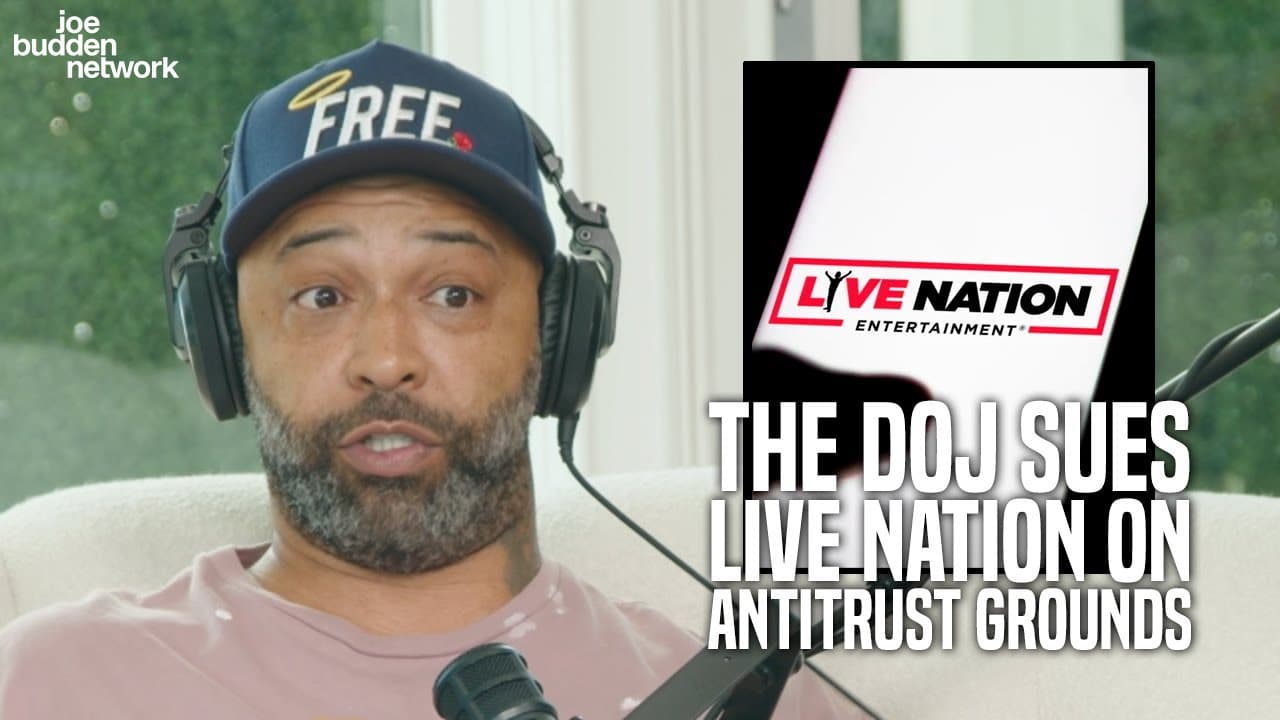
The DOJ Sues Live Nation On Antitrust Grounds | Joe Budden Reacts
TL;DR
The exposé reveals exploitative practices in Live Nation contracts affecting artists' earnings.
Transcript
oh yeah this is this guy uh exposing the Live Nation contract did hear my Live Nation contract worked it was right around the time I got to a place in my career we sold out 10,000 people to Jones Beach I mean it was like the height of everything for me and it was right around the time I figured out how my Live Nation contract worked it was right ar... Read More
Key Insights
- 🧑🎨 Live Nation's contracts can create hidden debts for artists, making them financially responsible for multiple indirect costs related to their performances.
- 🥺 The distinction between hard ticket sales and other revenue types can significantly influence an artist's profitability, often leading to losses if not managed properly.
- 🧑🎨 Pricing strategies by Live Nation can forcibly increase the number of sold-out shows required for artists to break even or see profit.
- 😋 The artist's perception of financial success can be misleading, as revenue from alternative income streams, such as merchandise and food sales, remains inaccessible to them.
- 🙈 The music industry is seen as having many exploitative practices, with monopolistic structures that create barriers for independent artists.
- 🧑🎨 Exploring the details of contracts is essential, as oversight can result in unfavorable financial terms that burden artists for years.
- 🫷 The allure of fame and success can push artists into contracts without fully understanding the financial implications, exacerbating the cycle of debt in the industry.
Install to Summarize YouTube Videos and Get Transcripts
Explore YouTube Video Summarizer or Get YouTube Transcript Extractor
Questions & Answers
Q: How does the structure of Live Nation contracts impact artists financially?
The structure of Live Nation contracts constricts artists' revenue streams, making them reliant solely on hard ticket sales to repay advances. Consequently, any funding received acts more like a loan, forcing artists to sell out every venue just to break even, leaving little room for profit amidst various expenses.
Q: What are some hidden costs associated with performing that artists might overlook in their contracts?
Artists often overlook costs that are indirectly outlined in their contracts, such as mandatory spending on catering and other operational expenses. These expenditures, often categorized under the artist's responsibility, can lead to substantial financial strain, especially when combined with the burden of repaying advances.
Q: Why does the speaker argue that Live Nation functions like a monopoly?
The speaker argues that Live Nation operates like a monopoly due to their ownership of numerous venues and the control they exert over ticket pricing and sales. This concentration of power enables them to profit significantly from all aspects of events, including concessions and parking, while artists see little of this income.
Q: What consequences do price drops in ticket sales have on an artist's income?
Price drops, such as during promotional events, can severely impact an artist’s expected income. If ticket prices are lowered drastically, artists must sell more tickets than anticipated to recoup their advance, creating additional pressure to perform well in a saturated market.
Q: In what ways does the speaker suggest the industry may manipulate aspiring artists?
The speaker implies that the industry lures aspiring artists with the promise of fame while exploiting their desire. Artists are often urged into unfavorable contracts, which may lead to financial distress as they labor under the illusion that they are achieving success, when in reality, they are servicing debts.
Q: What takeaway does the speaker share about the music industry overall?
The speaker advises caution in understanding industry contracts and highlights that many pitfalls, including exploitative practices, exist in the music business. They suggest that there are those willing to exploit the naivety of eager artists, indicating a systemic issue that needs to be addressed for fairer representation.
Summary & Key Takeaways
-
The speaker reflects on their experience with Live Nation, detailing how complex contracts can lead to massive debts for artists despite selling large ticket numbers.
-
Artists only generate revenue from hard ticket sales, while profits from food, drink, and parking go to Live Nation, perpetuating a cycle of debt.
-
The discussion highlights the monopolistic nature of Live Nation and their pricing strategies, which can leave artists financially vulnerable despite apparent success.
Read in Other Languages (beta)
Share This Summary 📚
Summarize YouTube Videos and Get Video Transcripts with 1-Click
Try YouTube Summary with ChatGPT & Claude or YouTube Transcript Generator
Explore More Summaries from Joe Budden TV 📚

Summarize YouTube Videos and Get Video Transcripts with 1-Click
Try YouTube Summary with ChatGPT & Claude or YouTube Transcript Generator