How to Achieve 1M Drone Deliveries with Zipline
TL;DR
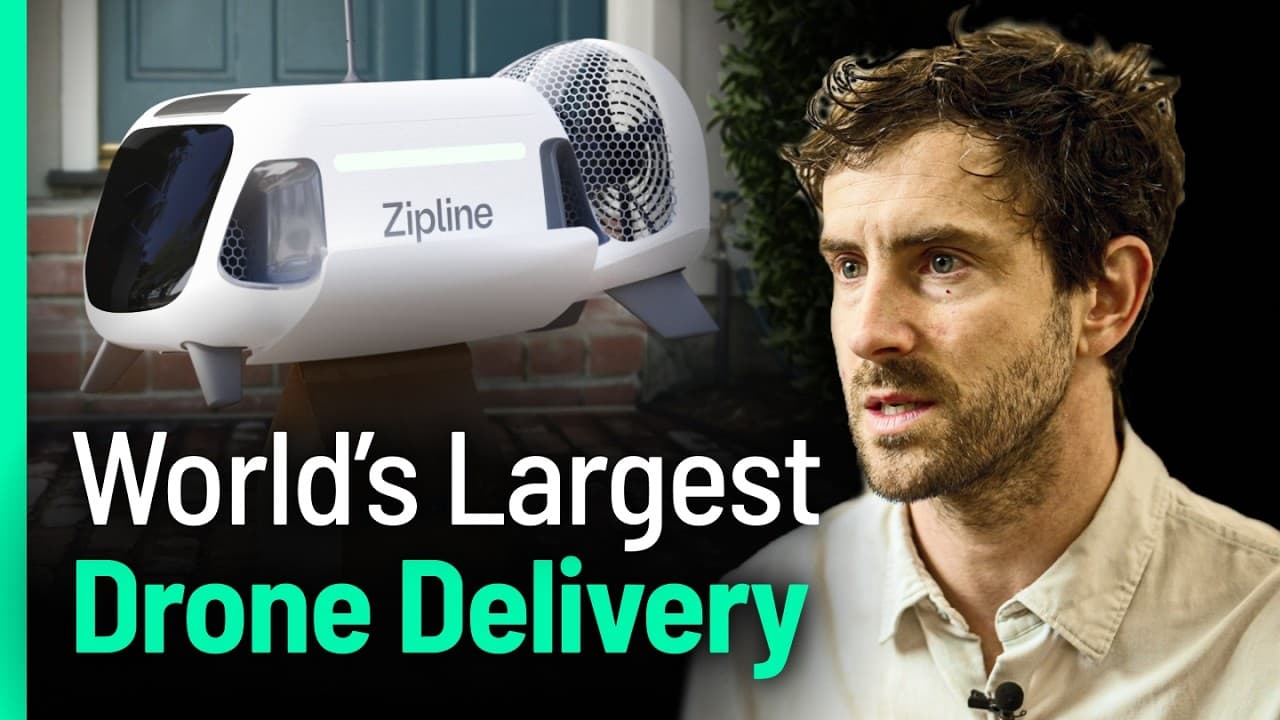
Zipline, a leading drone delivery service, has achieved over 1 million deliveries, revolutionizing logistics by making them faster and more efficient. Co-founders Keller Rinaudo Cliffton and Keenan Wyrobek discuss the challenges and breakthroughs in developing their system, emphasizing the importance of focusing on solving real-world problems and the potential of hardware companies to drive future innovations.
Transcript
If you're just getting started, you're an idiot. For the first two years, we've got every door slammed in our face like nobody believed that this was possible. You know what nerds are working on during the weekends in their garages today are what will be the giant companies of 5 or 10 years from now. You have to go work on something that's weird. Y... Read More
Key Insights
- Zipline is the largest commercial autonomous system with over 1 million deliveries.
- The company focuses on making logistics ten times faster and half the cost.
- Zipline's first major contract was with the Health Ministry of Rwanda to deliver blood.
- The platform uses fixed-wing aircraft instead of traditional drones for better range and cost efficiency.
- Hardware companies like Zipline have significant competitive advantages due to their complexity.
- Building impactful hardware solutions requires falling in love with the problem, not the technology.
- The founders emphasize working on unique, underexplored problems to avoid competition.
- Zipline's success highlights the potential of hardware companies to shape the future.
Install to Summarize YouTube Videos and Get Transcripts
Explore YouTube Video Summarizer or Get YouTube Transcript Extractor
Questions & Answers
Q: How does Zipline's delivery system work?
Zipline's delivery system uses fixed-wing aircraft to transport medical supplies and other goods. The aircraft are designed for long-range flights and cost efficiency, allowing Zipline to deliver quickly and reliably. The system is autonomous, reducing the need for human intervention and enabling rapid scaling to meet increasing demand.
Q: What was Zipline's first major contract?
Zipline's first major contract was with the Health Ministry of Rwanda. The agreement involved delivering blood to 21 hospitals across the country. This partnership was a pivotal moment for Zipline, demonstrating the viability of their autonomous delivery system and establishing their reputation as a reliable provider of critical logistics solutions.
Q: Why did Zipline choose fixed-wing aircraft over traditional drones?
Zipline opted for fixed-wing aircraft instead of traditional drones to better meet customer needs for range and cost efficiency. Fixed-wing aircraft can cover longer distances and operate more economically, making them ideal for the large-scale, frequent deliveries Zipline aims to achieve. This choice was crucial in securing customer satisfaction and expanding their market reach.
Q: What challenges did Zipline face in its early days?
In its early days, Zipline faced skepticism and numerous rejections, with many doors slammed in their face. The team had to overcome technical challenges, such as developing reliable autonomous systems and ensuring safe deliveries. They also navigated the complexities of building a hardware company, requiring expertise in various engineering disciplines and customer relations.
Q: How did Zipline secure its first customer?
Zipline secured its first customer, the Health Ministry of Rwanda, by addressing a critical need for reliable medical supply delivery. The Ministry was convinced by the potential of Zipline's system to save lives, particularly after a tragic incident where a lack of timely blood delivery resulted in a maternal death. This opportunity led to their first commercial contract.
Q: What role do hardware companies play in the future?
Hardware companies are crucial in shaping the future by addressing real-world problems and developing tangible solutions. They often have significant competitive advantages due to the complexity and expertise required in their operations. Companies like Zipline, Tesla, and SpaceX demonstrate how hardware innovation can drive significant advancements in technology and improve quality of life globally.
Q: What advice do Zipline's founders offer to entrepreneurs?
Zipline's founders advise entrepreneurs to focus on solving real-world problems rather than falling in love with a specific technology. They emphasize the importance of being willing to tackle unique and underexplored challenges, which can provide a competitive edge. They also highlight the need for resilience and conviction in pursuing innovative ideas, even when others doubt their feasibility.
Q: What impact has Zipline had on logistics and delivery?
Zipline has revolutionized logistics and delivery by making them faster, more efficient, and reliable. Their autonomous system has enabled the rapid transport of medical supplies, especially in remote or hard-to-reach areas, significantly impacting healthcare delivery. By reducing costs and increasing speed, Zipline's innovations have set new standards for the logistics industry and opened new possibilities for drone technology.
Summary & Key Takeaways
-
Zipline has become the largest commercial autonomous delivery system, achieving over 1 million deliveries. The company's innovative approach focuses on improving logistics efficiency and cost-effectiveness. Their journey began with a contract in Rwanda, delivering crucial medical supplies, which paved the way for their global expansion.
-
The founders of Zipline, Keller Rinaudo Cliffton and Keenan Wyrobek, stress the importance of addressing real-world problems and the role of hardware companies in advancing technology. They chose fixed-wing aircraft over traditional drones to meet customer needs for range and cost, leading to their success.
-
Zipline's growth exemplifies how focusing on unique challenges can lead to significant breakthroughs. By prioritizing customer needs and embracing the complexities of hardware development, Zipline has set a new standard in autonomous delivery, with plans for further expansion in developed economies.
Read in Other Languages (beta)
Share This Summary 📚
Summarize YouTube Videos and Get Video Transcripts with 1-Click
Try YouTube Summary with ChatGPT & Claude or YouTube Transcript Generator
Explore More Summaries from EO 📚






Summarize YouTube Videos and Get Video Transcripts with 1-Click
Try YouTube Summary with ChatGPT & Claude or YouTube Transcript Generator