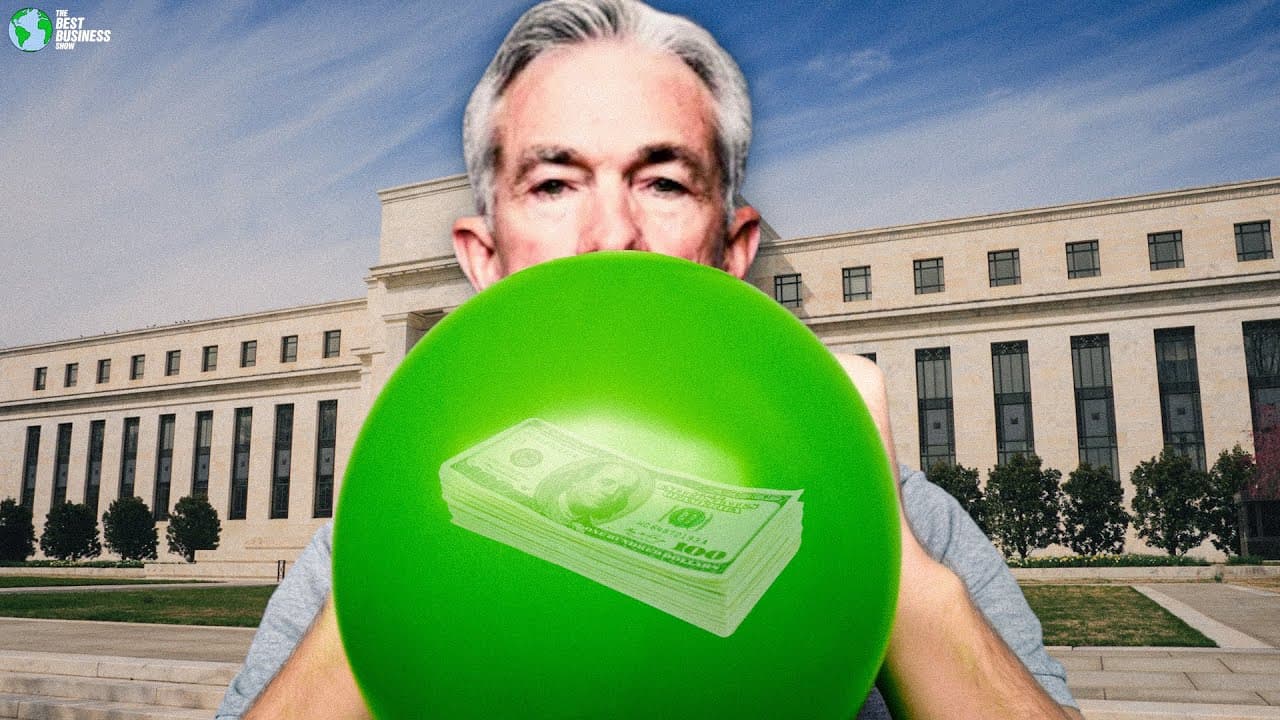
The Fed Is Creating More Inflation?!
TL;DR
The Fed could worsen economic conditions by using broad interest-rate hikes against inflation caused by both supply constraints and excess demand. Its response to a 40-year inflation high includes aggressive rate increases and quantitative tightening, but these blunt tools cannot target particular parts of the economy and may trigger a recession. Read on to understand why achieving a soft landing is portrayed as so difficult.
Transcript
the federal reserve has finally admitted that inflation wasn't transitory but they made a mistake and they didn't quite realize how bad inflation would get or how persistent it would be now their response to that 40-year high in inflation is to tighten financial conditions they're raising interest rates aggressively and they're beginning to conduct... Read More
Key Insights
- 💱 The Federal Reserve recognizes inflation's persistence and has changed its monetary policy response, but effectiveness remains debated.
- 😥 Analysts point to supply chain disruptions as a primary driver of inflation, complicating traditional economic assumptions.
- 🤗 The complexity of the global economy means that single-variable solutions like interest rate hikes may oversimplify the challenges at hand.
- 🤨 Economic contractions could result from aggressive monetary policies, raising the question of which outcome is more detrimental.
- 🍉 Short-term relief measures can create long-lasting economic repercussions, indicating a need for careful policy consideration.
- 🧑⚕️ A more nuanced understanding of monetary policy effects is critical in discussions of inflation and economic health.
- 🍉 The clash between short-term pain mitigation and long-term problem solving reflects a broader economic debate and decision-making difficulty.
Install to Summarize YouTube Videos and Get Transcripts
Explore YouTube Video Summarizer or Get YouTube Transcript Extractor
Questions & Answers
Q: Is the Fed creating more inflation by raising interest rates?
The transcript does not conclude that rate increases directly create more inflation. It says higher rates can reduce demand and help tame inflation, but analysts question whether this broad response properly addresses supply shocks and warn that it could cause a recession.
Q: Why does the Fed believe it needs to raise interest rates?
The Federal Reserve admitted that inflation was not transitory and had become more persistent than expected, reaching a 40-year high. It is raising interest rates aggressively and beginning quantitative tightening to tighten financial conditions and bring inflation down.
Q: What factors does the transcript identify as causes of inflation?
The transcript attributes inflation to both supply and demand shocks. It cites COVID-19 lockdowns, supply-chain problems, geopolitical conflict such as the Russia-Ukraine war, undisciplined monetary and fiscal policy, higher asset prices, and checks mailed directly to individuals.
Q: Why might higher interest rates be ineffective against supply-driven inflation?
Interest rates primarily work by tightening financial conditions and reducing demand, while supply disruptions are difficult for monetary policy to repair. If constrained supply were the only cause of rising prices, the transcript argues that raising rates would make little sense.
Q: What monetary-policy tools does the Fed have?
The transcript describes central bankers as having blunt tools: they can raise or lower interest rates and conduct quantitative easing or quantitative tightening. These measures affect the economy broadly, so policymakers cannot precisely choose which areas will react.
Q: Could raising interest rates cause a recession?
Yes, the transcript warns that suppressing demand enough to reduce inflation could push the United States, the global economy, or both into recession. That creates a lose-lose choice because people do not want either high inflation or a recession.
Q: Why would a soft landing be difficult to achieve?
A soft landing would require lowering inflation without causing a recession. The speaker considers that very difficult because it would demand intricate understanding and control of a complex economy, while central bankers possess only broad policy tools.
Q: Does the speaker favor Fed intervention or free-market adjustment?
The speaker says many people, including himself, believe the free market handles these situations better. He also acknowledges that rate increases have a strong argument behind them because reducing demand can help tame inflation, leaving the key question of whether the economic cost is worth it.
Summary & Key Takeaways
-
The Federal Reserve acknowledges that inflation is not transitory and is aggressively raising interest rates while conducting quantitative tightening, which some analysts argue could exacerbate the issue.
-
Analysts attribute high inflation primarily to supply chain disruptions and geopolitical tensions rather than just increased demand, highlighting a complex interplay of factors affecting the economy.
-
The effectiveness of the Fed's monetary policies is debated, with concerns that raising interest rates could lead to a recession while creating long-term economic challenges.
Read in Other Languages (beta)
Share This Summary 📚
Summarize YouTube Videos and Get Video Transcripts with 1-Click
Try YouTube Summary with ChatGPT & Claude or YouTube Transcript Generator
Explore More Summaries from Anthony Pompliano 📚
Summarize YouTube Videos and Get Video Transcripts with 1-Click
Try YouTube Summary with ChatGPT & Claude or YouTube Transcript Generator