Why Are Most Dash Cams Poor Quality?
TL;DR
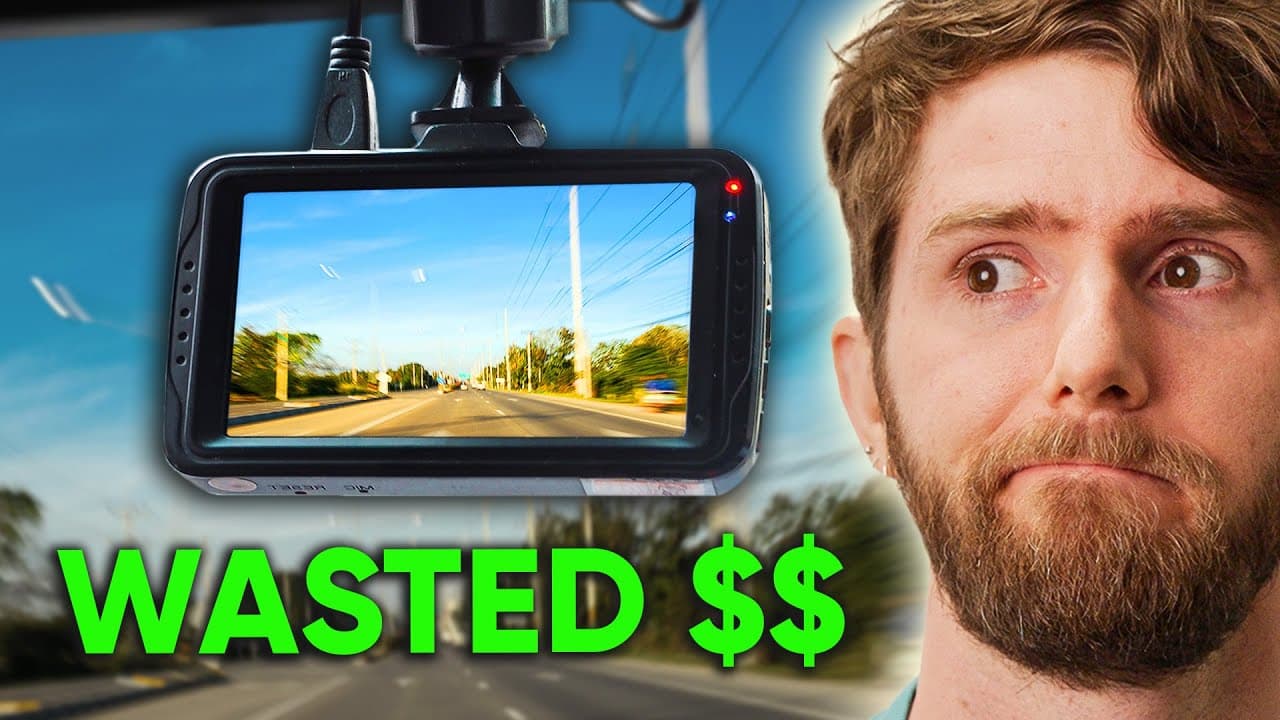
Most dash cams, regardless of price, offer disappointing image quality due to outdated technology and misleading marketing. The Thinkware F70 and Viofo A119 V3 are recommended for their reasonable performance and value, but significant improvements in dash cam video quality are unlikely without industry changes.
Transcript
- Buying a car is a major decision, and you'll wanna do everything you can to protect your investment. (car honking) Oh! Oh God! Oh, what the? That guy just hit me. Good thing I caught his license plate on one of my many trusty dash cams. This one's kinda crap. This one too. Well, surely my expensive one will. Now, come on! This is unusable! What t... Read More
Key Insights
- Dash cams often have poor image quality due to outdated SOCs and sensors.
- Many dash cam brands use similar components, leading to minimal performance variation.
- The Thinkware F70 is a budget-friendly option with decent performance.
- The Viofo A119 V3 offers the best value for most consumers.
- High-end dash cams often fail to justify their price with superior video quality.
- Sony STARVIS sensors are common but do not significantly enhance dash cam quality.
- Marketing for dash cams can be misleading, with paid reviews and exaggerated specs.
- Investing in a GoPro may offer better video quality but with less convenience.
Install to Summarize YouTube Videos and Get Transcripts
Explore YouTube Video Summarizer or Get YouTube Transcript Extractor
Questions & Answers
Q: Why do most dash cams have poor video quality?
Most dash cams have poor video quality because they use outdated SOCs and sensors, leading to minimal improvements in image clarity. These components are often shared across different brands, resulting in similar performance despite varying price points. Marketing strategies can also be misleading, with exaggerated specs and paid reviews.
Q: What are the recommended dash cams for value and performance?
The Thinkware F70 and Viofo A119 V3 are recommended for their balance of cost and performance. The Thinkware F70 is a budget-friendly option with adequate image quality, while the Viofo A119 V3 offers superior value for most consumers without significantly exceeding the price of lesser-performing models.
Q: Are expensive dash cams worth the investment?
Expensive dash cams often fail to justify their price with superior video quality. The video reveals that even high-end models do not offer significant improvements over cheaper alternatives. Consumers are advised to focus on value and essential features rather than paying for premium brand names or unnecessary extras.
Q: What components are commonly used in dash cams?
Dash cams commonly use SOCs from Novatek and image sensors from Sony's STARVIS line. These components are prevalent across many brands, leading to similar performance levels. The limited advancement in these components contributes to the overall lack of improvement in dash cam video quality over time.
Q: How can consumers avoid misleading dash cam marketing?
Consumers should be cautious of dash cams with overly positive reviews, exaggerated specifications, and high prices that do not correlate with performance. It's important to research and compare models based on independent reviews and user experiences, focusing on essential features like video clarity and reliability.
Q: Is a GoPro a better alternative to dash cams?
A GoPro can offer better video quality compared to typical dash cams, but it lacks the convenience and specific features designed for vehicle use, such as continuous recording and automatic power management. While it may provide clearer footage, using a GoPro as a dash cam involves trade-offs in ease of use and practicality.
Q: What are the limitations of current dash cam technology?
Current dash cam technology is limited by the use of outdated SOCs and sensors, which restrict the ability to enhance image quality significantly. Many dash cams rely on similar hardware, resulting in minimal performance differences. The industry focuses more on adding features than improving core video capabilities.
Q: What should consumers look for when buying a dash cam?
Consumers should prioritize image quality, reliability, and value when purchasing a dash cam. It's advisable to focus on models with proven performance, like the Thinkware F70 and Viofo A119 V3, rather than being swayed by brand reputation or additional features that do not improve the core function of capturing clear video footage.
Summary & Key Takeaways
-
Dash cams generally suffer from poor image quality, primarily due to outdated SOCs and sensors used across different brands. Despite high price tags, many dash cams do not deliver the expected performance improvements. The Thinkware F70 and Viofo A119 V3 are recommended for their balance of cost and capability.
-
Many dash cams share similar components, resulting in minimal differences in performance. Brands often market their products with misleading specifications and reviews. Consumers should be wary of paying premium prices for features that do not enhance the core function of capturing clear video footage.
-
For those seeking better video quality, a GoPro could be an alternative, though it lacks the convenience of dash cams. The video emphasizes the need for consumers to prioritize value and performance over brand reputation or price when selecting a dash cam.
Read in Other Languages (beta)
Share This Summary 📚
Summarize YouTube Videos and Get Video Transcripts with 1-Click
Try YouTube Summary with ChatGPT & Claude or YouTube Transcript Generator
Explore More Summaries from Linus Tech Tips 📚





Summarize YouTube Videos and Get Video Transcripts with 1-Click
Try YouTube Summary with ChatGPT & Claude or YouTube Transcript Generator