What Are Philosophical Views of the Self?
TL;DR
Philosophical views of the self explore various perspectives from ancient to modern times. Key thinkers like Socrates, Plato, and Descartes discuss self-knowledge, rationality, and consciousness. The self is seen as a complex interplay of experiences, perceptions, and innate knowledge, with differing views on its permanence and nature.
Transcript
good day to everyone so to start of the discussion it will be all about the cell from various perspective and to start out we will be discussing about the philosophical views of the self and for our objective at the end of this discussion the student is expected to articulate the various philosophical views about the self examine one's thoughts and... Read More
Key Insights
- Socrates believed in self-knowledge as essential for a meaningful life, emphasizing the importance of recognizing one's ignorance.
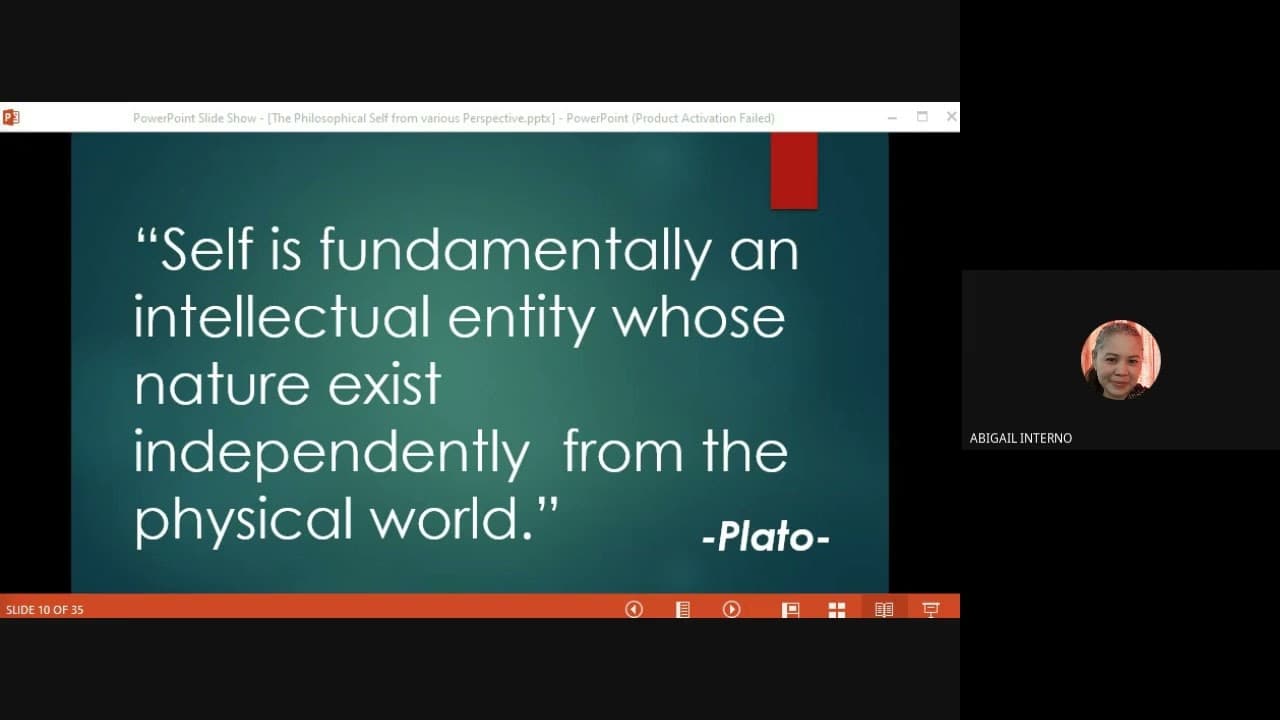
- Plato viewed the self as an intellectual entity, separate from the physical world, with the psyche composed of three elements: appetitive, spirited, and mind.
- Aristotle suggested that essence and matter coexist, providing meaning and substance to each other.
- Saint Augustine saw self-development as achievable through faith and self-realization, with true happiness found only in God.
- Rene Descartes emphasized doubt and rationality as the foundation of self-existence, famously stating 'I think, therefore I am.'
- John Locke proposed that self-knowledge arises from experience, with the mind as a blank slate filled by sensory data.
- David Hume argued against a persistent self, viewing it as a bundle of temporary impressions without permanence.
- Immanuel Kant synthesized rationalist and empiricist views, suggesting that ideas perceived by the self connect it to the world.
Install to Summarize YouTube Videos and Get Transcripts
Explore YouTube Video Summarizer or Get YouTube Transcript Extractor
Questions & Answers
Q: What is Socrates' view on self-knowledge?
Socrates believed that self-knowledge is essential for living a meaningful life. He emphasized the importance of recognizing one's ignorance as a path to true understanding. According to Socrates, self-examination and self-control are crucial for achieving the excellence of the soul, as they allow individuals to distinguish right from wrong and live with integrity.
Q: How did Plato describe the self?
Plato described the self as an intellectual entity, fundamentally separate from the physical world. He proposed that the self, or psyche, consists of three elements: the appetitive, which includes desires and pleasures; the spirited, which responds to challenges and injustices; and the mind, or nous, which is the conscious and rational part that governs the other elements, ensuring ethical living.
Q: What is Aristotle's perspective on essence and matter?
Aristotle believed that essence and matter coexist and are interdependent. He argued that essence provides meaning and purpose to matter, while matter gives substance and solidity to essence. This view contrasts with Plato's separation of the ideal and the phenomenal, suggesting that both are necessary for understanding the self and the world.
Q: How did Saint Augustine view self-development?
Saint Augustine viewed self-development as a process achieved through faith, self-presentation, and self-realization. He believed that true and eternal happiness is attainable only in God, with self-realization centered on religious convictions. Augustine emphasized that without God, human endeavors are bound to fail, and the restless heart finds peace only in divine wisdom.
Q: What was Rene Descartes' approach to understanding the self?
Rene Descartes approached the understanding of the self through methodic doubt, asserting that sensory perceptions can be deceptive. He famously stated, 'I think, therefore I am,' highlighting rationality as the foundation of self-existence. Descartes argued that human rationality is necessary to evaluate thoughts and actions, establishing certainty in the existence of the self.
Q: How did John Locke view the source of self-knowledge?
John Locke viewed self-knowledge as arising from experience, proposing that the mind is a blank slate or 'tabula rasa' filled by sensory data. He emphasized the importance of sense perception, which, through reflection and analysis, becomes knowledge. Locke's view allows for subjective and changing perceptions, providing individuals with independence in self-examination and self-management.
Q: What was David Hume's stance on the self?
David Hume challenged the notion of a persistent self, arguing that it is merely a bundle of temporary impressions. He believed that impressions are subjective and fleeting, making it impossible to have a constant and stable knowledge of oneself. Hume claimed that the self is not a permanent entity, but rather a collection of changing perceptions and experiences.
Q: How did Immanuel Kant synthesize rationalist and empiricist views?
Immanuel Kant synthesized rationalist and empiricist views by proposing the concept of the transcendental unity of apperception. He argued that ideas perceived by the self connect it to the world, with sensory apparatus allowing for the derivation of ideas. Kant suggested that rationality unifies perceptions, creating sensible ideas about the self and the world, bridging the gap between temporary impressions and coherent understanding.
Summary & Key Takeaways
-
Philosophical views of the self range from ancient to modern perspectives, each offering unique insights into self-knowledge and identity. Socrates emphasized the importance of self-knowledge, while Plato and Aristotle explored the self's intellectual and existential dimensions. Modern thinkers like Descartes and Kant focused on rationality and perception as key elements of self-awareness.
-
Socrates and Plato laid foundational ideas about the self, with Socrates highlighting self-knowledge and Plato discussing the psyche's elements. Aristotle integrated essence and matter, while Augustine linked self-realization to divine faith. These views shaped early philosophical understandings of the self's nature and purpose.
-
Modern philosophers like Descartes, Locke, and Hume debated the self's nature, with Descartes focusing on rationality and Locke on experiential knowledge. Hume challenged the idea of a persistent self, while Kant offered a synthesis of rational and empirical perspectives. These discussions continue to influence contemporary views on identity and consciousness.
Read in Other Languages (beta)
Share This Summary 📚
Summarize YouTube Videos and Get Video Transcripts with 1-Click
Try YouTube Summary with ChatGPT & Claude or YouTube Transcript Generator