How Does Locke Define Personal Identity?
TL;DR
John Locke's theory of personal identity challenges the notion of identity being tied to an unchanging essence. Instead, Locke suggests identity is linked to consciousness and memory, offering a fresh perspective on the age-old philosophical problem. This insight prompts a reevaluation of how we understand personal continuity over time.
Transcript
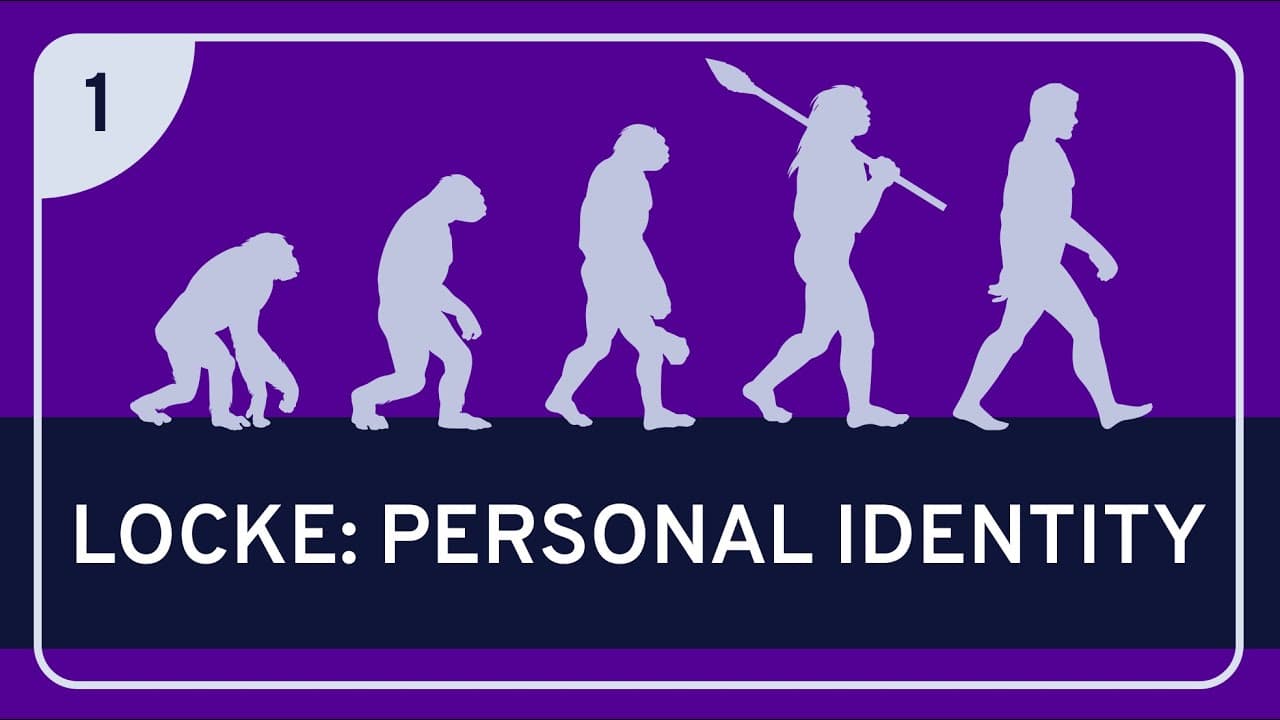
(intro music) This is a lecture on personal identity, as this problem arises in the case of John Locke, a British philosopher of the seventeenth century. Hi, my name is Michael Della Rocca, I'm a professor of philosophy at Yale, and I've been a professor here at Yale for what seems to me to be an unbelievably long period of time, since 1991. It's u... Read More
Key Insights
- John Locke's theory of personal identity emphasizes consciousness and memory as key components.
- The problem of personal identity questions what makes an individual the same over time despite changes.
- Philosophical problems, like personal identity, often focus more on understanding than finding definitive solutions.
- Locke's insights opened new research avenues in understanding the nature of persons.
- Personal identity has practical implications, influencing moral responsibility and future planning.
- The identity problem applies to various entities, not just persons, including animals and artifacts.
- Philosophical progress can be made by viewing old problems in new ways, enhancing self-understanding.
- Personal identity is crucial because it underpins our interactions and moral judgments about others.
Install to Summarize YouTube Videos and Get Transcripts
Explore YouTube Video Summarizer or Get YouTube Transcript Extractor
Questions & Answers
Q: How does Locke define personal identity?
Locke defines personal identity through the continuity of consciousness and memory, rather than an unchanging essence or soul. He argues that personal identity is tied to the awareness and recollection of past experiences, making it distinct from mere physical or metaphysical continuity.
Q: Why is the problem of personal identity important?
The problem of personal identity is important because it underpins our understanding of what makes an individual the same over time, influencing moral responsibility, social interactions, and future planning. It challenges us to consider the essence of self and continuity despite physical and experiential changes.
Q: What are necessary and sufficient conditions in the context of personal identity?
Necessary conditions for personal identity are those that must be present for identity to hold, such as a specific relation. Sufficient conditions are those that, if present, ensure identity. Together, they help define what it means for an individual to remain the same over time.
Q: How does Locke's theory differ from traditional views of identity?
Locke's theory differs from traditional views by focusing on consciousness and memory rather than an unchanging essence or soul. This approach shifts the emphasis from physical or metaphysical continuity to the psychological continuity of experiences and self-awareness.
Q: What role does philosophical progress play in understanding identity?
Philosophical progress in understanding identity involves viewing longstanding problems in new ways, enhancing self-understanding even without definitive solutions. Locke's insights exemplify this, offering fresh perspectives that open new research avenues and deepen our comprehension of personal continuity.
Q: How does personal identity relate to moral responsibility?
Personal identity relates to moral responsibility because it underpins the continuity of self across time. Our practices of moral praise and blame rely on the assumption that individuals remain the same over time, holding them accountable for past actions based on their ongoing identity.
Q: What is the significance of consciousness in Locke's theory?
Consciousness is significant in Locke's theory as it forms the basis of personal identity. Locke argues that the awareness and memory of past experiences constitute identity, distinguishing it from mere physical continuity and emphasizing the psychological aspects of selfhood.
Q: How does the problem of identity extend beyond persons?
The problem of identity extends beyond persons to include animals and artifacts, questioning what makes an entity the same over time. This broader inquiry explores the conditions for identity across different types of objects, highlighting the complexity and universality of identity issues.
Summary & Key Takeaways
-
Locke's theory of personal identity hinges on consciousness and memory, challenging traditional notions of identity as an unchanging essence. This perspective invites a reevaluation of personal continuity over time, emphasizing understanding over definitive solutions.
-
Philosophical problems like personal identity often lack consensus, but progress can be made by viewing these issues through new lenses. Locke's work exemplifies this, opening new research avenues and enhancing understanding of self and identity.
-
Personal identity is fundamental to our social and moral practices, presupposing continuity over time. Locke's insights into consciousness and memory provide a framework for understanding identity's role in moral responsibility and future planning.
Read in Other Languages (beta)
Share This Summary 📚
Summarize YouTube Videos and Get Video Transcripts with 1-Click
Try YouTube Summary with ChatGPT & Claude or YouTube Transcript Generator
Explore More Summaries from Wireless Philosophy 📚
Summarize YouTube Videos and Get Video Transcripts with 1-Click
Try YouTube Summary with ChatGPT & Claude or YouTube Transcript Generator