What Is the Future of Air and Space Power?
TL;DR
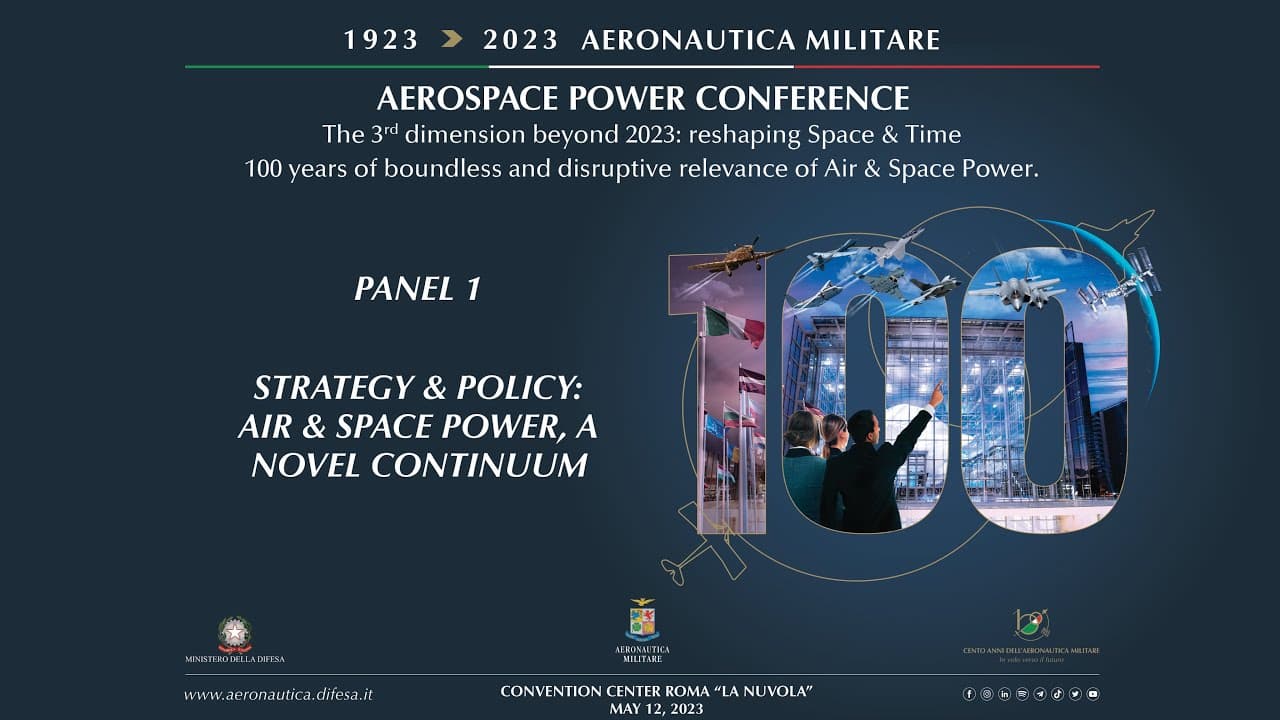
The Italian Air Force's centenary conference explores the future of air and space power, emphasizing the importance of integrating air, space, and cyber domains for military operations. Experts discuss the challenges of technological advancement, the need for international cooperation, and the role of unmanned systems. The event highlights the evolving landscape of aerospace capabilities and the strategic importance of space in defense.
Transcript
foreign crawling business it is in the air that one feels the glory of being a man and of Conquering the elements there is an Exquisite smoothness of motion and the joy of gliding through space it is wonderful thank you yes thank you now is up the reservation and I show 30 for a my compliments engineering foreign [Applause] [Applause] distinguished... Read More
Key Insights
- The integration of air, space, and cyber domains is crucial for future military operations.
- Technological advancements are reshaping the landscape of aerospace capabilities.
- International cooperation is essential for addressing the challenges in air and space power.
- Unmanned systems are expected to play a significant role in future operations.
- The importance of mass and quality in defense capabilities is highlighted.
- Space is becoming a critical domain for military strategy and operations.
- The need for resilience and adaptability in defense systems is emphasized.
- Ethical and strategic considerations are vital in the development of autonomous systems.
Install to Summarize YouTube Videos and Get Transcripts
Explore YouTube Video Summarizer or Get YouTube Transcript Extractor
Questions & Answers
Q: How are air, space, and cyber domains integrated for military operations?
The integration of air, space, and cyber domains is crucial for enhancing military operations' effectiveness. This integration allows for seamless communication, data sharing, and strategic coordination across different platforms and environments. By leveraging advancements in technology, such as artificial intelligence and autonomous systems, military forces can achieve greater situational awareness and operational efficiency. The synergy between these domains enables a more comprehensive approach to defense, addressing both traditional and emerging threats.
Q: What role will unmanned systems play in future military operations?
Unmanned systems are expected to play a significant role in future military operations, offering advantages such as reduced risk to human life, increased operational flexibility, and cost-effectiveness. These systems can be deployed for various missions, including surveillance, reconnaissance, and combat, providing critical support to manned operations. As technology advances, the capabilities of unmanned systems will continue to expand, potentially leading to more autonomous operations where human oversight is minimized but remains essential for ethical and strategic decision-making.
Q: Why is international cooperation important in air and space power?
International cooperation is vital in air and space power due to the global nature of these domains and the shared challenges they present. Collaborative efforts allow countries to pool resources, share technological advancements, and develop common strategies to address threats such as space debris, cyber attacks, and geopolitical tensions. By working together, nations can enhance their collective defense capabilities, ensure the security of critical infrastructure, and promote stability in the international arena. Cooperation also fosters the development of norms and regulations that govern the use of air and space, contributing to a safer and more predictable global environment.
Q: What challenges do technological advancements pose for aerospace capabilities?
Technological advancements pose several challenges for aerospace capabilities, including the rapid pace of innovation, the need for continuous adaptation, and the potential for disruptive technologies to alter the strategic balance. As new technologies emerge, defense forces must ensure that their systems are resilient, interoperable, and capable of integrating cutting-edge solutions. Additionally, the proliferation of advanced technologies among potential adversaries necessitates a focus on maintaining a competitive edge through research, development, and strategic investment. Balancing the benefits of technology with ethical considerations and strategic objectives is also a critical challenge for military planners.
Q: How does space factor into modern military strategy?
Space is increasingly becoming a critical factor in modern military strategy due to its role in communication, navigation, reconnaissance, and intelligence gathering. Control of space assets can provide a strategic advantage by enhancing situational awareness, enabling precision targeting, and ensuring secure communication channels. The growing reliance on space-based systems also makes them a potential target for adversaries, necessitating robust defense measures and international cooperation to protect these assets. As space becomes more congested and contested, its strategic importance will continue to grow, influencing defense planning and policy at both national and international levels.
Q: What is the significance of resilience in defense systems?
Resilience in defense systems is significant because it ensures that military operations can continue effectively in the face of disruptions, whether from technological failures, cyber attacks, or adversarial actions. Resilient systems are designed to withstand and recover quickly from such challenges, maintaining operational capabilities and safeguarding critical infrastructure. Achieving resilience involves incorporating redundancy, adaptability, and robust cybersecurity measures into defense systems, as well as fostering a culture of continuous improvement and innovation. This approach helps military forces maintain a strategic advantage and ensures mission success under adverse conditions.
Q: How do ethical considerations impact the development of autonomous military systems?
Ethical considerations impact the development of autonomous military systems by guiding the responsible use of technology in warfare. These considerations include ensuring that autonomous systems operate within the bounds of international law, human rights, and moral principles. Decision-making processes must incorporate human oversight to prevent unintended consequences and maintain accountability. Ethical frameworks also address concerns about the potential loss of human control and the implications of delegating life-and-death decisions to machines. By prioritizing ethics in development, military forces can build trust, legitimacy, and acceptance of autonomous systems both domestically and internationally.
Q: What lessons can be learned from current space operations for future defense planning?
Current space operations offer several lessons for future defense planning, including the importance of resilience, international cooperation, and the need for comprehensive space situational awareness. The increasing congestion and competition in space highlight the need for robust debris mitigation strategies and collaborative efforts to establish norms of responsible behavior. Space operations also underscore the significance of integrating space capabilities with other domains to enhance overall defense effectiveness. As space becomes a more contested environment, defense planners must prioritize the protection of space assets and develop strategies to counter potential threats, ensuring the continued security and utility of space for military and civilian purposes.
Summary & Key Takeaways
-
The conference addresses the integration of air, space, and cyber domains, emphasizing their collective impact on future military operations. Experts discuss the challenges posed by technological advancements and the importance of international cooperation.
-
Unmanned systems are anticipated to play a crucial role in future operations, highlighting the need for a balance between mass and quality in defense capabilities. The strategic significance of space in military operations is increasingly recognized.
-
Resilience and adaptability in defense systems are essential for addressing emerging threats. Ethical and strategic considerations are critical in the development and deployment of autonomous systems within the military framework.
Read in Other Languages (beta)
Share This Summary 📚
Summarize YouTube Videos and Get Video Transcripts with 1-Click
Try YouTube Summary with ChatGPT & Claude or YouTube Transcript Generator