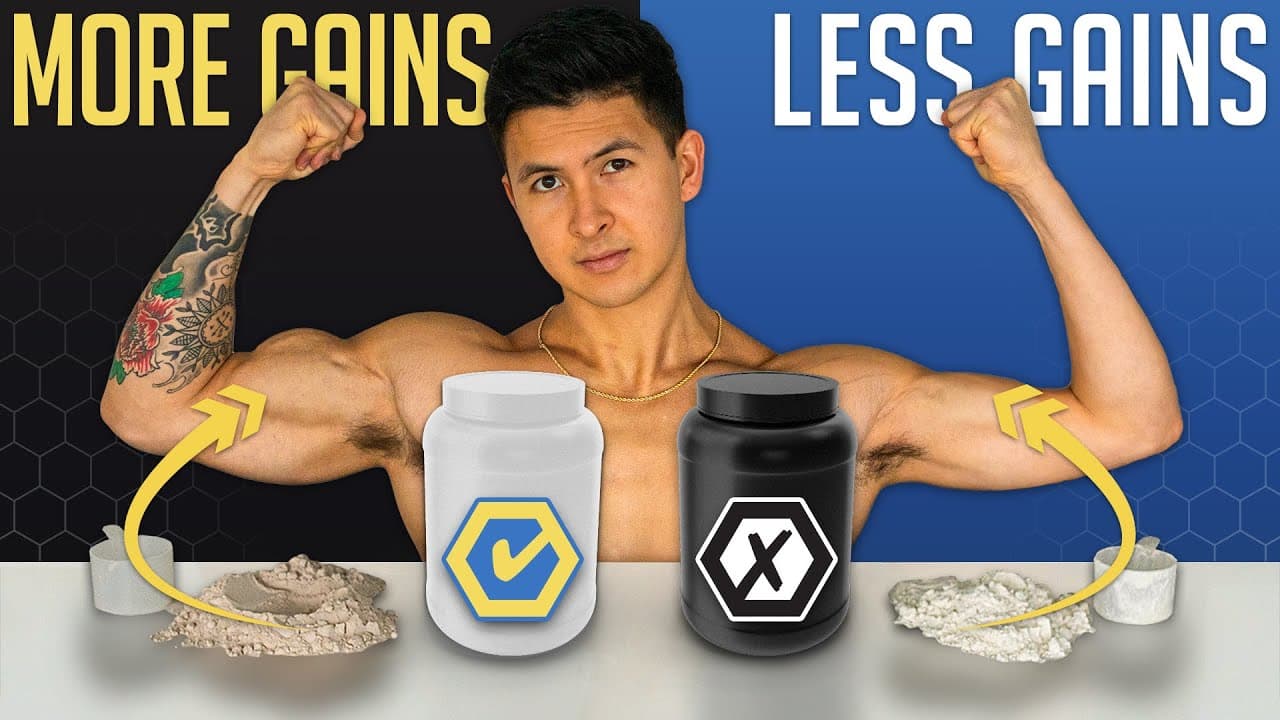
How to Choose the Best Protein Powder
TL;DR
Whey protein is generally the best choice due to its high leucine content and absorption efficiency. For those with lactose intolerance, whey isolate is recommended. Plant-based proteins can be effective when combined, such as rice and pea protein. Avoid proprietary blends and protein spiking by checking labels, and ensure the brand tests for contaminants.
Transcript
if you've seen any of my supplement videos then you know i'm a big fan of protein powder because of its practicality and the various advantages and potential muscle building benefits they can provide but once you do decide that you're ready to invest in a protein powder it's important that you first get well informed of the various differences betw... Read More
Key Insights
- Whey protein is the most effective for muscle growth due to its high leucine content and absorption rate.
- Whey isolate is a better option for those with lactose intolerance, offering higher protein content with less fat and carbs.
- Plant-based proteins are less effective alone but can be combined, like rice and pea protein, to improve amino acid profiles.
- Proprietary blends can hide low-quality ingredients; check labels for protein content relative to serving size.
- Protein spiking involves adding non-protein nitrogen substances to appear as protein; avoid products with unnecessary amino acid blends.
- Contamination with heavy metals and plastic derivatives is possible; choose brands with third-party testing certifications like NSF or GMP.
- Soy protein is a viable plant-based option despite controversy, offering a complete amino acid profile.
- Research brands' quality control practices to ensure product safety and efficacy.
Install to Summarize YouTube Videos and Get Transcripts
Explore YouTube Video Summarizer or Get YouTube Transcript Extractor
Questions & Answers
Q: What is the best type of protein powder for muscle growth?
Whey protein is considered the best type for muscle growth due to its high leucine content, which is crucial for muscle protein synthesis. Among whey proteins, whey isolate is preferred for those with lactose intolerance as it offers higher protein content with less fat and carbs. It is also more efficiently absorbed by the body compared to other protein sources.
Q: How can I avoid low-quality protein powders?
To avoid low-quality protein powders, check for proprietary blends on the label, which can hide inferior ingredients. Ensure the protein content per serving is high relative to the total serving size. Avoid products with unnecessary amino acid blends, which may indicate protein spiking. Choose brands that disclose full ingredient lists and amino acid profiles.
Q: Why should I be cautious of protein spiking?
Protein spiking involves adding non-protein nitrogen-containing substances to protein powders, misleadingly inflating the protein content. These additives, like creatine or cheap amino acids, are not true protein sources and can reduce the product's nutritional value. To avoid protein spiking, scrutinize labels for unnecessary amino acid blends and opt for transparent brands.
Q: What should I look for to ensure protein powder safety?
To ensure protein powder safety, research the brand's quality control practices and look for third-party testing certifications such as NSF or GMP. These certifications indicate rigorous testing for contaminants like heavy metals and plastic derivatives. Checking for these certifications can help ensure you're consuming a safe and effective product.
Q: Are plant-based proteins effective for muscle growth?
Plant-based proteins can be effective for muscle growth when combined to improve amino acid profiles. For example, a blend of rice and pea protein can compensate for individual deficiencies in essential amino acids. Soy protein is another viable option, offering a complete amino acid profile. However, plant-based proteins are generally less effective than whey proteins.
Q: What is the difference between whey concentrate and whey isolate?
Whey concentrate typically contains 35-80% protein and higher amounts of lactose, carbs, and fats. Whey isolate, on the other hand, is more processed to contain at least 90% protein by weight, with fewer fats and carbs. This makes whey isolate a better option for those with lactose intolerance or who prefer a higher protein content with fewer additional calories.
Q: How can I identify protein powders with proprietary blends?
Proprietary blends can be identified by examining the nutrition label for vague ingredient lists and a significant gap between the actual protein content per serving and the total serving size. These blends often mask low-quality ingredients. Opt for products with clear ingredient disclosures and a detailed amino acid profile to ensure transparency and quality.
Q: Why is third-party testing important for protein powders?
Third-party testing is important for protein powders as it ensures the product is free from harmful contaminants like heavy metals and plastic derivatives. These tests provide an unbiased verification of the product's safety and efficacy. Choosing brands with third-party testing certifications like NSF or GMP can help guarantee that the protein powder meets high-quality standards.
Summary & Key Takeaways
-
Whey protein, particularly whey isolate, is the best choice for muscle growth due to its high leucine content and efficient absorption. Plant-based options, such as a blend of rice and pea protein, can be effective for those with dietary restrictions. Avoid proprietary blends and protein spiking by carefully examining nutrition labels and choosing brands with transparent practices.
-
Proprietary blends can obscure the quality of protein powders, making it crucial to check the amount of protein per serving against the total serving size. Protein spiking involves adding non-protein nitrogen substances to inflate protein content, so be wary of unnecessary amino acid blends on labels. Ensure the brand conducts thorough contamination testing.
-
Contamination is a concern with protein powders, as some may contain dangerous levels of heavy metals and plastic derivatives. Opt for brands that undergo third-party testing and display certifications like NSF or GMP. By doing so, you can ensure you're consuming a safe and effective product.
Read in Other Languages (beta)
Share This Summary 📚
Summarize YouTube Videos and Get Video Transcripts with 1-Click
Try YouTube Summary with ChatGPT & Claude or YouTube Transcript Generator
Explore More Summaries from Jeremy Ethier 📚




Summarize YouTube Videos and Get Video Transcripts with 1-Click
Try YouTube Summary with ChatGPT & Claude or YouTube Transcript Generator