What Are the Impacts of the India-UK Trade Deal?
TL;DR
The India-UK Free Trade Agreement aims to enhance bilateral trade by reducing tariffs on goods and services. While promising economic benefits, the deal includes complex conditions that may limit immediate consumer advantages. It represents a strategic move post-Brexit, but its full impact will unfold over time, with potential challenges and opportunities for both nations.
Transcript
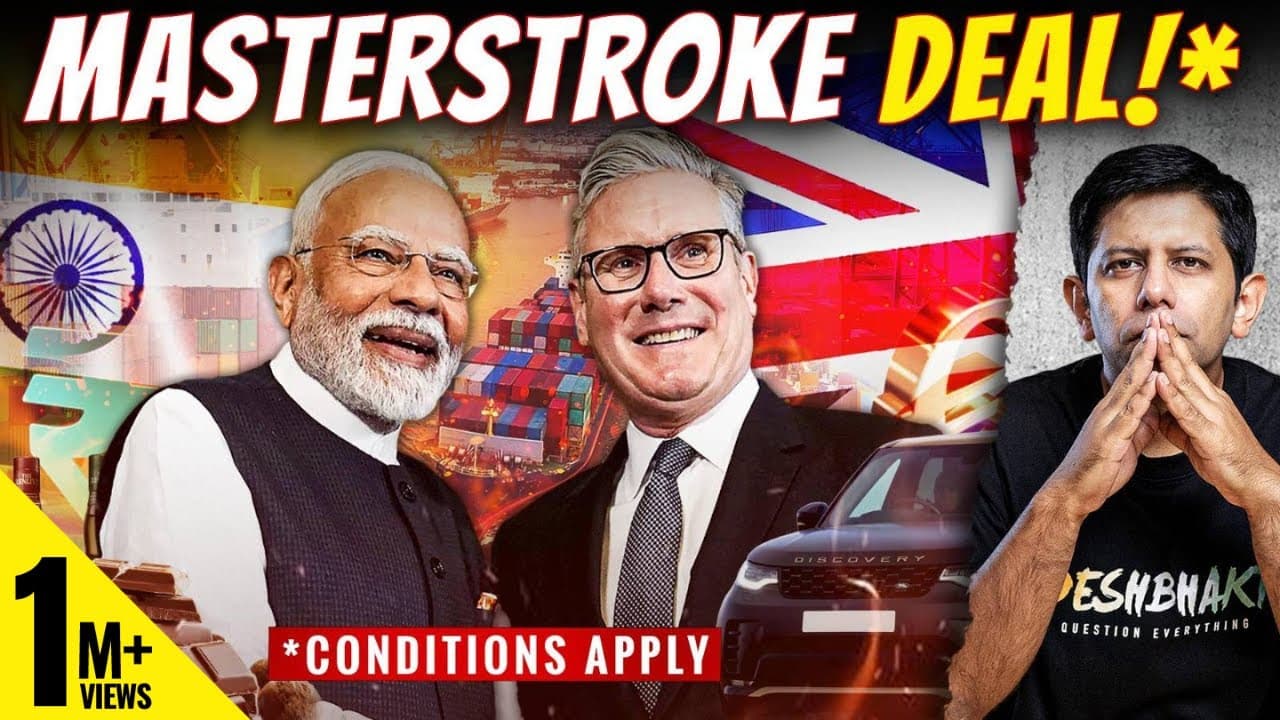
if you follow media, you may have heard of India UK landmark free trade agreement you may be dreaming of cheap range rover and aston martin and a glass of scotch and rare salmon steak, saying what a masterstroke! this deal with UK is a crucial step for our economic security especially when you cant trust Donald Trump, who can even put 500% tariff i... Read More
Key Insights
- The India-UK Free Trade Agreement aims to double bilateral trade to $120 billion by 2030.
- Tariffs on 99% of Indian exports to the UK will be removed, enhancing market access.
- India's textile sector will benefit from duty-free access to the UK market, aiding MSMEs.
- Tariff reductions on luxury cars and scotch whisky have conditions limiting immediate consumer benefits.
- The agreement includes provisions for Indian professionals to work in the UK with reduced barriers.
- UK exporters are concerned about limited benefits due to conditions in the deal.
- The deal is significant post-Brexit, marking the UK's first major trade agreement with a non-EU country.
- The agreement needs ratification by both countries' parliaments and will take time to realize its full benefits.
Install to Summarize YouTube Videos and Get Transcripts
Explore YouTube Video Summarizer or Get YouTube Transcript Extractor
Questions & Answers
Q: How will the India-UK trade deal impact bilateral trade?
The India-UK trade deal aims to significantly increase bilateral trade by reducing tariffs on goods and services. The goal is to double trade to $120 billion by 2030, enhancing market access for key sectors like textiles, engineering, and processed foods. While promising economic growth, the deal's full impact will unfold over time, with both opportunities and challenges.
Q: What benefits does the trade deal offer to India's textile sector?
The trade deal provides India's textile sector with duty-free access to the UK market, covering 1,100 product categories. This is expected to aid micro, small, and medium enterprises (MSMEs) in competing with countries like Bangladesh and Cambodia. The sector is anticipated to increase its market share in the UK's $27 billion textile import market, potentially boosting employment.
Q: Will consumers see immediate price reductions on luxury cars and whisky?
Consumers may not see significant immediate price reductions on luxury cars and whisky due to conditions in the trade deal. Tariff reductions on these items are phased and subject to quotas. For example, tariffs on scotch whisky will gradually reduce from 150% to 40% over time, while luxury car tariffs will decrease over 15 years, limiting immediate consumer benefits.
Q: How does the trade deal affect Indian professionals working in the UK?
The trade deal facilitates easier access for Indian professionals to work in the UK by reducing barriers for temporary entry and stay. It includes provisions for various professions, including tech workers, yoga instructors, and chefs, allowing them to work without social security contributions for three years. This is expected to benefit around 60,000 IT employees, saving Indian companies significant costs.
Q: What are the concerns of UK exporters regarding the trade deal?
UK exporters have expressed concerns that the trade deal's conditions limit immediate benefits. Although the agreement reduces tariffs on many goods, the complex conditions and quotas, particularly on high-demand items like luxury cars and whisky, may restrict their ability to capitalize on the Indian market. This has led to some dissatisfaction among UK businesses.
Q: Why is the India-UK trade deal significant post-Brexit?
The India-UK trade deal is significant post-Brexit as it marks the UK's first major trade agreement with a non-EU country. It represents a strategic move to strengthen economic ties and diversify trade relationships outside the European Union. The deal is seen as a benchmark for future agreements, showcasing the UK's ability to negotiate bilateral deals independently.
Q: What are the long-term benefits of the India-UK trade deal?
The long-term benefits of the India-UK trade deal include increased bilateral trade, enhanced market access, and strengthened economic collaboration. By reducing tariffs and easing entry for professionals, the deal aims to boost sectors like textiles, engineering, and services. It is expected to create jobs, increase exports, and provide a framework for future trade agreements, benefiting both nations economically.
Q: How will the trade deal affect India's market share in the UK?
The trade deal is expected to increase India's market share in the UK by providing duty-free access to key sectors like textiles and engineering. With reduced tariffs, Indian exporters can compete more effectively, potentially increasing their market share by 5%. This growth is anticipated to benefit highly labor-intensive sectors, creating jobs and boosting economic activity in India.
Summary & Key Takeaways
-
The India-UK Free Trade Agreement, signed after three years of negotiations, aims to significantly boost bilateral trade by reducing tariffs on goods and services. While it promises economic growth and increased market access, particularly for India’s textile and engineering sectors, the deal includes conditions that may limit immediate consumer benefits, such as on luxury cars and scotch whisky.
-
The agreement offers Indian professionals easier access to work in the UK, with reduced barriers for temporary entry and stay. However, UK exporters express concerns over the limited immediate benefits due to the deal's complex conditions. The agreement is a strategic move post-Brexit, marking the UK's first major trade deal with a non-EU country.
-
Despite the media excitement, the India-UK trade deal includes various conditions that may temper expectations of immediate consumer benefits. While it sets the stage for long-term economic collaboration, the deal requires ratification by both nations' parliaments and will take time to fully realize its potential impacts on trade and employment.
Read in Other Languages (beta)
Share This Summary 📚
Summarize YouTube Videos and Get Video Transcripts with 1-Click
Try YouTube Summary with ChatGPT & Claude or YouTube Transcript Generator
Explore More Summaries from The Deshbhakt 📚




Summarize YouTube Videos and Get Video Transcripts with 1-Click
Try YouTube Summary with ChatGPT & Claude or YouTube Transcript Generator