How to Make Restaurant-Quality Lasagna at Home
TL;DR
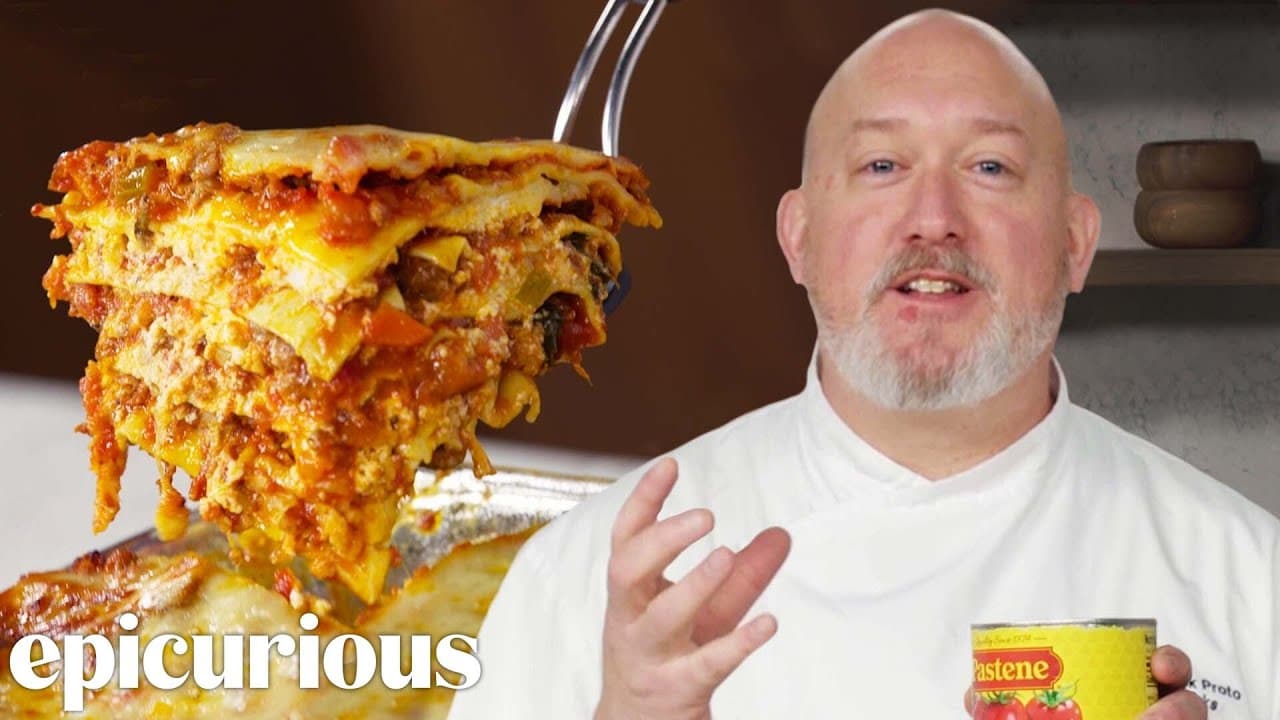
To make restaurant-quality lasagna at home, focus on building a flavorful sauce with browned pork, spicy sausage, and aromatic vegetables. Layer the sauce with pasta and a mix of cheeses, bake until crispy, and let it rest before serving. The result is a cheesy, meaty, and perfectly layered dish that impresses every time.
Transcript
- I'm Frank Proto, professional chef and culinary instructor, and today I'm gonna show you how to make lasagna, Frank style. We're talking cheesy, creamy, melty and delectable lasagna. This is Lasagna 101. [bright guitar strumming] Making the sauce for your lasagna is definitely a process. This is the flavor base of our lasagna. Basically the heart... Read More
Key Insights
- Building a flavorful sauce is essential for a great lasagna.
- Brown pork and sausage add depth and richness to the sauce.
- Layering flavors with vegetables and spices enhances taste.
- Using dry pasta allows it to absorb sauce flavors during baking.
- Cheese variety creates a balanced, creamy, and tangy flavor.
- Baking lasagna with foil helps pasta cook evenly and cheese melt.
- Resting lasagna after baking ensures it holds its shape when cut.
- Lasagna can be refrigerated or frozen for future enjoyment.
Install to Summarize YouTube Videos and Get Transcripts
Explore YouTube Video Summarizer or Get YouTube Transcript Extractor
Questions & Answers
Q: How to make a flavorful lasagna sauce?
To make a flavorful lasagna sauce, start by browning pork and spicy sausage to develop deep flavors. Add onions, carrots, celery, and garlic, and deglaze with white wine. Simmer with tomatoes and a bouquet garni to build a rich, layered sauce.
Q: What meats are used in lasagna sauce?
Lasagna sauce typically uses pork and spicy Italian sausage. Pork provides a mellow, rich base, while the sausage adds heat and additional fat for flavor. The combination of these meats creates a robust, savory foundation for the lasagna.
Q: Why is layering important in lasagna?
Layering is crucial in lasagna to ensure even distribution of flavors and textures. Sauce, pasta, and cheeses are layered to allow the pasta to absorb flavors and the cheese to melt evenly, resulting in a cohesive, delicious dish with each slice.
Q: What cheeses are best for lasagna?
For lasagna, a combination of cheeses like pecorino, Parmesan, low-moisture mozzarella, and ricotta is ideal. Pecorino adds sharpness, Parmesan provides nuttiness, mozzarella offers creaminess, and ricotta contributes a smooth, rich texture.
Q: How long should lasagna rest after baking?
Lasagna should rest for at least 30 minutes after baking. This resting period allows the layers to set and the flavors to meld, ensuring that the lasagna holds its shape when sliced and served, preventing a runny, messy presentation.
Q: Can lasagna be prepared in advance?
Yes, lasagna can be prepared in advance. After baking, it can be refrigerated or frozen. Refrigerate for up to a few days or freeze for longer storage. Reheat thoroughly before serving to enjoy the same rich flavors and textures.
Q: What is the purpose of using a bouquet garni in lasagna sauce?
A bouquet garni, a bundle of herbs tied together, is used in lasagna sauce to infuse flavors without leaving herb remnants. It adds depth and aroma to the sauce and is easily removed before serving, ensuring a smooth texture in the final dish.
Q: Why use dry pasta in lasagna?
Dry pasta is used in lasagna because it absorbs flavors from the sauce during baking, enhancing the overall taste. It also maintains its structure better than fresh pasta, resulting in a firmer, more cohesive lasagna that slices neatly.
Summary & Key Takeaways
-
Creating a delicious lasagna involves making a rich sauce by browning pork and sausage, then layering it with pasta and cheese. The sauce is enhanced with aromatic vegetables and spices for depth. After baking, let it rest for a perfect slice.
-
The key to a restaurant-quality lasagna is the sauce. Brown pork and spicy sausage are combined with onions, carrots, celery, and garlic. This mixture is deglazed with white wine and simmered with tomatoes and herbs for a robust flavor.
-
Layering is crucial for lasagna. Sauce, pasta, and a mix of cheeses are stacked to build flavor. After baking, the lasagna must rest to firm up. The result is a beautiful, cheesy, and meaty dish that delights with every bite.
Read in Other Languages (beta)
Share This Summary 📚
Summarize YouTube Videos and Get Video Transcripts with 1-Click
Try YouTube Summary with ChatGPT & Claude or YouTube Transcript Generator
Explore More Summaries from Epicurious 📚





Summarize YouTube Videos and Get Video Transcripts with 1-Click
Try YouTube Summary with ChatGPT & Claude or YouTube Transcript Generator