How to actually stop procrastinating (by a NASA engineer)
TL;DR
Ali Aluli explains how to identify and overcome procrastination effectively.
Transcript
hey guys my name is Ali aluli I'm a systems engineer and a post doctor fellow at the nas propulsion lab in this video I'm going to show you how you can figure out why you're procrastinating specifically and how to put an end to that so this video is going to be attacking the root cause of procrastination and it's not going to be one of these cookie... Read More
Key Insights
- 🤪 Understanding the root causes of procrastination goes beyond traditional tips; it's essential to self-reflect on emotional and situational triggers.
- 😨 Fear of failure is a common deterrent preventing individuals from starting significant tasks; addressing this fear can lead to action.
- ❓ Identifying personal values that align with tasks can boost motivation; misalignment often results in procrastination.
- 🍳 Overwhelm can cripple productivity, making it crucial to break tasks into smaller, more manageable steps to foster progress.
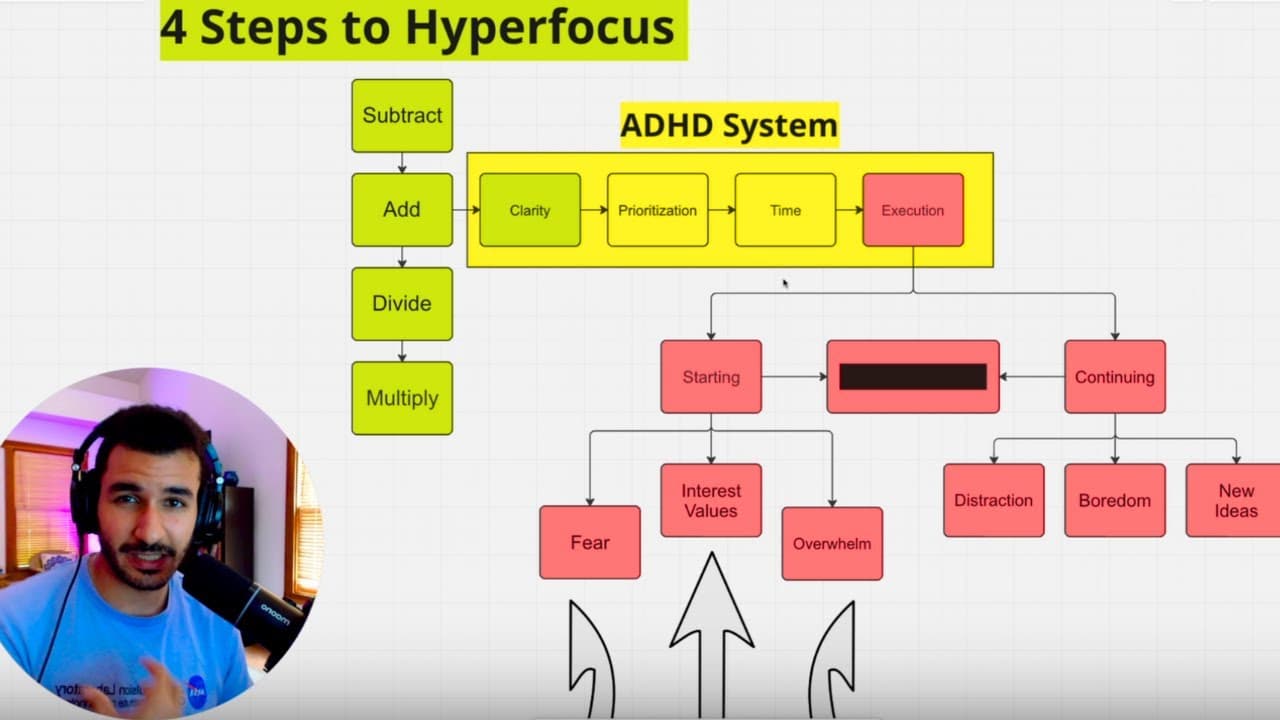
- 🛟 The "procrastination trident" serves as a diagnostic tool to help identify specific obstacles to productivity.
- 👻 Utilizing strategies like "V-zero" allows individuals to engage with tasks in a low-pressure manner, promoting ease in getting started.
- 💦 Incorporating enjoyable elements into unappealing tasks helps mitigate procrastination by creating a more favorable working environment.
Install to Summarize YouTube Videos and Get Transcripts
Explore YouTube Video Summarizer or Get YouTube Transcript Extractor
Questions & Answers
Q: What are the main reasons people procrastinate according to Ali Aluli?
Aluli identifies three primary reasons for procrastination: fear, incongruence of values and interests, and overwhelming tasks. Fear often arises from the anticipation of failure on important projects, leading to avoidance. A mismatch between personal values and a task may cause disinterest, while overwhelming feelings make it difficult to start—especially for those with ADHD.
Q: How does the concept of the "procrastination trident" help understand procrastination?
The "procrastination trident" consists of three key causes: fear, conflict of values, and overwhelm. By diagnosing which of these causes is affecting them at any given moment, individuals can tailor their approach to overcome procrastination. This involves introspective questioning to pinpoint specific barriers to productivity.
Q: What practical first steps does Ali suggest for overcoming procrastination related to overwhelm?
For those struggling with overwhelm, Ali recommends focusing solely on the first step of the task instead of the entire project. This diminishes the feeling of panic and eases the way to initiation. For instance, instead of thinking about writing a whole proposal, one should aim to identify what preliminary action, like creating an outline, needs to be taken first.
Q: What is the purpose of the "V-zero" concept introduced in the video?
The "V-zero" concept allows individuals to engage in low-stakes activities that lead to task completion without the pressure of delivering a perfect result. This method encourages getting comfortable with the starting process by performing preliminary checks or setting up necessary equipment without the expectation of producing final results right away.
Q: Why is accountability emphasized as a key strategy for reducing procrastination?
Ali highlights accountability as a significant motivator in overcoming procrastination. When individuals have someone checking in on their progress, it creates external pressure that can help them stay committed to their tasks. This can be a friend, family member, or a supportive community, making people more driven to complete their work.
Q: How does Ali propose to make uninteresting tasks more engaging?
To combat boredom with uninteresting tasks, Ali recommends finding ways to make them enjoyable, such as listening to music or working alongside others. These strategies can transform mundane tasks into more appealing activities, making it easier to get started and maintain motivation.
Q: What potential role does fear of failure play in procrastination?
Fear of failure can be a significant barrier to starting tasks, as individuals may dread producing work that doesn't meet their standards. Ali suggests reframing this fear by assuring oneself that initial efforts don't have to be perfect and that engaging in preliminary actions without high stakes can help mitigate anxiety around productivity.
Q: In what ways does Ali’s background contribute to his approach to procrastination?
Ali's experience as a systems engineer provides him with a structured perspective on productivity and problem-solving. His analytical mindset allows him to dissect procrastination into manageable components, facilitating a methodical approach to identify root causes and develop effective strategies to address them.
Summary & Key Takeaways
-
The video delves into the reasons behind procrastination, challenging traditional tips by addressing root causes related to fear, values, and overwhelm.
-
Ali shares personal experiences as a chronic procrastinator and how he utilized his engineering background to devise a systematic approach to tackling procrastination.
-
He offers actionable steps to overcome procrastination, emphasizing the need to recognize the underlying issues and adapt strategies accordingly for better productivity.
Read in Other Languages (beta)
Share This Summary 📚
Summarize YouTube Videos and Get Video Transcripts with 1-Click
Try YouTube Summary with ChatGPT & Claude or YouTube Transcript Generator
Explore More Summaries from Ali Alqaraghuli, PhD 📚

Summarize YouTube Videos and Get Video Transcripts with 1-Click
Try YouTube Summary with ChatGPT & Claude or YouTube Transcript Generator