How Did P-51 Mustangs Change Air Warfare Over Berlin?
TL;DR
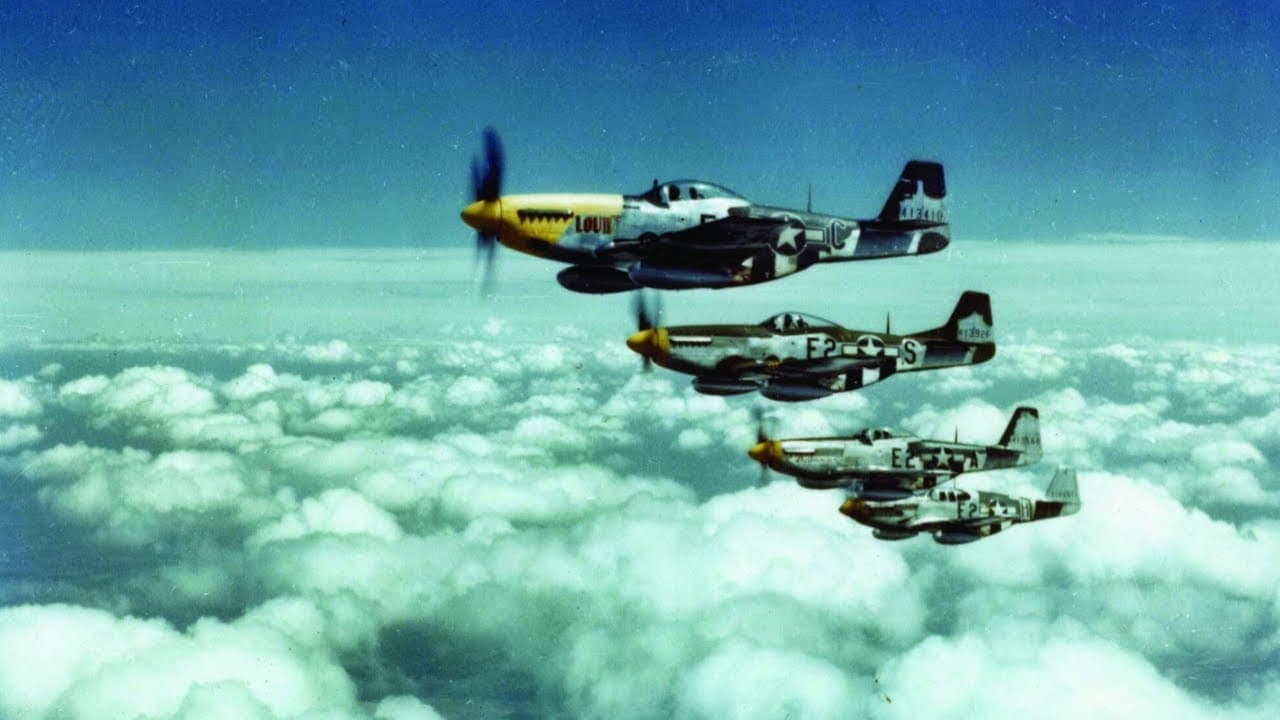
On March 6, 1944, the appearance of American P-51 Mustangs over Berlin shocked Luftwaffe pilots, marking a turning point in WWII. The Mustangs, with their extended range, enabled continuous bomber escort, decimating German defenses and shifting air superiority to the Allies. This event demonstrated the power of American industrial capability and innovation, leading to the eventual collapse of the Luftwaffe and altering the course of the war.
Transcript
March 6th, 1944, 28,000 ft above Brandenburgg, Germany, the oxygen mask froze against Major Hans Kogler's face as he scanned the crystalline sky through his Messid BF 109G6's canopy, leading his mixed formation of fighters toward the bomber stream his ground controllers had promised would be unescorted at this altitude, this deep into the Reich. Ak... Read More
Key Insights
- The P-51 Mustang's extended range allowed it to escort bombers all the way to Berlin, a feat previously deemed impossible.
- The introduction of the P-51 Mustangs marked a significant psychological blow to the Luftwaffe, undermining their confidence and strategy.
- American innovation, notably the Merlin engine and drop tanks, extended the Mustang's range to 650 miles, covering all of Germany.
- The appearance of Mustangs over Berlin shattered the Luftwaffe's belief in their air superiority and defensive strategies.
- The P-51's presence enabled Allied forces to conduct precision bombings on critical German infrastructure, crippling their war effort.
- The Luftwaffe suffered catastrophic losses in pilots and aircraft, with a loss rate reaching 18% per sortie by 1945.
- The Mustang's success highlighted the superiority of American industrial production and strategic innovation over Nazi Germany.
- The event marked a strategic shift in air warfare, demonstrating that industrial capacity and technological innovation could overcome geographic barriers.
Install to Summarize YouTube Videos and Get Transcripts
Explore YouTube Video Summarizer or Get YouTube Transcript Extractor
Questions & Answers
Q: How did the P-51 Mustang change air warfare during WWII?
The P-51 Mustang revolutionized air warfare by providing long-range escort to bombers, enabling them to reach deep into enemy territory, such as Berlin. Its extended range and superior performance allowed for continuous air superiority, decimating German defenses and shifting the balance of power in favor of the Allies. This transformation demonstrated the strategic impact of combining technology with industrial production.
Q: What was the impact of the P-51 Mustang on the Luftwaffe?
The P-51 Mustang had a devastating impact on the Luftwaffe, both psychologically and strategically. The appearance of Mustangs over Berlin shattered German confidence in their air superiority and defensive strategies. It led to catastrophic losses in aircraft and pilots, with a loss rate of 18% per sortie by 1945, contributing significantly to the Luftwaffe's collapse.
Q: Why was the appearance of P-51 Mustangs over Berlin significant?
The appearance of P-51 Mustangs over Berlin on March 6, 1944, was significant because it marked the first time Allied single-engine fighters could escort bombers all the way to the German capital. This event challenged the Luftwaffe's assumptions about their defensive capabilities and demonstrated the reach and effectiveness of American air power, leading to strategic and psychological changes in the air war.
Q: How did American innovation contribute to the success of the P-51 Mustang?
American innovation was crucial to the P-51 Mustang's success. The integration of the British-designed Merlin engine and the development of lightweight drop tanks extended the Mustang's range significantly. These innovations allowed the Mustang to escort bombers deep into enemy territory, maintaining combat performance and altering the dynamics of air warfare by enabling sustained Allied air superiority.
Q: What role did the P-51 Mustang play in the Allied bombing campaigns?
The P-51 Mustang played a critical role in Allied bombing campaigns by providing long-range escort to bombers, allowing them to reach and accurately target critical German infrastructure. This capability reduced bomber losses, increased bombing accuracy, and enabled systematic destruction of key industrial and fuel production sites, crippling the German war effort and hastening the end of the war.
Q: How did the P-51 Mustang affect German pilot morale during WWII?
The P-51 Mustang significantly affected German pilot morale by undermining their confidence and sense of air superiority. The unexpected presence of Mustangs over Berlin shattered the belief in the Luftwaffe's invincibility, leading to a psychological collapse. German pilots faced increasing losses and realized that their defensive strategies were ineffective against the superior range and performance of the Mustangs.
Q: What strategic lessons were learned from the deployment of P-51 Mustangs?
The deployment of P-51 Mustangs taught several strategic lessons, including the importance of long-range air power, the integration of technology and production, and the value of continuous innovation. The Mustangs demonstrated that air superiority could be achieved over vast distances, reshaping military strategy by showing that industrial capacity and technological advancements could decisively impact the outcome of conflicts.
Q: How did the P-51 Mustang influence post-WWII military strategy?
The P-51 Mustang influenced post-WWII military strategy by highlighting the importance of air superiority and long-range strike capabilities. It demonstrated that industrial and technological innovation could overcome geographic barriers, leading to a focus on developing integrated air defense systems and long-range fighters. These lessons have shaped modern military doctrines, emphasizing power projection and strategic flexibility in global conflicts.
Summary & Key Takeaways
-
The appearance of P-51 Mustangs over Berlin on March 6, 1944, marked a pivotal moment in WWII air warfare. The Mustangs' extended range allowed them to escort bombers deep into German territory, undermining the Luftwaffe's defensive strategies and morale. This shift enabled precision bombing of critical infrastructure, contributing to the eventual collapse of German air defenses.
-
The P-51 Mustang, equipped with advanced Merlin engines and innovative drop tanks, achieved a combat radius of 650 miles, challenging German assumptions about air superiority. The shock of seeing Mustangs over Berlin led to a psychological and strategic collapse within the Luftwaffe, as their belief in their invincibility was shattered.
-
The Mustang's dominance in the skies over Berlin demonstrated the effectiveness of American industrial and technological innovation. It marked a shift in air warfare strategy, showing that long-range air power could decisively impact the outcome of the war. This transformation in aerial combat paved the way for Allied victory and reshaped military strategy for future conflicts.
Read in Other Languages (beta)
Share This Summary 📚
Summarize YouTube Videos and Get Video Transcripts with 1-Click
Try YouTube Summary with ChatGPT & Claude or YouTube Transcript Generator
Explore More Summaries from WW2 Tales 📚
Summarize YouTube Videos and Get Video Transcripts with 1-Click
Try YouTube Summary with ChatGPT & Claude or YouTube Transcript Generator