How to Protect Wealth in Market Bubble
TL;DR
Current stock valuations suggest we are in a significant market bubble, surpassing previous highs such as the dot-com era. To protect and grow wealth, consider contrarian strategies, avoid passive investing, and focus on active management. Diversify into assets like gold, uranium, and Treasury futures for better returns with lower risk.
Transcript
I'm going to quickly prove that we are in the biggest stock market bubble in history. And then I'm going to tell you very simple strategies you can use to not only protect but grow your wealth in this crazy time of out of control central banks, big governments, deficits, debts, etc. And then I'm also going to share with you some of the things I hav... Read More
Key Insights
- The S&P 500's price-to-sales ratio is at an all-time high of 3.23, indicating a larger bubble than the dot-com era.
- The Schiller CAPE ratio and trailing 12-month PE ratios are at historically high levels, suggesting overvaluation.
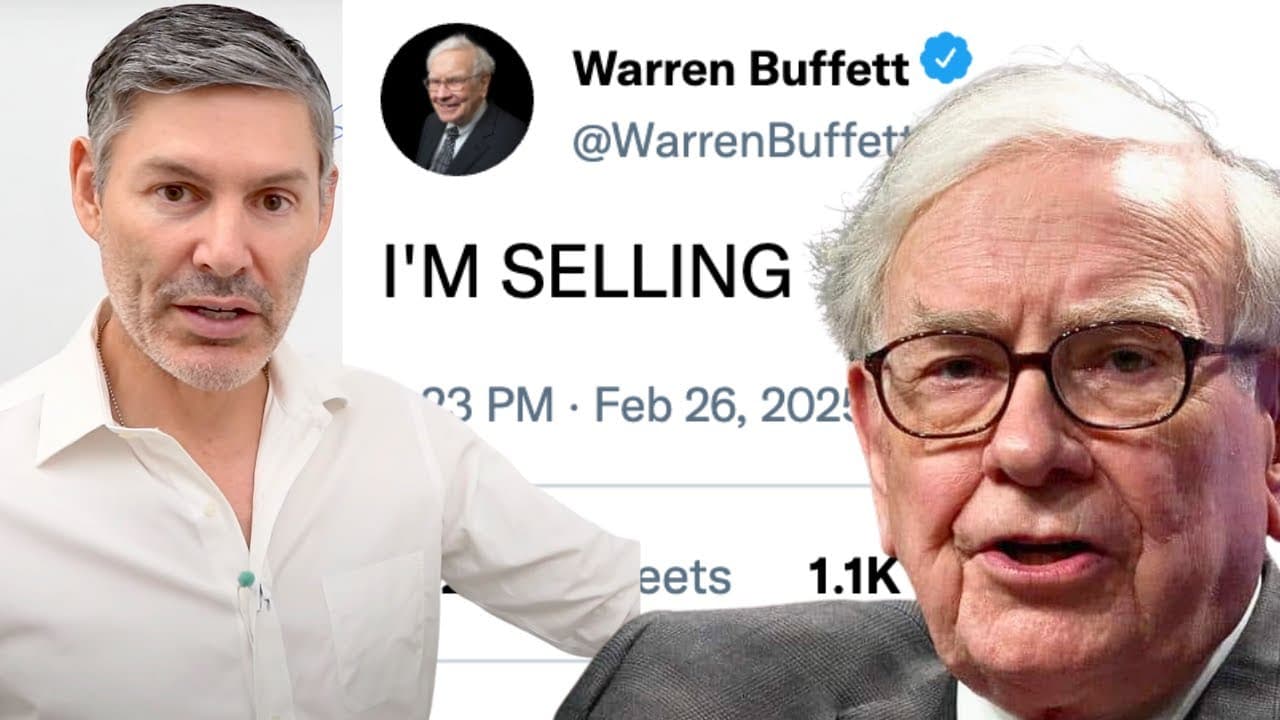
- Warren Buffett's actions, such as holding a large cash position, indicate caution in the current market environment.
- Contrarian investing, or doing the opposite of mainstream advice, can lead to better returns with less risk.
- Passive investing strategies may not be suitable in a market bubble; active management is essential.
- Historical data shows that buy-and-hold strategies may not always be effective; timing and valuation awareness are crucial.
- Mentorship and learning from experienced investors can significantly enhance investment success.
- Diversifying into assets like uranium ETFs and Treasury futures can outperform traditional stock indices.
Install to Summarize YouTube Videos and Get Transcripts
Explore YouTube Video Summarizer or Get YouTube Transcript Extractor
Questions & Answers
Q: How to identify a stock market bubble?
A stock market bubble can be identified by examining valuation metrics such as the price-to-sales ratio, CAPE ratio, and PE ratios. When these metrics reach historically high levels, it suggests overvaluation. Additionally, observing investor behavior, such as excessive speculation and deviation from fundamental values, can indicate a bubble.
Q: Why is passive investing risky in a bubble?
Passive investing can be risky in a bubble because it involves buying and holding a broad index without considering valuation levels. In a bubble, valuations are often inflated, and passive investors may face significant losses when the bubble bursts. Active management allows for strategic allocation to undervalued assets, reducing risk.
Q: What are contrarian investment strategies?
Contrarian investment strategies involve going against prevailing market trends and sentiment. This can include buying undervalued assets when the market is overly pessimistic or selling overvalued assets when optimism is high. By doing the opposite of the crowd, contrarian investors seek to capitalize on market inefficiencies.
Q: How does Warren Buffett's cash position reflect market caution?
Warren Buffett's large cash position reflects market caution as it indicates he sees limited opportunities for attractive investments at current valuations. Holding cash provides flexibility to invest when valuations become more reasonable, and it suggests he believes the market is overvalued, warranting a cautious approach.
Q: What role does mentorship play in investing?
Mentorship plays a crucial role in investing by providing guidance, knowledge, and experience from seasoned investors. Learning from mentors helps avoid common pitfalls, enhances decision-making skills, and offers insights into market dynamics. Mentorship can significantly improve investment outcomes and accelerate learning.
Q: Why is diversification important in a market bubble?
Diversification is important in a market bubble because it spreads risk across different asset classes, reducing exposure to any single overvalued market. By investing in a mix of assets like gold, uranium, and Treasury futures, investors can achieve better returns and minimize potential losses when the bubble bursts.
Q: How can uranium ETFs outperform the S&P 500?
Uranium ETFs can outperform the S&P 500 by capitalizing on favorable supply-demand dynamics in the uranium market. As the demand for nuclear energy increases and supply remains constrained, uranium prices can rise, leading to significant gains for uranium-focused investments compared to traditional stock indices.
Q: What are the risks of investing in Treasury futures?
Investing in Treasury futures carries risks such as interest rate fluctuations, leverage, and market volatility. Changes in interest rates can impact bond prices, affecting futures contracts. Leverage amplifies gains and losses, increasing risk. Investors must carefully manage these factors to mitigate potential losses.
Summary & Key Takeaways
-
Stock valuations are at historic highs, suggesting a market bubble larger than previous ones like the dot-com era. To protect and grow wealth, it's crucial to adopt contrarian strategies, avoiding passive investing and focusing on active management. Diversifying into assets such as gold, uranium, and Treasury futures can offer better returns with lower risk.
-
Warren Buffett's large cash position and halted buybacks reflect caution in the current market. Historical data shows that buy-and-hold strategies may not always be effective, emphasizing the importance of timing and valuation awareness. Mentorship from experienced investors can significantly enhance investment success.
-
Contrarian investing, or doing the opposite of mainstream advice, can lead to better returns with less risk. The S&P 500's price-to-sales ratio is at an all-time high, indicating overvaluation. Diversifying into assets like uranium ETFs and Treasury futures can outperform traditional stock indices.
Read in Other Languages (beta)
Share This Summary 📚
Summarize YouTube Videos and Get Video Transcripts with 1-Click
Try YouTube Summary with ChatGPT & Claude or YouTube Transcript Generator
Explore More Summaries from George Gammon 📚


Summarize YouTube Videos and Get Video Transcripts with 1-Click
Try YouTube Summary with ChatGPT & Claude or YouTube Transcript Generator