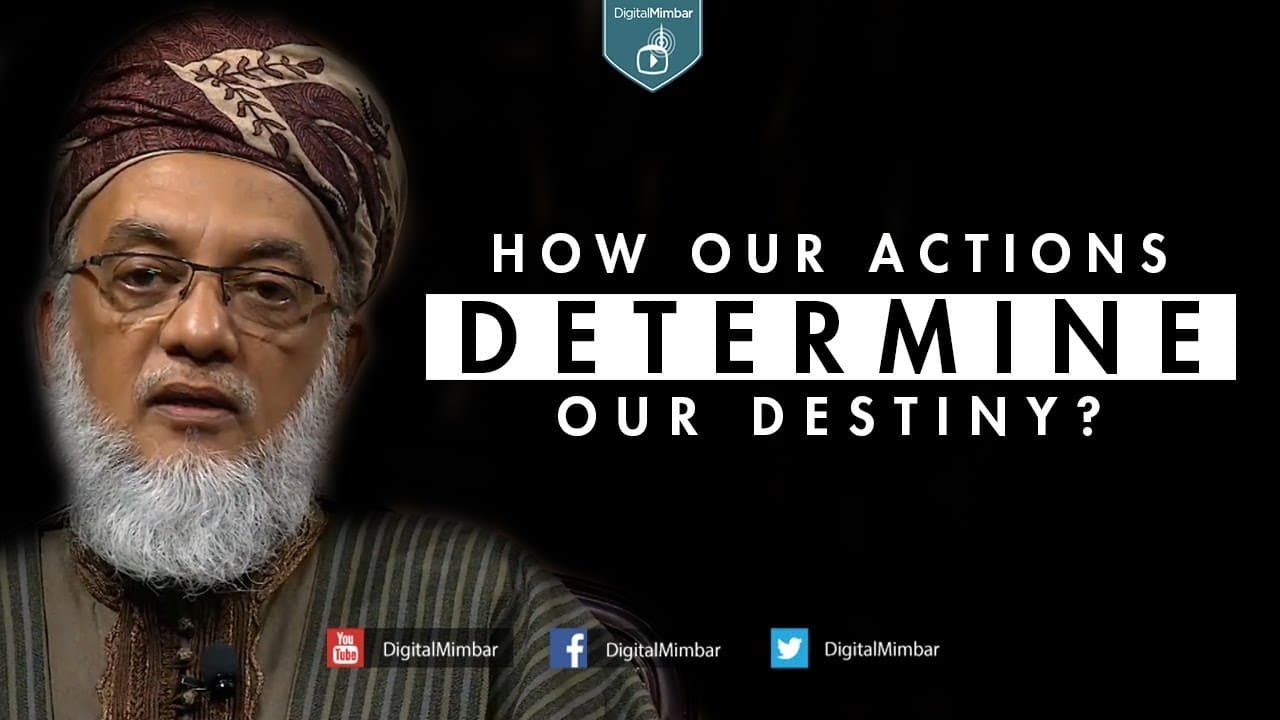
How Do Our Actions Determine Our Destiny?, Yawar Baig
TL;DR
Our actions determine our destiny because human conduct creates many of the trials and difficulties experienced in the world, according to Yawar Baig. He says Allah allows people to taste a smaller punishment so they may turn toward Him and avoid a greater one. The proposed response rests on Quranic guidance, justice, excellence, repentance, and becoming part of the solution. Read on for the practical duties involved.
Transcript
alhamdulillah jalapeno salat wa salam ala sheriff olymbia evil mousseline while ali he was heavy as rain were bad my dear brothers and sisters assalamu aleikum wa rahmatullah wa barakato I want to remind myself in you of a very important thing that relates to our conditions the global conditions that we as Muslims find ourselves in in different cou... Read More
Key Insights
- 😀 Difficulties faced by Muslims and the world as a whole are a consequence of human actions.
- 👻 Allah allows these hardships to guide individuals towards seeking repentance and refuge in Him.
- 👨⚖️ Justice and excellence are the foundations for overcoming challenges and finding salvation.
- 👪 Muslims should fulfill their duties towards family, society, and the environment.
- 🫡 Following the law of the land and treating neighbors with kindness and respect are important aspects of justice.
- 👶 A focus on personal growth and moral upbringing of children is essential.
- 🗯️ Understanding and fulfilling the rights of parents and upholding fairness in all aspects of life contribute to sowing seeds of peace and harmony.
Install to Summarize YouTube Videos and Get Transcripts
Explore YouTube Video Summarizer or Get YouTube Transcript Extractor
Questions & Answers
Q: How do our actions determine our destiny?
Yawar Baig says present difficulties are consequences earned through human actions. Turning toward Allah, repenting, and changing those actions can lead to a better life for oneself and others while helping a person avoid punishment in the hereafter.
Q: Why are Muslims facing trials and difficulties globally?
The talk attributes trials and difficulties on land and sea to the actions of human beings as a whole, including Muslims. It does not claim that Muslims caused everything bad in the world, but says they are part of humanity and therefore share responsibility for becoming part of the solution.
Q: Why does Allah allow difficulties to happen?
Yawar Baig says Allah allows difficulties so people experience a smaller consequence of what their actions are producing and turn back toward Him. He presents these trials as an expression of mercy intended to prevent a more severe and lasting punishment.
Q: What analogy explains trials and tribulations in the talk?
The speaker compares them to a mother tapping a child's wrist when the child reaches toward a fire. The tap hurts, but it protects the child from a burn that would be far more painful and long-lasting.
Q: What human actions and problems does Yawar Baig connect?
He names global warming, climate change, water shortages, habitat destruction, disappearing animal species, wars, suffering, poverty, and the gap between the haves and have-nots. He says these problems can be traced back to human actions and will return to affect people badly.
Q: How can Muslims become part of the solution?
The talk says Muslims must recognize that they are part of the human actions contributing to global problems and then change their conduct. It points them toward the Quran, the example of the Prophet Muhammad, justice, and excellence as foundations for responding.
Q: What guidance does the Quran provide for overcoming difficulties?
Yawar Baig describes the Quran as the best guide and says its meaning is demonstrated through the life of the Prophet Muhammad. The page's summary identifies justice and excellence as the two foundations for overcoming difficulties and finding salvation.
Q: What practical responsibilities follow from justice and excellence?
The page highlights fulfilling duties toward family, society, and the environment. It also includes obeying the law of the land, treating neighbors kindly and respectfully, honoring parents' rights, raising children morally, and acting fairly regardless of race, religion, or nationality.
Summary & Key Takeaways
-
Difficult conditions faced by the Muslim community globally are attributed to their own actions and serve as a consequence of their deeds.
-
Allah allows these hardships to happen in order to awaken individuals and redirect them towards Him.
-
The Quran guides Muslims on how to overcome these difficulties and find salvation through justice and excellence.
Read in Other Languages (beta)
Share This Summary 📚
Summarize YouTube Videos and Get Video Transcripts with 1-Click
Try YouTube Summary with ChatGPT & Claude or YouTube Transcript Generator
Explore More Summaries from Digital Mimbar 📚
Summarize YouTube Videos and Get Video Transcripts with 1-Click
Try YouTube Summary with ChatGPT & Claude or YouTube Transcript Generator