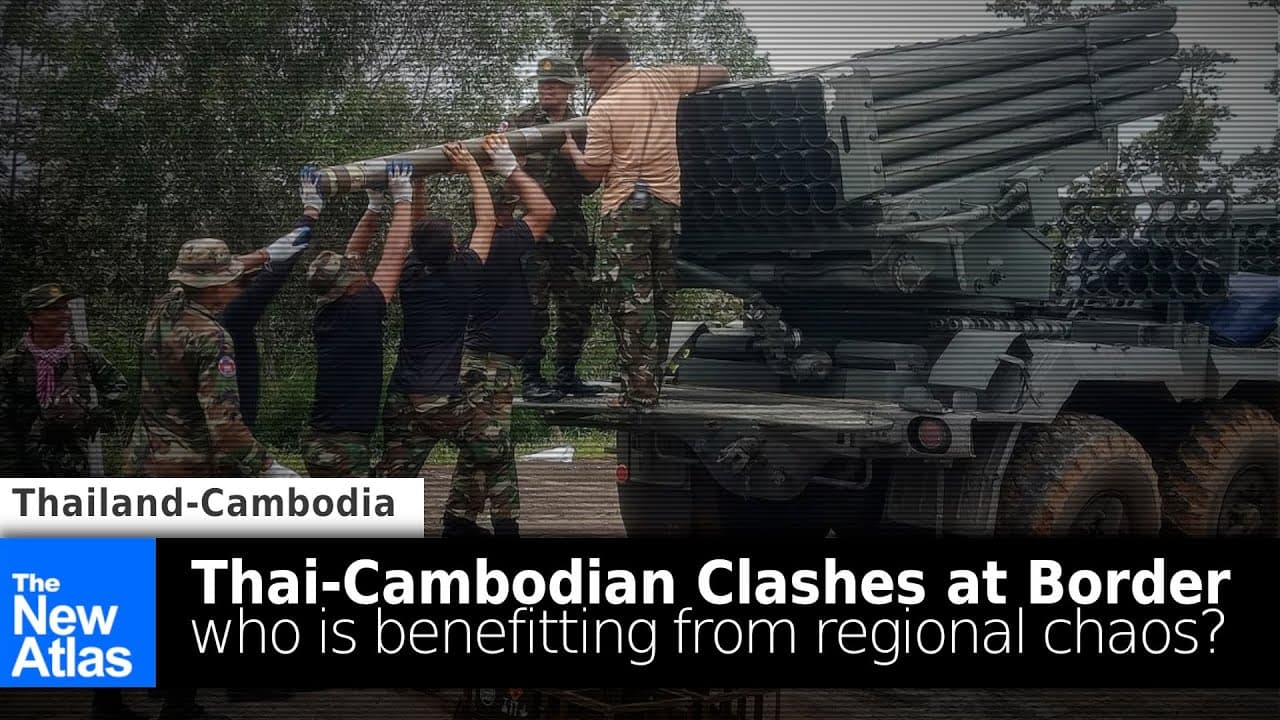
Who Gains from Thai-Cambodian Border Conflict?
TL;DR
The ongoing conflict between Thailand and Cambodia is not merely a regional dispute but part of a larger geopolitical strategy involving the US. The US aims to destabilize Southeast Asia, particularly Thailand, to counter China's growing influence. This conflict serves US interests by creating regional chaos, aligning with its broader strategy of extending adversaries through peripheral conflicts.
Transcript
Today is July 26, 2025. There is an ongoing armed conflict between the Kingdom of Thailand and neighboring Cambodia here in Southeast Asia where I am based. This has been going on for several days now. Let's take a look at some of the headlines from the Western media regarding this conflict. Thailand and Cambodia exchange heavy artillery fires. Bor... Read More
Key Insights
- Thailand and Cambodia are engaged in an armed conflict over disputed territory, with both sides accusing each other of aggression.
- The US, Malaysia, and China have offered to mediate, but the conflict serves broader geopolitical interests, particularly those of the US.
- Thailand has developed closer ties with China in recent years, shifting away from its historical alignment with the US.
- Cambodia relies heavily on the US as its primary export market and uses the US dollar as its local currency, unlike most of its Asian neighbors.
- The conflict is part of a US strategy to create pressure points around China and its allies, similar to tactics used against Russia.
- US-backed political figures in Thailand, such as Thaksin Shinawatra and his affiliates, are involved in the conflict, aligning with Cambodian interests.
- The Thai military opposes US influence, leading to internal divisions within Thailand that exacerbate the conflict.
- The ongoing conflict is a manifestation of the US's broader strategy to destabilize Southeast Asia and counter China's influence.
Install to Summarize YouTube Videos and Get Transcripts
Explore YouTube Video Summarizer or Get YouTube Transcript Extractor
Questions & Answers
Q: Why is there a conflict between Thailand and Cambodia?
The conflict between Thailand and Cambodia is rooted in historical territorial disputes dating back to French colonial times. However, it is currently exacerbated by geopolitical strategies, particularly those of the US, which aims to destabilize the region to counter China's influence. The US leverages existing tensions to create chaos, aligning with its broader strategy of extending adversaries through peripheral conflicts.
Q: How does the US benefit from the Thai-Cambodian conflict?
The US benefits from the Thai-Cambodian conflict by creating regional instability, which serves to counter China's growing influence in Southeast Asia. By fueling tensions and leveraging existing disputes, the US aims to disrupt the unity and economic progress of the region, aligning with its strategy of extending adversaries like China through peripheral conflicts and internal divisions.
Q: What role does China play in the Thai-Cambodian conflict?
China plays an indirect role in the Thai-Cambodian conflict, as the tensions are partly a result of Thailand's growing economic and military ties with China. This shift challenges US influence in the region, prompting the US to exploit the conflict to destabilize Southeast Asia. While China is not directly involved, its strategic partnership with Thailand is a key factor in the geopolitical dynamics at play.
Q: How has Thailand's relationship with the US changed over the years?
Thailand's relationship with the US has evolved from being a major non-NATO ally to developing closer ties with China in recent years. This shift is due to Thailand's growing economic and military partnerships with China, which offer more significant benefits than its historical alignment with the US. The US aims to reverse this trend by destabilizing Thailand through geopolitical strategies and regional conflicts.
Q: What is the economic impact of the Thai-Cambodian conflict?
The Thai-Cambodian conflict can disrupt regional trade and economic growth, particularly affecting Thailand's economic pivot towards China. The conflict creates uncertainty and instability, which can hinder investment and development in the region. For Cambodia, heavily reliant on the US as an export market, the conflict may exacerbate economic vulnerabilities and dependence on external influences.
Q: How does the conflict affect Thailand's internal politics?
The conflict exacerbates internal political divisions in Thailand, particularly between US-backed political figures like Thaksin Shinawatra and the Thai military, which opposes US influence. These divisions complicate Thailand's governance and strategic direction, making it more susceptible to external manipulation and destabilization efforts, particularly by the US seeking to maintain its influence in the region.
Q: What historical factors contribute to the Thai-Cambodian conflict?
The Thai-Cambodian conflict is rooted in territorial disputes dating back to French colonial times, when border delineations were left unresolved. These historical tensions have been opportunistically used by external powers, notably the US, to create regional instability. While the historical factors provide a basis for the conflict, the current tensions are more influenced by geopolitical strategies and external interventions.
Q: What are the broader geopolitical implications of the conflict?
The broader geopolitical implications of the Thai-Cambodian conflict include increased regional instability and the potential for further US-China tensions. The conflict highlights the US strategy of destabilizing regions to counter China's influence, mirroring tactics used in other parts of the world. It underscores the shifting alliances and strategic recalibrations in Southeast Asia, as countries navigate the complex dynamics of US-China rivalry.
Summary & Key Takeaways
-
The Thai-Cambodian conflict is more than a border dispute; it's part of a broader US strategy to destabilize China-aligned nations. The US aims to create regional chaos, exploiting historical tensions to overextend adversaries. This conflict serves US interests by disrupting Southeast Asia's unity and economic growth, particularly Thailand's pivot towards China.
-
Thailand's closer ties with China have shifted its geopolitical stance, challenging US influence in the region. Cambodia, however, remains economically tied to the US, creating a complex dynamic. The conflict involves US-backed Thai political figures, revealing deeper geopolitical maneuvers aimed at maintaining US dominance.
-
The US strategy mirrors its actions in other regions, using conflicts to extend adversaries like China and Russia. The Thai-Cambodian conflict, while rooted in historical disputes, is fueled by external influences seeking to exploit regional vulnerabilities. The ongoing tension reflects broader geopolitical shifts and the US's attempts to counter China's rise.
Read in Other Languages (beta)
Share This Summary 📚
Summarize YouTube Videos and Get Video Transcripts with 1-Click
Try YouTube Summary with ChatGPT & Claude or YouTube Transcript Generator
Explore More Summaries from The New Atlas 📚



Summarize YouTube Videos and Get Video Transcripts with 1-Click
Try YouTube Summary with ChatGPT & Claude or YouTube Transcript Generator