The Most Common Allergy In The World
TL;DR
Urushiol, found in poison ivy and poison oak, triggers an allergic reaction by tricking our immune cells into thinking it's dangerous.
Transcript
Hi, this is David from MinuteEarth. And this is urushiol; it's the molecule that causes the painful, itchy reaction we get when we touch poison ivy or poison oak. But urushiol isn't poisonous; the molecule itself doesn’t actually pose any danger to humans. Yet, like lots of other innocuous stuff out there, it can hurt us by inadvertently tricking o... Read More
Key Insights
- ❓ Urushiol triggers an allergic reaction by mimicking dangerous molecules and tricking our immune cells.
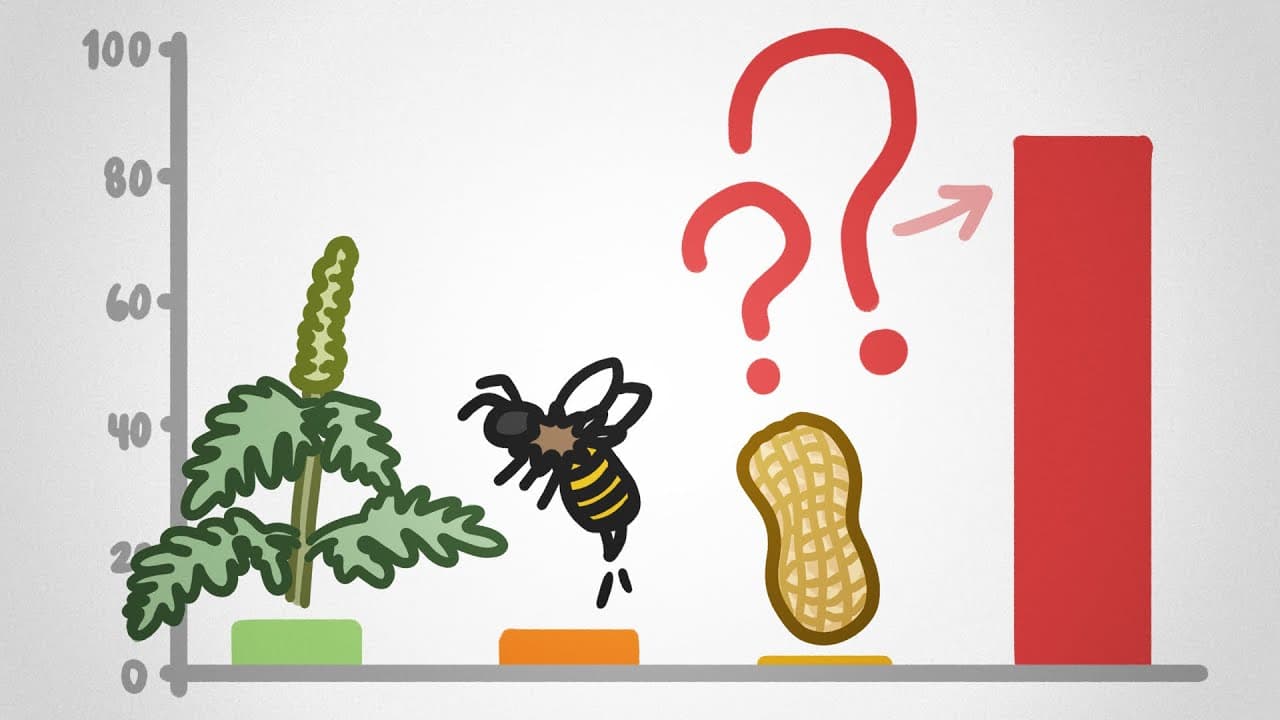
- 🥜 This allergic response is similar to other allergies, such as pollen-induced sniffles and peanut allergies.
- 👯 Approximately 85% of people are allergic to urushiol, making it the most common allergy worldwide.
- 😥 Urushiol does not have a known defense mechanism and primarily serves as a sap thickener.
- 💀 Animals, apart from humans and our close relatives, can consume poison ivy and poison oak without adverse effects.
- 🧑🏭 The reasons behind individual reactions to urushiol are not fully understood and may involve immune system and genetic factors.
- 🖤 Urushiol's allergy highlights the broader mystery and lack of understanding surrounding allergies in general.
Install to Summarize YouTube Videos and Get Transcripts
Explore YouTube Video Summarizer or Get YouTube Transcript Extractor
Questions & Answers
Q: Why does urushiol cause an allergic reaction?
Urushiol triggers an allergic reaction by mimicking the handcuffs used by immune cells to bind dangerous molecules. This mistaken identity leads to a defensive response, even though urushiol itself is harmless.
Q: Are animals affected by urushiol?
Many animals are not affected by urushiol and can safely consume poison ivy and poison oak. The urushiol allergy seems to be unique to humans and our close relatives.
Q: Why do some people react to urushiol while others don't?
The reason why some individuals react to urushiol and others don't is still not fully understood. It may be due to variations in immune system responses or genetic factors.
Q: Is urushiol's allergy a defense mechanism?
Urushiol does not seem to have evolved as a defense mechanism. It is primarily a sap thickener that helps seal up damaged leaves. The allergic reaction in humans appears to be an unintended consequence.
Summary & Key Takeaways
-
Urushiol, the molecule in poison ivy and poison oak, causes a painful and itchy reaction when it comes into contact with human skin.
-
The molecule itself is not poisonous, but it tricks our immune cells into thinking there is a threat, leading to an immune response.
-
Urushiol triggers an allergic reaction in approximately 85% of people, making it the most common allergy worldwide.
Read in Other Languages (beta)
Share This Summary 📚
Summarize YouTube Videos and Get Video Transcripts with 1-Click
Try YouTube Summary with ChatGPT & Claude or YouTube Transcript Generator
Explore More Summaries from MinuteEarth 📚




Summarize YouTube Videos and Get Video Transcripts with 1-Click
Try YouTube Summary with ChatGPT & Claude or YouTube Transcript Generator