Why Does Leisure Enhance Genius?
TL;DR
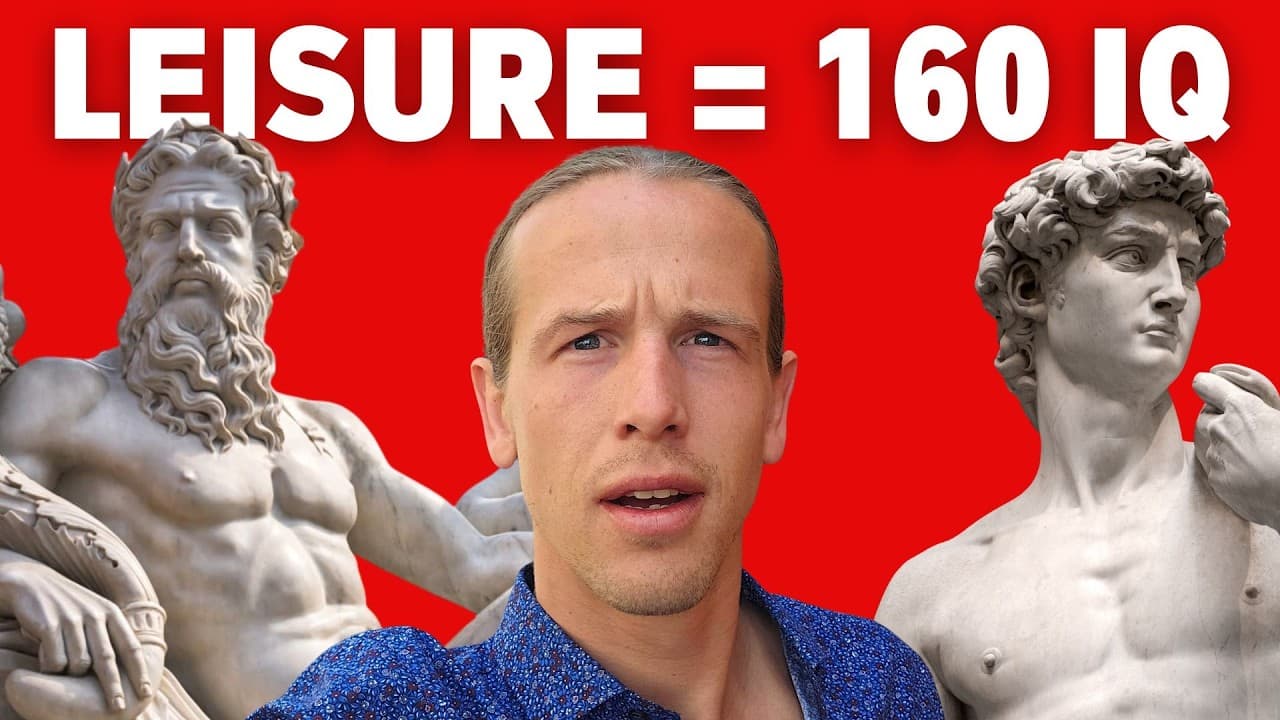
Leisure is essential for creativity and genius, as it allows the mind to relax and access deeper insights. Historical figures like Goethe and Nietzsche thrived by balancing deep work with leisure, suggesting that true innovation comes from a state of rest rather than constant busyness. Embracing leisure can lead to personal growth and original ideas.
Transcript
There's an interesting correlation throughout history between leisure and genius. In fact, the highest civilizations and the greatest geniuses of history would have been considered lazy by modern peoples. And this is because they understood the lost aristocratic virtue of leisure maxing. And I want to give you the full guide in this presentation. S... Read More
Key Insights
- Leisure is the foundation of genius, allowing deeper insight and creativity.
- Historical geniuses like Goethe prioritized leisure over constant work.
- Modern society glorifies busyness, which stifles creativity and insight.
- True leisure involves activities like walking, reading, and meaningful conversations.
- The ancient Greeks balanced competition with leisure, leading to cultural advancements.
- Stress and busyness disconnect us from our instincts and intuition.
- AI will replace busy work, making human creativity and insight more valuable.
- Genuine leisure is not escapism but a state that fosters original thinking.
Install to Summarize YouTube Videos and Get Transcripts
Explore YouTube Video Summarizer or Get YouTube Transcript Extractor
Questions & Answers
Q: How does leisure contribute to genius?
Leisure contributes to genius by allowing the mind to relax and access deeper insights. Historical figures like Goethe and Nietzsche thrived by balancing deep work with leisure, suggesting that true innovation comes from a state of rest rather than constant busyness. This balance fosters creativity and original thinking.
Q: What activities constitute true leisure?
True leisure involves activities that promote relaxation and meaningful engagement, such as walking, reading, and having deep conversations. Unlike escapism, which includes mindless scrolling or partying, genuine leisure fosters creativity and insight by allowing individuals to connect with their instincts and intuition.
Q: Why is modern society's focus on busyness problematic?
Modern society's focus on busyness is problematic because it stifles creativity and insight. Constant busyness disconnects individuals from their instincts and intuition, making it difficult to access deeper insights. This hustle culture contrasts with the historical emphasis on leisure, which has been shown to enhance genius and innovation.
Q: How did historical figures like Goethe use leisure to their advantage?
Historical figures like Goethe used leisure to their advantage by structuring their days around a balance of deep work and relaxation. Goethe's routine involved early morning deep work, followed by leisurely activities like walking and engaging with nature. This approach allowed him to maintain clarity of mind and foster creativity.
Q: What lessons can we learn from the ancient Greeks about leisure?
The ancient Greeks demonstrate that balancing competition with leisure leads to cultural and intellectual advancements. They engaged in gentlemanly symposiums for philosophical discussions and socialization, which fueled their creativity and led to significant contributions in science, drama, and philosophy. This balance highlights the importance of leisure in fostering innovation.
Q: How will AI impact the value of human creativity?
AI will replace many repetitive and mechanistic tasks, increasing the value of human creativity and insight. As AI takes over busy work, the ability to generate original ideas and insights will become more important. Embracing leisure can help individuals tap into their creative potential and remain relevant in an AI-driven world.
Q: What is the difference between real and fake leisure?
Real leisure involves activities that promote relaxation and meaningful engagement, such as walking, reading, and deep conversations. Fake leisure, on the other hand, includes escapism activities like mindless scrolling or partying, which do not foster creativity or insight. Real leisure allows individuals to connect with their instincts and intuition.
Q: How can individuals incorporate leisure into their daily routines?
Individuals can incorporate leisure into their daily routines by scheduling time for activities that promote relaxation and meaningful engagement. This can include taking walks, reading, and having deep conversations. Balancing deep work with leisure allows for mental clarity and fosters creativity, leading to personal growth and original ideas.
Summary & Key Takeaways
-
Leisure is crucial for accessing deeper insights and creativity. Historical figures like Goethe and Nietzsche balanced work with leisure, leading to significant achievements. In contrast, modern society's focus on busyness hinders genuine creativity and insight.
-
True leisure involves meaningful activities such as walking, reading, and engaging in deep conversations, as opposed to escapism. The ancient Greeks exemplified this balance, using leisure to fuel cultural and intellectual advancements.
-
As AI takes over repetitive tasks, human creativity and insight will become increasingly valuable. Embracing leisure can help individuals connect with their instincts and intuition, leading to original ideas and personal growth.
Read in Other Languages (beta)
Share This Summary 📚
Summarize YouTube Videos and Get Video Transcripts with 1-Click
Try YouTube Summary with ChatGPT & Claude or YouTube Transcript Generator
Explore More Summaries from Wisdom Warriors 📚




Summarize YouTube Videos and Get Video Transcripts with 1-Click
Try YouTube Summary with ChatGPT & Claude or YouTube Transcript Generator