7-TKT CLIL: Lesson Planning I
TL;DR
Understand goals, objectives, and outcomes for effective CLIL lesson planning.
Transcript
hello everybody so in this video we're going to cover lesson planning in cleo or lesson planning for the clil tkt test and what we need to know to be successful uh in the test when it comes to the topic of lesson planning or planning lessons so let us begin with making the difference or establishing differences between what goals objectives... Read More
Key Insights
- Goals, objectives, and outcomes differ in specificity; goals are broad, objectives are more specific, and outcomes are the most specific.
- Objectives can be teacher-centered or student-centered, serving as a bridge to achieving learning outcomes.
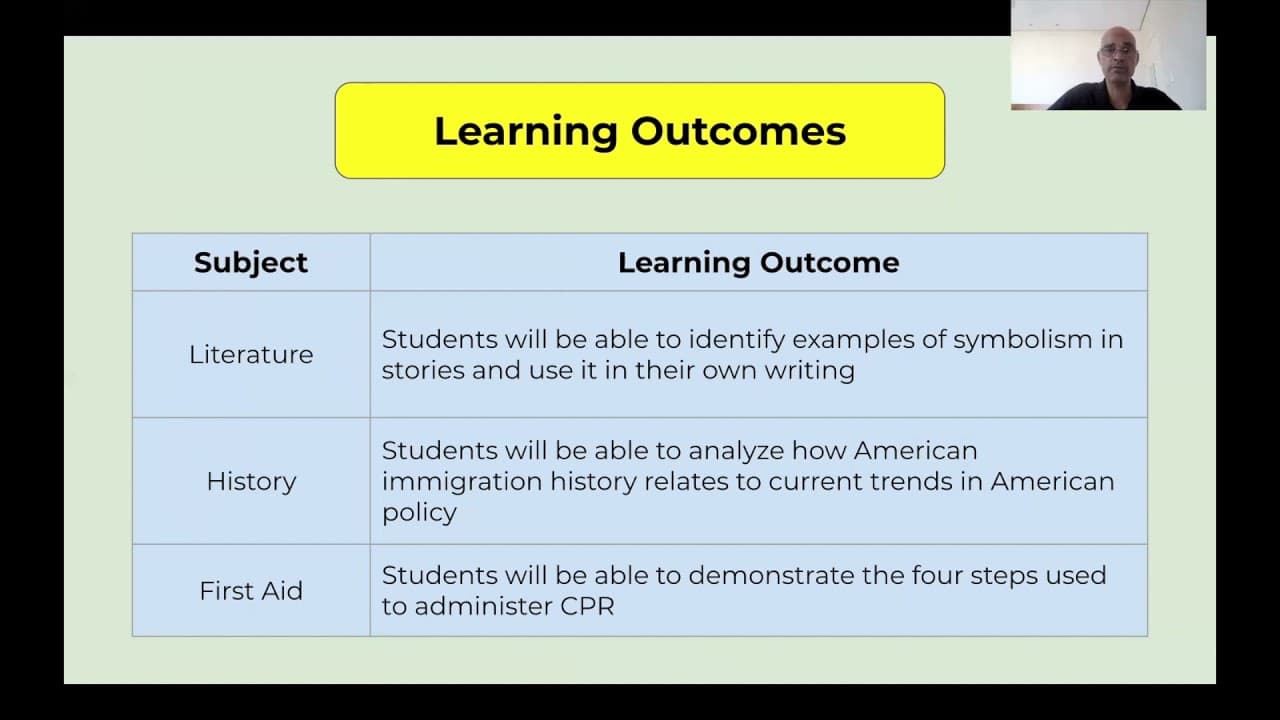
- Learning outcomes describe what students are expected to learn and are crucial for assessing student progress.
- Differentiation involves adjusting content to meet the varying capabilities of students, either by modifying input or output.
- Support can be provided before, during, and after lessons, and should be available regardless of differentiation needs.
- Examples of differentiation include pairing students of different abilities and narrowing lesson focus for clarity.
- Support strategies include using visuals, diagrams, paraphrasing, and glossaries to aid comprehension.
- Key resources for TKT CLIL preparation include the TKT CLIL course module and handbook, along with other educational texts.
Install to Summarize YouTube Videos and Get Transcripts
Explore YouTube Video Summarizer or Get YouTube Transcript Extractor
Questions & Answers
Q: What is the difference between goals, objectives, and outcomes in lesson planning?
Goals, objectives, and outcomes differ in their level of specificity. Goals are broad statements about what the lesson aims to achieve. Objectives are more specific, outlining what the teacher intends to teach or what students should learn. Outcomes are the most specific, detailing what students are expected to learn and be able to do by the end of the lesson.
Q: How can lesson objectives be framed in CLIL lesson planning?
Lesson objectives in CLIL planning can be framed from either the teacher's or the student's perspective. Teacher-centered objectives focus on what the teacher plans to teach, while student-centered objectives focus on what students are expected to understand. Objectives serve as a bridge to achieving specific learning outcomes, guiding both instruction and assessment.
Q: What is the role of learning outcomes in lesson planning?
Learning outcomes play a critical role in lesson planning as they specify what students should be able to do after the lesson. They help teachers fine-tune their teaching strategies and provide a clear framework for assessing student progress. Learning outcomes are student-focused and ensure that the lesson's objectives are met with precision and clarity.
Q: How does differentiation support student learning in CLIL?
Differentiation supports student learning by adjusting the lesson content to match students' varying abilities. This can involve modifying the input, such as the materials used, or the output, like the tasks students are asked to complete. Differentiation ensures that all students, regardless of their skill level, can engage with the lesson content effectively.
Q: What strategies can be used to provide support in CLIL lessons?
Support strategies in CLIL lessons include using visuals and diagrams to aid understanding, providing sentence frames to assist with language production, and offering glossaries for vocabulary support. These strategies help students grasp complex content and language, ensuring they can participate fully in the lesson and achieve the learning outcomes.
Q: Why is it important to provide support before, during, and after lessons?
Providing support before, during, and after lessons is important because it ensures that students have the resources they need to succeed at every stage of the learning process. Pre-lesson support prepares students for new content, in-lesson support helps them engage with the material, and post-lesson support reinforces learning and aids retention.
Q: What are some examples of differentiation in lesson planning?
Examples of differentiation in lesson planning include pairing students of different abilities to facilitate peer learning, narrowing the focus of lessons to ensure clarity, and providing question starters to guide student inquiry. These strategies help tailor the learning experience to meet the diverse needs of students, promoting engagement and understanding.
Q: What resources are recommended for preparing for the TKT CLIL test?
Recommended resources for preparing for the TKT CLIL test include the TKT CLIL course module and the TKT handbook for teachers. These resources provide valuable insights into the test's focus and offer guidance on effective lesson planning and teaching strategies. Additional educational texts can further enhance understanding of the concepts covered in the test.
Summary & Key Takeaways
-
The video discusses the importance of understanding the differences between goals, objectives, and outcomes in lesson planning, particularly for the TKT CLIL test. It emphasizes the need for specificity in outcomes and how they guide teaching strategies and student assessments.
-
Differentiation and support are crucial elements of lesson planning. Differentiation involves adjusting content to suit students' abilities, while support encompasses strategies to aid learning before, during, and after lessons. Examples include using visuals and providing sentence frames.
-
The video highlights essential resources for preparing for the TKT CLIL test, including specific modules and handbooks. These resources help educators understand the test's focus and improve their lesson planning and teaching strategies.
Read in Other Languages (beta)
Share This Summary 📚
Summarize YouTube Videos and Get Video Transcripts with 1-Click
Try YouTube Summary with ChatGPT & Claude or YouTube Transcript Generator