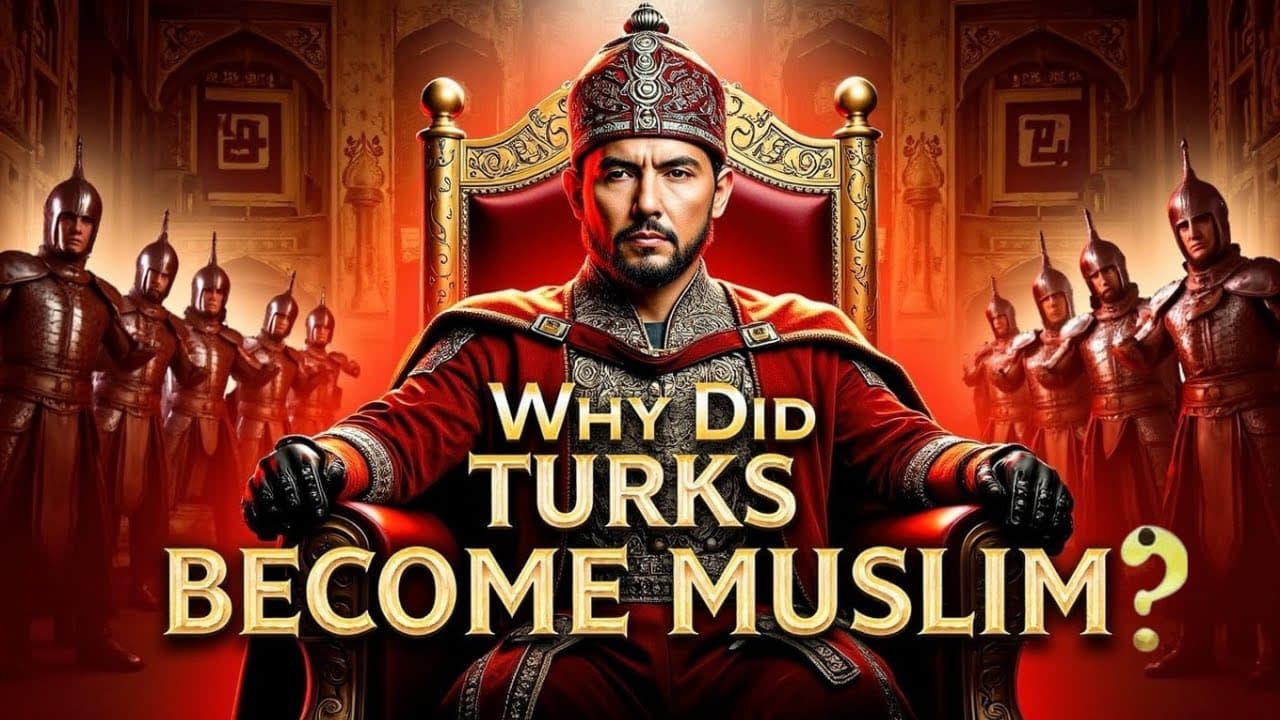
Why Did the Turks Become Muslim? Islamic History Movie
TL;DR
Turks' acceptance of Islam reshaped history through battles and cultural shifts.
Transcript
Read and summarize the transcript of this video on Glasp Reader (beta).
Key Insights
- The Turks' conversion to Islam was a complex process involving significant battles and cultural exchanges, notably the Battle of Talas, which played a crucial role in shaping their religious direction.
- The initial contact between Turks and Muslims occurred during the early Islamic conquests, but the relationship was strained due to harsh Umayyad policies, which prioritized control over religious conversion.
- The Umayyad dynasty's authoritarian rule and Arab nationalism alienated many non-Arab Muslims, including Turks, leading to resistance and limited conversion during their reign.
- The Abbasid revolution marked a significant shift in policy, treating non-Arab groups, including Turks, with respect and integrating them into military and administrative roles, facilitating a more genuine spread of Islam.
- The Battle of Talas in 751 was pivotal, as it not only halted Chinese expansion into Central Asia but also allowed for the exchange of cultural and technological knowledge, such as papermaking, between the Arabs and Chinese.
- The Turks' strategic alliance with the Abbasids during the Battle of Talas was driven by a desire to preserve their autonomy and cultural identity, ultimately leading to their gradual conversion to Islam.
- The decline of the Umayyads and the rise of the Abbasids created an environment where Islam could spread more naturally among the Turks, who began to see themselves as protectors of the faith.
- The mass conversion of the Oguz Turks in the 10th century was a turning point, as they embraced Islam and played a significant role in its propagation, influencing the Muslim world and history significantly.
Install to Summarize YouTube Videos and Get Transcripts
Explore YouTube Video Summarizer or Get YouTube Transcript Extractor
Questions & Answers
Q: What was the significance of the Battle of Talas?
The Battle of Talas in 751 was significant because it halted Chinese expansion into Central Asia and marked a turning point for the Turks' conversion to Islam. The Turks allied with the Abbasids, choosing this partnership over Chinese dominance, which facilitated cultural exchanges and the spread of Islam among the Turks. This battle also introduced papermaking technology to the Muslim world, influencing cultural and intellectual development.
Q: How did the Umayyad policies affect the Turks' conversion to Islam?
The Umayyad policies negatively impacted the Turks' conversion to Islam due to their authoritarian rule and focus on control rather than genuine religious conversion. The Umayyads practiced Arab nationalism and treated non-Arab Muslims, including Turks, as second-class citizens. This approach led to resistance and limited conversion among the Turks during the Umayyad reign, as many Turks were alienated by their harsh policies.
Q: What changes did the Abbasid revolution bring to the Turks?
The Abbasid revolution brought significant changes to the Turks by ending the unfair policies of the Umayyads and treating non-Arab groups, including Turks, with respect. The Abbasids integrated Turks into their military and administrative structures, offering them high ranks and positions. This inclusive approach facilitated a more genuine spread of Islam among the Turks, who began to see themselves as protectors and leaders of the faith, reshaping their identity and role in the Muslim world.
Q: Why did the Turks ally with the Abbasids during the Battle of Talas?
The Turks chose to ally with the Abbasids during the Battle of Talas because they wanted to preserve their autonomy and cultural identity. They preferred an alliance with the Abbasids over Chinese dominance, as it offered them a better chance to maintain their independence. This strategic decision was based on the Turks' assessment of their future interests, leading to their gradual conversion to Islam and a significant role in the Muslim world.
Q: What role did cultural exchanges play in the Turks' conversion to Islam?
Cultural exchanges played a crucial role in the Turks' conversion to Islam, particularly during the Abbasid period. The Turks' alliance with the Abbasids during the Battle of Talas facilitated the exchange of knowledge and technology, such as papermaking, between the Arabs and Chinese. These exchanges helped integrate the Turks into the Islamic world, allowing them to embrace Islam more naturally and become influential protectors and leaders of the faith.
Q: How did the decline of the Umayyads influence the Turks' acceptance of Islam?
The decline of the Umayyads influenced the Turks' acceptance of Islam by creating a more favorable environment for genuine religious conversion. The harsh and authoritarian policies of the Umayyads had alienated many Turks, but the rise of the Abbasids brought a more inclusive and respectful approach. This shift allowed the Turks to integrate into the Islamic world more naturally, facilitating their gradual conversion and significant role in the spread of Islam.
Q: What was the impact of the Turks' conversion on the Muslim world?
The Turks' conversion to Islam had a profound impact on the Muslim world, as they became influential protectors and leaders of the faith. Their strategic alliance with the Abbasids and gradual acceptance of Islam reshaped their identity and role, contributing to the spread of Islam in Central Asia and beyond. The Turks' mass conversion, particularly during the 10th century, marked a turning point, as they embraced Islam and played a significant role in its propagation, influencing history significantly.
Q: How did the Turks' strategic decisions influence their religious and cultural identity?
The Turks' strategic decisions, particularly their alliance with the Abbasids during the Battle of Talas, significantly influenced their religious and cultural identity. By choosing to align with the Abbasids over Chinese dominance, the Turks preserved their autonomy and cultural identity while facilitating their gradual conversion to Islam. This strategic alliance allowed them to integrate into the Islamic world more naturally, reshaping their identity and role as influential protectors and leaders of the faith.
Summary & Key Takeaways
-
The Turks' conversion to Islam was a transformative journey marked by significant battles, cultural exchanges, and shifts in political power. The Battle of Talas was a crucial turning point, allowing the Turks to align with the Abbasids and gradually embrace Islam, reshaping their identity and role in the Muslim world.
-
The harsh policies of the Umayyad dynasty initially hindered the spread of Islam among the Turks, as they prioritized control over genuine religious conversion. However, the rise of the Abbasids brought a more inclusive approach, integrating Turks into military and administrative roles, which facilitated a more authentic spread of Islam.
-
The strategic alliance between the Turks and the Abbasids during the Battle of Talas was driven by the Turks' desire to maintain their autonomy and cultural identity. This pivotal battle not only halted Chinese expansion but also allowed for the exchange of cultural and technological knowledge, ultimately leading to the Turks' gradual conversion to Islam.
Read in Other Languages (beta)
Share This Summary 📚
Summarize YouTube Videos and Get Video Transcripts with 1-Click
Try YouTube Summary with ChatGPT & Claude or YouTube Transcript Generator
Explore More Summaries from Religious Story TV 📚






Summarize YouTube Videos and Get Video Transcripts with 1-Click
Try YouTube Summary with ChatGPT & Claude or YouTube Transcript Generator