Leonard Susskind: The Power of Quantum Computers | AI Podcast Clips
TL;DR
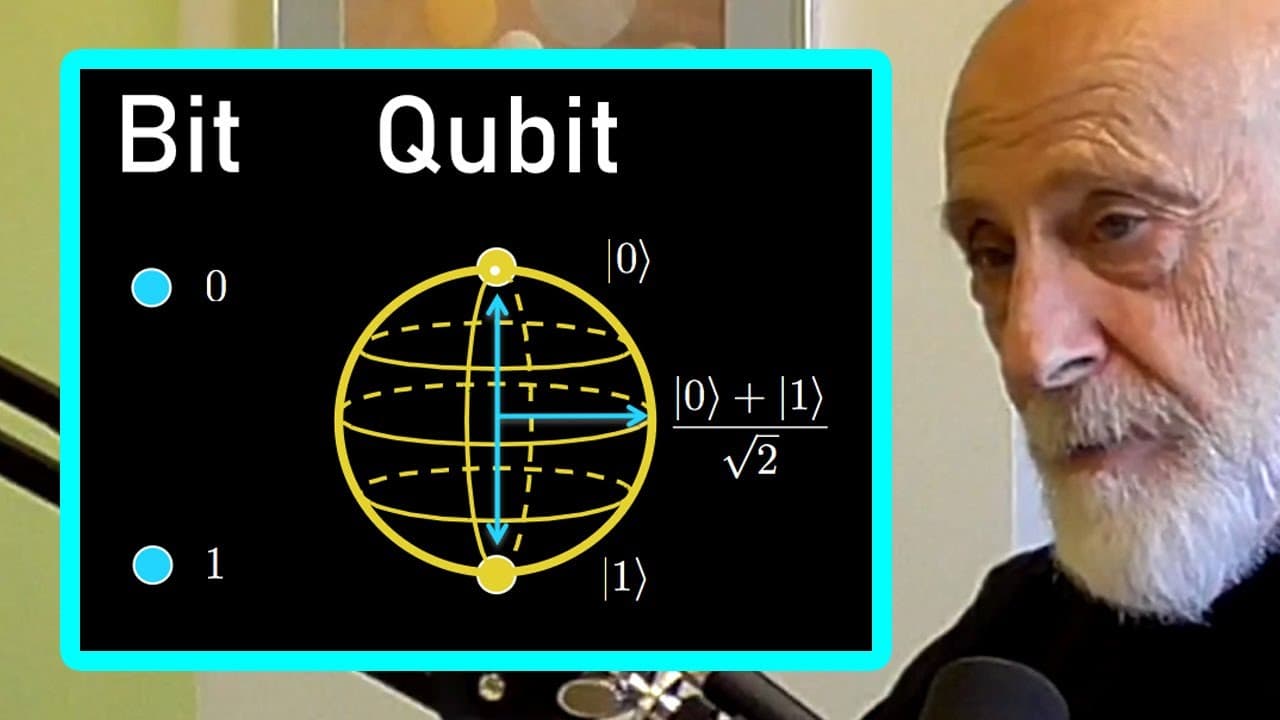
Quantum computers have the ability to simulate and understand complex quantum systems that are difficult to study classically, making them valuable in fields like chemistry, solid-state physics, and quantum gravity.
Transcript
my mind as far as I can tell the great power of quantum computers will actually be to simulate quantum systems if you're interested in a certain quantum system and it's too hard to simulate classically you simply build a version of the same system you build a version of it you build a model of it that's actually functioning as the system you run it... Read More
Key Insights
- 🔬 Quantum computers will have a significant impact on simulating quantum systems, allowing for the manipulation and measurement of these systems in controlled circumstances. This will enhance our understanding of fundamental laws and applied sciences in various fields such as chemistry, solid-state physics, and quantum field theory.
- 🔐 While factoring large numbers may seem unrelated to quantum mechanics, it is one of the key applications of quantum computers. However, there are numerous other quantum systems like black holes, which have many degrees of freedom and share similarities with large quantum computers.
- 🧠 Neuroscientists generally believe that the brain functions classically rather than utilizing quantum principles like entanglement and superposition. However, the debate regarding the true nature of the brain is ongoing, and further research is required to determine if it operates as a quantum system.
- 🌌 Black holes represent a fundamental quantum system that is vastly different from the brain. Studying the physics of black holes can provide insights into the functioning of quantum systems on a large scale, and this knowledge can potentially inform our understanding of intermediate-sized systems like the brain.
- 🧪 Materials that we work with, such as topological insulators and superconductors, are composed of quantum systems. These materials exhibit macroscopic properties that heavily rely on quantum mechanics. The study of these materials requires the application of quantum tools and techniques.
- 📚 Quantum computers' greatest advantage lies in their ability to simulate and analyze quantum systems, enabling researchers to explore scenarios that are difficult or impossible to achieve with real systems. This provides opportunities to test theories and make discoveries about the behavior of small-scale quantum systems.
- 🔄 Real systems have limitations when it comes to manipulation, change, and measurement. Quantum computers overcome these limitations and offer greater flexibility in understanding and experimenting with quantum systems. ⏰ While quantum computers can simulate quantum systems slower than real systems, the ability to change, manipulate, and measure them in various ways compensates for the slower pace. This allows for detailed exploration and analysis of quantum systems at their lowest levels and fundamental laws.
Install to Summarize YouTube Videos and Get Transcripts
Explore YouTube Video Summarizer or Get YouTube Transcript Extractor
Questions & Answers
Q: How can quantum computers be used to study quantum systems?
Quantum computers have the ability to simulate and replicate quantum systems, allowing researchers to manipulate and measure them to gain valuable insights and understanding that would be difficult to achieve through classical methods. By building a functioning model of the system, researchers can run simulations and experiment with different scenarios to explore its behavior.
Q: Why are quantum computers valuable in understanding quantum systems at the lowest level?
Real quantum systems have limitations - they cannot be easily modified or manipulated, and experiments on them are constrained. In contrast, quantum computers offer the flexibility to slow down, poke into, and modify quantum systems in ways that are not possible with real systems. This allows for a deeper understanding and exploration of the fundamental laws governing quantum systems at their lowest level.
Q: What are the potential applications of quantum computers in various fields?
Quantum computers can find applications in fields such as chemistry, solid-state physics, quantum gravity, and quantum field theory. These systems often involve complex equations that are challenging to solve through traditional methods. By building simulations of these systems on a quantum computer, researchers can gain insights, make measurements, and study various phenomena to further advancements in these fields.
Q: What is the relationship between large quantum computers and black holes?
The physics of large quantum computers and large quantum black holes are found to be similar in some ways. This relationship is utilized to study black holes and understand their properties. By leveraging the understanding and similarities between the physics of large quantum systems, researchers can apply their knowledge to different areas, such as neuroscience, and potentially gain insights into macro-level systems like the human brain.
Q: Is the human brain a quantum system?
Neuroscientists generally believe that the brain functions classically, without intrinsic quantum mechanical systems. While there is no concrete evidence either way, some scientists hold a romantic idea that the brain could be a quantum system. However, the prevailing belief is that the brain operates based on classical principles and does not make use of the special features of quantum mechanics, such as entanglement and superposition.
Summary & Key Takeaways
-
Quantum computers can simulate quantum systems that are too complex to study classically.
-
They allow researchers to manipulate and measure these simulated systems, providing valuable insights and knowledge.
-
Quantum computers can have applications in various fields, such as chemistry, solid-state physics, and quantum gravity.
Read in Other Languages (beta)
Share This Summary 📚
Summarize YouTube Videos and Get Video Transcripts with 1-Click
Try YouTube Summary with ChatGPT & Claude or YouTube Transcript Generator
Explore More Summaries from Lex Fridman 📚






Summarize YouTube Videos and Get Video Transcripts with 1-Click
Try YouTube Summary with ChatGPT & Claude or YouTube Transcript Generator