How to Succeed in Your Internal Medicine Rotation
TL;DR
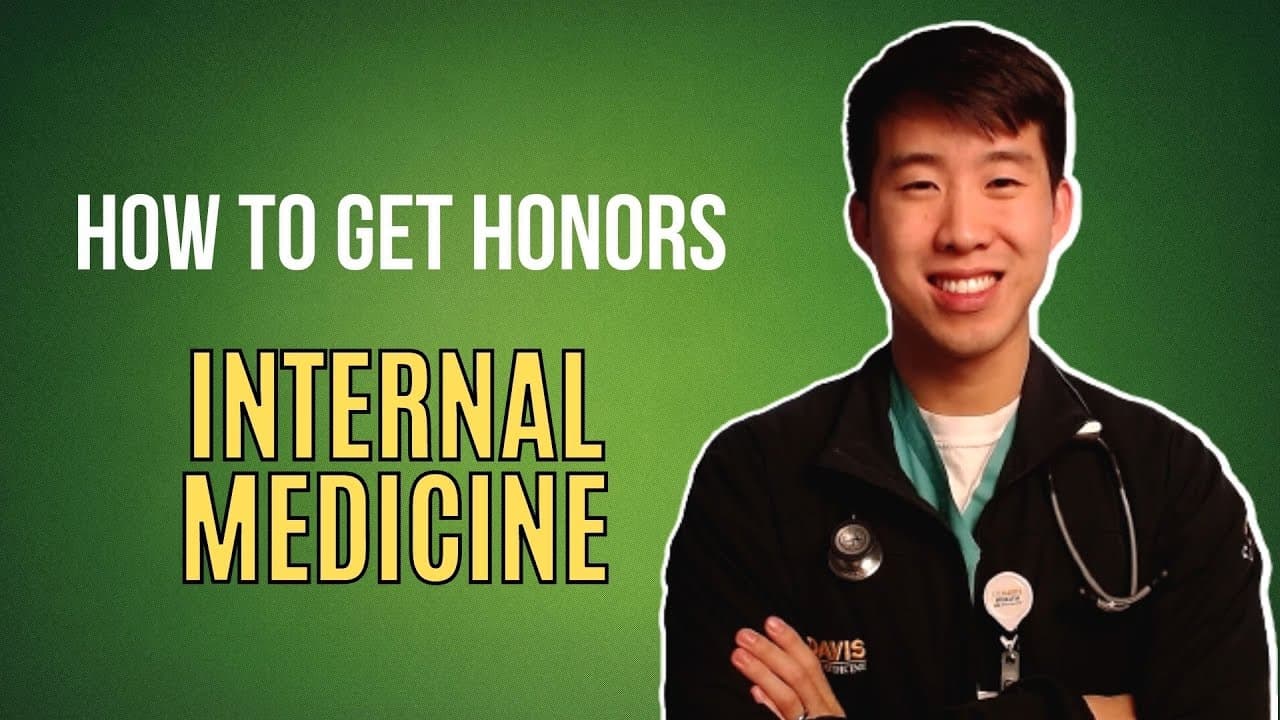
To excel in your internal medicine rotation, focus on high-yield topics like atrial fibrillation, acute coronary syndrome, and cirrhosis. Master patient interactions by asking about their hobbies and perform thorough medication reconciliation to assist your team. Understand key concepts such as the CHADS-VASc score for stroke risk and the classification of acute coronary syndrome based on troponin levels.
Transcript
Read and summarize the transcript of this video on Glasp Reader (beta).
Key Insights
- Building rapport with patients can be enhanced by asking about hobbies, which may also yield useful information.
- Medication reconciliation is crucial for internal medicine due to the high volume of medications patients take.
- Atrial fibrillation is a common condition with stroke as a major complication; the CHADS-VASc score estimates stroke risk.
- Acute coronary syndrome is classified into unstable angina, NSTEMI, and STEMI, differentiated by troponin levels.
- COPD management includes oxygen supplementation and nicotine cessation, with specific goals for oxygen saturation.
- Cirrhosis complications include hepatic encephalopathy and ascites; lactulose is used for treating encephalopathy.
- Diabetes management in hospitals focuses on insulin, avoiding most oral medications due to potential side effects.
- Hyponatremia requires careful assessment of volume status and osmolality to determine the correct treatment approach.
Install to Summarize YouTube Videos and Get Transcripts
Explore YouTube Video Summarizer or Get YouTube Transcript Extractor
Questions & Answers
Q: What is the significance of asking patients about their hobbies?
Asking patients about their hobbies is significant because it helps build rapport and trust, demonstrating genuine interest in their lives. This question can also reveal vital information about their lifestyle and social history, which can aid in tailoring their medical care. Additionally, understanding a patient's hobbies can provide insights into their mental and emotional well-being, which is crucial for holistic care.
Q: Why is medication reconciliation important in internal medicine?
Medication reconciliation is important in internal medicine because patients often take multiple medications, increasing the risk of drug interactions and errors. By thoroughly reviewing a patient's medication list upon admission, healthcare providers can ensure continuity of care and prevent adverse events. This process is especially crucial in internal medicine, where complex cases often require precise medication management to achieve optimal outcomes.
Q: What are the complications of atrial fibrillation?
Atrial fibrillation can lead to significant complications, with stroke being the most critical. The irregular heart rhythm can cause blood clots to form in the atria, which may travel to the brain and result in a stroke. Another complication is rapid ventricular response (RVR), which can cause hemodynamic instability and exacerbate heart failure symptoms. Proper management of atrial fibrillation is essential to mitigate these risks and improve patient outcomes.
Q: How is acute coronary syndrome classified?
Acute coronary syndrome (ACS) is classified into three categories: unstable angina, non-ST elevation myocardial infarction (NSTEMI), and ST elevation myocardial infarction (STEMI). The primary differentiator among these is the presence of troponin elevation, which indicates myocardial injury. Unstable angina does not show elevated troponin levels, whereas NSTEMI and STEMI do, with STEMI also presenting with characteristic ST-segment elevations on an ECG.
Q: What treatments reduce mortality in COPD?
In COPD, the two treatments that have been shown to reduce mortality are oxygen supplementation and smoking cessation. Oxygen therapy is crucial for patients with significant hypoxemia, as it can improve survival and quality of life. Smoking cessation is equally important, as it halts the progression of the disease and reduces the risk of associated complications. These interventions are vital components of comprehensive COPD management.
Q: What is the treatment for hepatic encephalopathy in cirrhosis?
The primary treatment for hepatic encephalopathy in cirrhosis is lactulose, which is titrated to achieve two to three bowel movements per day. Lactulose works by reducing the absorption of ammonia in the gut, thereby lowering blood ammonia levels and alleviating encephalopathy symptoms. In cases where lactulose alone is insufficient, rifaximin may be added to enhance treatment efficacy. Effective management of hepatic encephalopathy is crucial for improving patient outcomes.
Q: Why are oral diabetes medications often held during hospitalization?
Oral diabetes medications are often held during hospitalization due to potential side effects and the risk of hypoglycemia. Hospitalized patients may have altered renal function, making them more susceptible to complications like lactic acidosis with metformin. Additionally, changes in diet and activity levels can impact blood glucose control, increasing the risk of hypoglycemia when using sulfonylureas. Insulin is typically continued as it allows for more precise glucose management.
Q: How is hyponatremia assessed and treated?
Hyponatremia is assessed by first evaluating the patient's serum osmolality to determine if it is hypertonic, isotonic, or hypotonic. The most common type, hypotonic hyponatremia, is further assessed by evaluating the patient's volume status. Treatment varies based on the underlying cause: hypovolemic hyponatremia is treated with fluid replacement, euvolemic with fluid restriction, and hypervolemic with diuretics. Correct diagnosis is crucial, as inappropriate treatment can worsen the condition.
Summary & Key Takeaways
-
The video provides a detailed guide for third-year medical students to excel in their internal medicine rotation, covering high-yield questions and essential knowledge areas.
-
Key medical conditions such as atrial fibrillation, acute coronary syndrome, COPD, and cirrhosis are discussed with a focus on diagnostic criteria and treatment strategies.
-
Practical tips for patient interaction, medication reconciliation, and understanding complex medical concepts are shared to help students achieve honors in their rotation.
Read in Other Languages (beta)
Share This Summary 📚
Summarize YouTube Videos and Get Video Transcripts with 1-Click
Try YouTube Summary with ChatGPT & Claude or YouTube Transcript Generator
Explore More Summaries from Conan Liu, M.D. 📚



Summarize YouTube Videos and Get Video Transcripts with 1-Click
Try YouTube Summary with ChatGPT & Claude or YouTube Transcript Generator