What Are the Worst Businesses to Start in 2024?
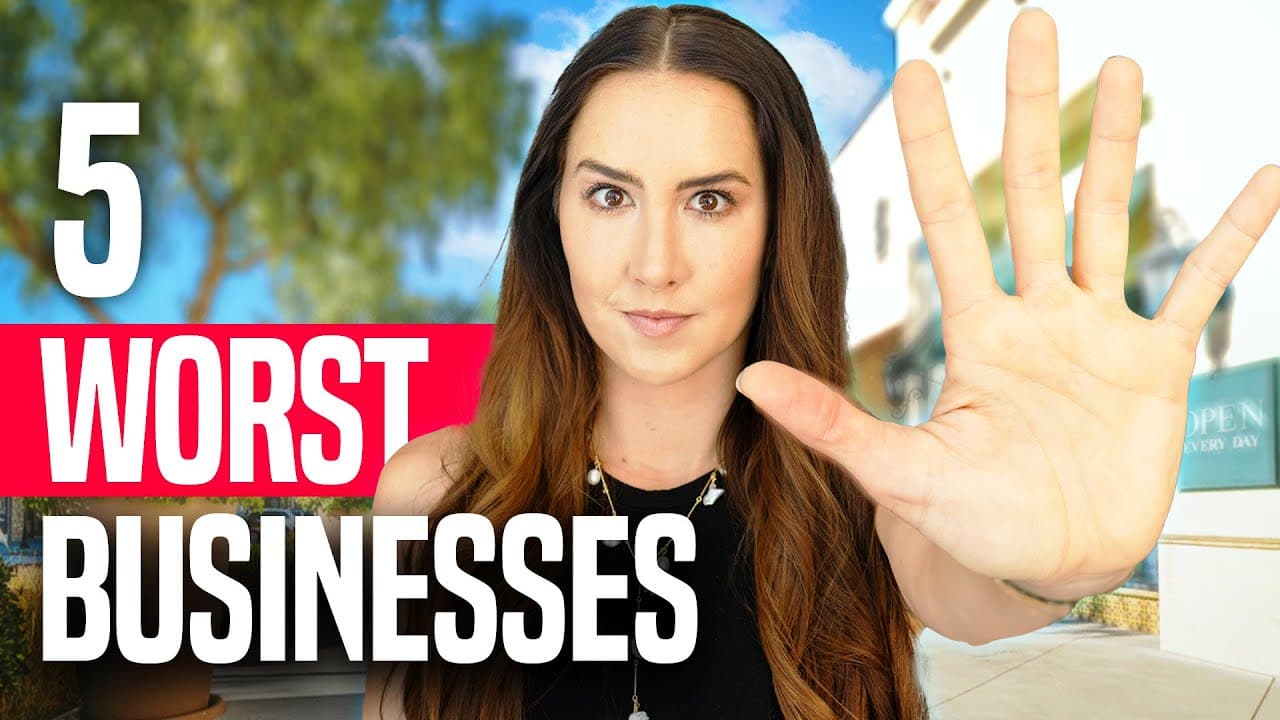
TL;DR
The video outlines five business types to avoid in 2024: ATM routes, Amazon FBA, retail stores, restaurants, and hotels. Each has drawbacks like high competition, low profit margins, and operational complexities. The speaker emphasizes the importance of choosing ventures with favorable probabilities for success, as these businesses often fail to provide a satisfactory return on investment.
Transcript
studies show that these five businesses are the worst businesses to start or buy the game of Entrepreneurship is so ugly for an entrepreneur it's War out there the worst investment I ever made how long do you have numbers don't lie so we're breaking down why these businesses are great if you like losing money or what I call the anti- invvy ugly and... Read More
Key Insights
- ATM routes are unprofitable due to low transaction volume and high operational costs.
- Amazon FBA poses risks like platform dependency and intense competition from copycat products.
- Retail stores struggle with high overhead costs, inventory management, and market saturation.
- Restaurants face high failure rates, low profit margins, and fierce competition.
- Hotels demand intensive management and often have negative profit margins without tax advantages.
- Choosing businesses with favorable success probabilities is crucial for long-term profitability.
- Operational complexities in these businesses increase the likelihood of failure.
- Avoiding these business types can save entrepreneurs from significant financial losses.
Install to Summarize YouTube Videos and Get Transcripts
Explore YouTube Video Summarizer or Get YouTube Transcript Extractor
Questions & Answers
Q: Why are ATM routes considered a bad business investment?
ATM routes are considered a bad investment because they typically generate low transaction volumes, resulting in insufficient revenue to cover operational costs. The average ATM only performs a few transactions daily, and the profit margins are too thin to justify the initial investment. Additionally, the payback period can extend beyond seven years, making it an unattractive option for those seeking quicker returns.
Q: What risks are associated with Amazon FBA businesses?
Amazon FBA businesses face significant risks, including platform dependency, where Amazon can alter or terminate seller accounts based on policy changes or fake reviews. The market is flooded with competition, often from low-cost copycat products. Sellers also have limited control over pricing and customer data, making it difficult to maintain a competitive edge and secure long-term profitability.
Q: What challenges do retail stores face that make them poor business choices?
Retail stores face challenges such as high overhead costs, including rent and inventory expenses, which can strain cash flow. The need to purchase inventory upfront without guarantee of sales adds financial risk. Market saturation and the shift towards online shopping further reduce the viability of physical retail stores, making it difficult to achieve sustainable profitability.
Q: Why do restaurants have high failure rates?
Restaurants have high failure rates due to low profit margins, often between 3-5%, and intense competition in saturated markets. Operational complexities, such as managing inventory, spoilage, and fluctuating demand, add to the risk. High initial investment costs and the difficulty in maintaining consistent customer traffic make it challenging for restaurants to succeed long-term.
Q: What makes hotels a challenging business to operate?
Hotels are challenging due to their asset-heavy nature, requiring significant investment in property and ongoing maintenance. They often operate at negative profit margins without tax advantages like depreciation. The need for 24/7 management, unpredictable demand, and reliance on low-wage labor further complicate operations, making it difficult to achieve consistent profitability.
Q: What is the importance of selecting businesses with favorable probabilities?
Selecting businesses with favorable probabilities is crucial because it increases the likelihood of achieving a positive return on investment. Businesses with high success rates and manageable operational risks provide more predictable and stable financial outcomes. Entrepreneurs should focus on ventures with clear paths to profitability and sustainable growth to minimize financial losses.
Q: How does market saturation affect the success of a business?
Market saturation affects business success by increasing competition, which can drive down prices and profit margins. In saturated markets, businesses struggle to differentiate themselves and attract customers, leading to reduced sales and revenue. This environment makes it difficult for new entrants to gain a foothold and for existing businesses to maintain profitability, ultimately increasing the risk of failure.
Q: Why is operational complexity a concern for these businesses?
Operational complexity is a concern because it increases the likelihood of errors and inefficiencies, which can lead to financial losses. Businesses with complex operations require more resources for management, oversight, and problem-solving. This complexity can strain financial and human resources, making it difficult to maintain smooth operations and achieve profitability, especially in competitive or low-margin industries.
Summary & Key Takeaways
-
ATM routes are not profitable due to low transaction numbers and high operational costs, making it difficult to break even.
-
Amazon FBA is risky because of platform control, competition, and the risk of product imitation, making it hard to sustain a profitable business.
-
Retail stores, restaurants, and hotels face high failure rates and operational challenges, often leading to financial losses.
Read in Other Languages (beta)
Share This Summary 📚
Summarize YouTube Videos and Get Video Transcripts with 1-Click
Try YouTube Summary with ChatGPT & Claude or YouTube Transcript Generator
Explore More Summaries from Codie Sanchez 📚

Summarize YouTube Videos and Get Video Transcripts with 1-Click
Try YouTube Summary with ChatGPT & Claude or YouTube Transcript Generator