Is It Too Late to Stop Greenland's Ice Sheet Melting?
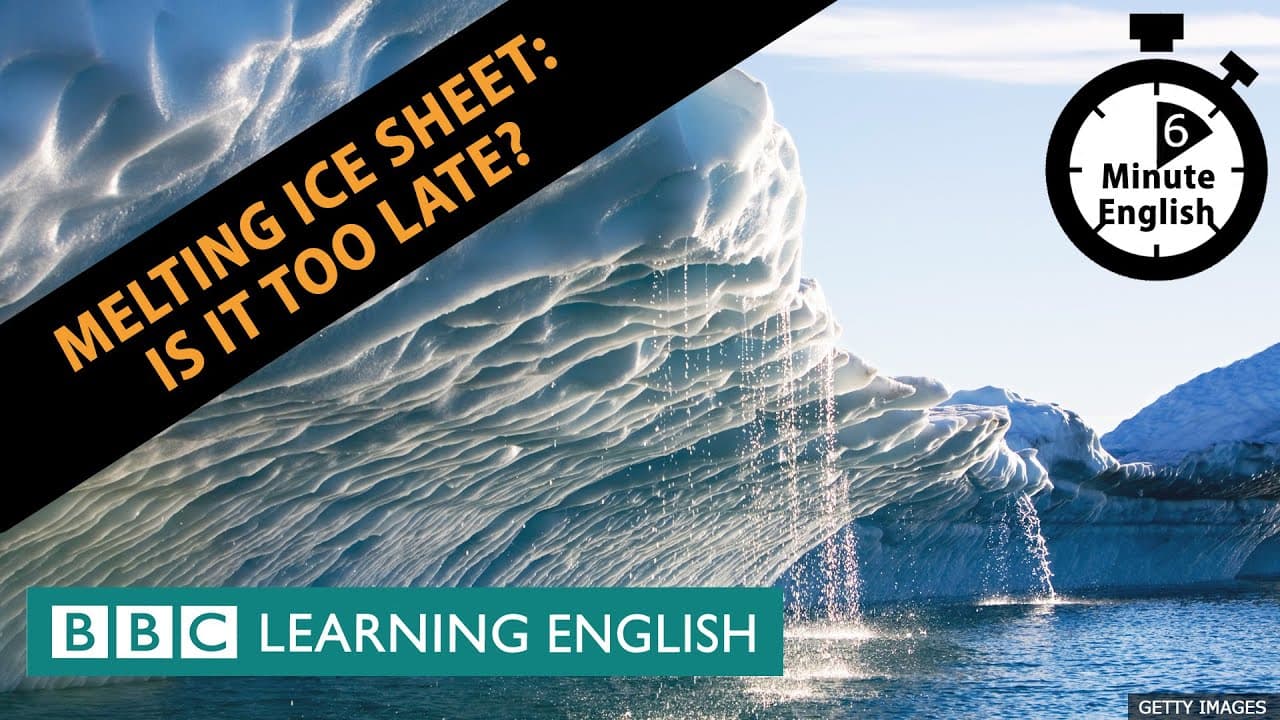
TL;DR
It may not be too late to slow the melting of Greenland's ice sheet, despite concerns about reaching a tipping point. Scientists estimate that around 500 gigatonnes of ice are melting annually, highlighting the urgent need for collective action to curb global warming and mitigate climate change impacts.
Transcript
Hello. This is 6 Minute English from BBC Learning English. I'm Neil. And I'm Georgina. With no end in sight to the coronavirus pandemic, many people can't wait for the year 2020 to end. But with the coronavirus dominating the newspaper headlines, attention has moved away from an equally serious global issue which has quietly been getting worse - cl... Read More
Key Insights
- The coronavirus pandemic has overshadowed the equally pressing issue of climate change, particularly the melting of polar ice.
- August 2020 recorded extreme temperatures and significant ice melting, with Greenland's ice sheet losing vast amounts of ice.
- Greenland's ice sheet, three times the size of Texas, contains enough water to raise sea levels by 6 meters.
- The balance between ice formation and melting has been disrupted since 2000, leading to a potential tipping point.
- A tipping point is defined as a moment when changes become unstoppable, raising concerns about irreversible climate impacts.
- Despite the alarming situation, scientists believe human actions can still slow down the rate of ice loss.
- The current rate of ice melt in Greenland is approximately 500 gigatonnes annually, equivalent to giant ice cubes the size of small towns.
- Collective action and behavioral changes are crucial to mitigate climate change and prevent further environmental damage.
Install to Summarize YouTube Videos and Get Transcripts
Explore YouTube Video Summarizer or Get YouTube Transcript Extractor
Questions & Answers
Q: What major issue has been overshadowed by the coronavirus pandemic?
The coronavirus pandemic has overshadowed the pressing issue of climate change, particularly the significant melting of polar ice. This environmental concern has been quietly worsening, with August 2020 witnessing record temperatures and ice melting in Greenland and the Arctic.
Q: How large is Greenland's ice sheet and what impact could its melting have?
Greenland's ice sheet is three times the size of Texas and almost 2 kilometers thick. Locked within it is enough water to raise global sea levels by 6 meters, posing a significant threat to coastal areas worldwide if melting continues at the current rate.
Q: What is the significance of reaching a tipping point in climate change?
A tipping point in climate change signifies a moment when changes become irreversible, making it impossible to revert to previous conditions. Scientists are concerned that the disruption in the balance of ice formation and melting in the Arctic may indicate reaching such a point.
Q: Can human actions still influence the rate of ice melt in Greenland?
Yes, scientists believe that human actions can still influence the rate of ice melt in Greenland. By reducing greenhouse gas emissions and implementing sustainable practices, it is possible to slow down the rate of ice loss and mitigate the impacts of climate change.
Q: What is the current rate of ice melt in Greenland?
The current rate of ice melt in Greenland is approximately 500 gigatonnes annually. This immense loss is equivalent to giant ice cubes the size of small towns, highlighting the urgent need for action to address the underlying causes of global warming.
Q: What message does the episode convey about the climate situation?
The episode conveys a message of hope, emphasizing that despite the alarming situation, it is not too late for collective action to slow down the rate of ice loss. It encourages individuals and societies to take proactive measures to combat climate change and prevent further environmental damage.
Q: What vocabulary related to climate change is taught in the episode?
The episode teaches vocabulary related to climate change, including terms like 'ice sheet,' 'glacier,' 'in balance,' 'tipping point,' 'rate,' and the idiom 'throw your hands up.' These terms help listeners understand the scientific concepts discussed in the context of the Arctic ice melt.
Q: What is the role of collective action in addressing climate change?
Collective action plays a crucial role in addressing climate change. By working together, societies can implement policies and practices that reduce greenhouse gas emissions, promote sustainability, and mitigate the impacts of global warming, ultimately slowing down the rate of ice melt and preserving the environment.
Summary & Key Takeaways
-
The 6 Minute English episode discusses the impact of climate change on the Arctic, highlighting the significant melting of Greenland's ice sheet. With scientists concerned about reaching a tipping point, the episode stresses the importance of action to slow down global warming.
-
The episode explains the concept of a tipping point, where changes become irreversible, and emphasizes the need for collective efforts to control the rate of ice melt. It also provides vocabulary related to climate change, aiding English learners.
-
Listeners learn about the alarming rates of ice melt in Greenland, with 500 gigatonnes of ice melting annually. Despite the dire situation, the episode conveys a message of hope, encouraging proactive measures to combat climate change.
Read in Other Languages (beta)
Share This Summary 📚
Summarize YouTube Videos and Get Video Transcripts with 1-Click
Try YouTube Summary with ChatGPT & Claude or YouTube Transcript Generator
Explore More Summaries from BBC Learning English 📚

Summarize YouTube Videos and Get Video Transcripts with 1-Click
Try YouTube Summary with ChatGPT & Claude or YouTube Transcript Generator