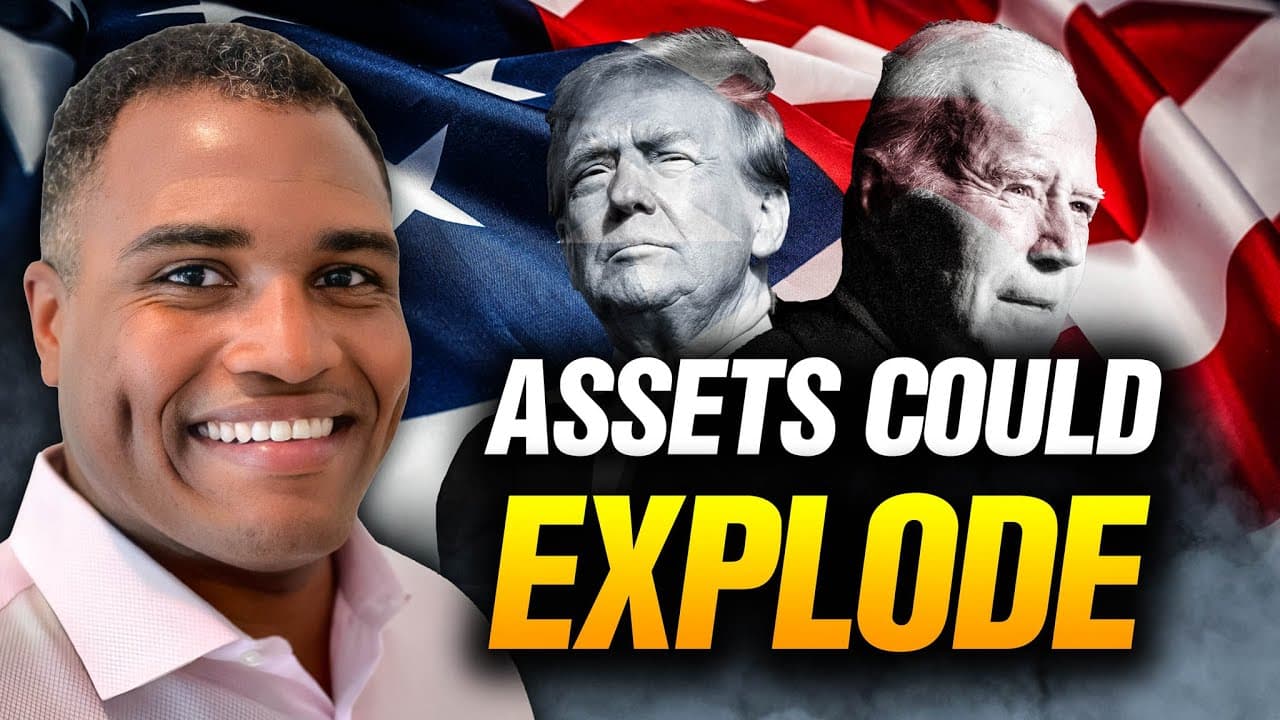
Presidential Election Could Make Assets EXPLODE
TL;DR
Darius Young discusses the implications of the Q2 quarterly refunding announcement on market liquidity and asset prices.
Transcript
all right guys bang bang I've got Darius here with me uh Darius secretary young is in charge she got a big big responsibility but she's making some pretty important decisions lately um let's just dive into Q2 quarterly refunding announcement and what does that mean and why is she doing this yeah appreciate you P thanks for having me back on the sho... Read More
Key Insights
- 🪡 The quarterly refunding announcement is critical for understanding treasury borrowing and market financing needs.
- 🪐 A projected increase in net marketable borrowing reflects tightening liquidity, impacting how investors react in asset markets.
- 🤑 Secretary Yellen's strategies emphasize managing the money supply effectively, aiming to balance between liquidity and inflation control.
- 😮 The rising treasury general account balance indicates a potential shift towards more restrictive financial conditions that could dampen investor confidence.
- 🥺 Historical trends suggest that stock performance typically strengthens in the months leading up to an election but is subject to inflation pressures.
- ✳️ Sticky inflation may pose risks for treasury policies, complicating market dynamics as responses fluctuate between dovish and hawkish stances.
- 🥺 The relationship between bond market conditions and overall investor liquidity is vital; a tightening could lead to adverse asset price reactions.
Install to Summarize YouTube Videos and Get Transcripts
Explore YouTube Video Summarizer or Get YouTube Transcript Extractor
Questions & Answers
Q: What is the purpose of the quarterly refunding announcement?
The quarterly refunding announcement helps investors understand treasury's projected net financing estimates, detailing how much borrowing the treasury anticipates for the current and upcoming quarters. It outlines key information regarding the treasury general account balance and provides essential projections that market participants rely on for investment decisions.
Q: How does Secretary Yellen’s strategy impact market liquidity?
Yellen’s approach, particularly in increasing net marketable borrowing, seeks to manage liquidity in a way that can either support or drain market liquidity. By targeting the bill market, it aims to facilitate a flow of funds into the economy, but recent trends suggest a shift towards tighter financial conditions, which could lead to diminished liquidity and a more cautious investment atmosphere.
Q: What implications does the rise in treasury general account balances have for investors?
An increase in the treasury general account balance may signal the treasury's intent to tighten financial conditions, which could lead to lower liquidity in the markets. Investors need to be aware that this could affect asset prices negatively, as a tightening environment generally creates more challenging conditions for investments and financial growth.
Q: How does inflation affect treasury policies and investor confidence?
Persistent inflation can pressure treasury policies to evolve towards tighter financial conditions, impacting the overall investor outlook. As inflation trends influence government debt strategies, investors may react by adjusting their portfolios to mitigate risks related to rising costs, potentially leading to volatility in asset markets.
Q: What are the potential outcomes for asset markets ahead of the election cycle?
Asset markets traditionally see bullish conditions as elections approach, particularly with a Democratic incumbent; however, sticky inflation could alter this trend. Understanding how treasury policies adapt in response to inflation and economic signals will be crucial in predicting potential market movements leading up to the elections.
Q: Why is it crucial to monitor the bill market specifically during this period?
The bill market has been a focal point due to its ability to provide the treasury with favorable financing conditions. With most net marketable borrowing occurring here, the treasury's actions in this segment can significantly affect liquidity and investor behavior across broader markets, making it essential for market participants to closely monitor these developments.
Q: What factors are emerging as dominant drivers of asset prices currently?
The interplay between sticky inflation in the U.S. economy and treasury financing policies is becoming increasingly important. These elements, combined with fluctuating global liquidity and political dynamics, are affecting how investors position their portfolios, challenging previous bullish narratives and creating room for potential market adjustments.
Summary & Key Takeaways
-
The quarterly refunding announcement reveals treasury's net financing estimates, impacting both current and future market borrowing forecasts for investors.
-
Secretary Yellen's strategies signal a potential tightening of financial conditions, influencing liquidity and asset market dynamics as inflation and economic factors evolve.
-
Changes in treasury policies could affect asset prices significantly, especially with the upcoming election cycle, stirring investor sentiments regarding inflation and growth.
Read in Other Languages (beta)
Share This Summary 📚
Summarize YouTube Videos and Get Video Transcripts with 1-Click
Try YouTube Summary with ChatGPT & Claude or YouTube Transcript Generator
Explore More Summaries from Anthony Pompliano 📚

Summarize YouTube Videos and Get Video Transcripts with 1-Click
Try YouTube Summary with ChatGPT & Claude or YouTube Transcript Generator