Why Rick Can't Kill God (Season 5 Episode 2 Breakdown)
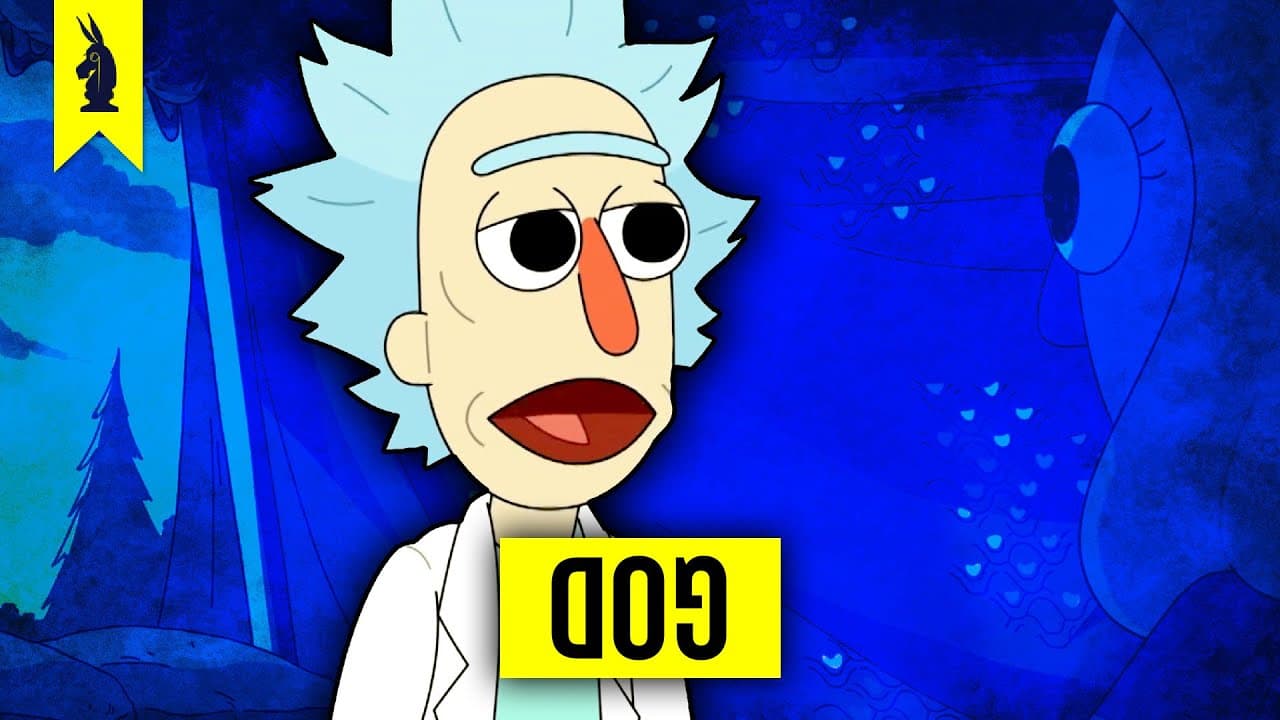
TL;DR
Episode two of Rick and Morty delves into themes of nihilism and the complex relationship between creator and creation.
Transcript
this video is brought to you by surfsharkvpn what's up guys it's definitely not a decoy michael to talk clones gods and pinocchio jerry's the fifth season of rick and morty is already off to a great start offering the mind-bending hilarity we've come to expect from our favorite geriatric genius okay let's go that's his magic ocean horn but episode ... Read More
Key Insights
- 😒 The episode cleverly uses humor to explore deep philosophical themes centered around religion and nihilism.
- 🪩 Rick's actions mirror traditional notions of a god, creating a paradox of wanting to be god-like while rejecting religious faith.
- 🛟 The creation of decoys serves as a metaphor for humanity's need for guidance and meaning, typical of religious belief systems.
- ❓ Jacques Lacan's concepts explain the persistence of religious ideation in human consciousness despite overt atheism.
- ❓ The character dynamics explore themes of authority, responsibility, and the consequences of creation.
- 😒 The use of dark humor in depicting the family's demise accentuates the show's critique of conventional morality.
- 💠 The episode cleverly critiques modern secularism while acknowledging the necessity of belief in shaping human identity and values.
Install to Summarize YouTube Videos and Get Transcripts
Explore YouTube Video Summarizer or Get YouTube Transcript Extractor
Questions & Answers
Q: What central theme does this episode of Rick and Morty address?
The central theme revolves around the interplay of nihilism and godhood, reflected through Rick’s actions in creating decoys and their subsequent embrace of religion. The episode interrogates the necessity of belief systems in human life, even in a seemingly atheistic worldview.
Q: How does the narrative relate Rick's actions to religious structures?
Rick’s creation of decoys serves as a critique of the divine creator trope, as these beings quickly begin to formulate their own religious ideologies, mimicking Rick's actions. This reflects the idea that humanity's drive to create belief systems persists, regardless of their origins, indicating an intrinsic connection to religion.
Q: What role does Jacques Lacan's philosophy play in understanding the episode?
Lacan's theories highlight that the unconscious belief in a higher power remains ingrained in the psyche, even after rejecting religion. This concept elucidates Rick's god-like behaviors toward his decoys as a manifestation of an inherent need for structure, thus complicating his nihilistic perspective.
Q: Why does the episode suggest that Rick cannot kill God?
The episode concludes that Rick cannot kill God because he embodies god-like qualities himself. His nihilism clashes with an unconscious drive to create and govern, establishing that concepts of divinity and belief are integral to human experience and perception.
Q: What does the family's demise illustrate in terms of Rick's character?
The family’s repeated deaths underscore the consequences of Rick's reckless pursuit of knowledge and exploration without regard for morality or the impact on loved ones. This encapsulates Rick's existential struggle as he confronts the limits of his intelligence and the weight of his choices.
Q: How do the decoys develop their own religion around Rick?
The decoys, created to protect Rick's family, form their own societal structure, revering Rick despite their resentments. This evolution reflects an inherent trait of humanity to seek purpose and connection, highlighting that shared beliefs can emerge even from unrecognized parental figures.
Summary & Key Takeaways
-
The episode features Rick and Morty confronting themes of godhood, where Rick's creator role parallels religious dynamics while remaining grounded in nihilism.
-
Rick's creation of decoys raises questions about religion and purpose, as these entities adopt beliefs, suggesting an unconscious drive towards divinity.
-
French psychoanalyst Jacques Lacan's theories are explored, positing that even in a secular worldview, humanity harbors an innate need for structure provided by a "higher power."
Read in Other Languages (beta)
Share This Summary 📚
Summarize YouTube Videos and Get Video Transcripts with 1-Click
Try YouTube Summary with ChatGPT & Claude or YouTube Transcript Generator