What Is the Relationship Between Money and Happiness?
TL;DR
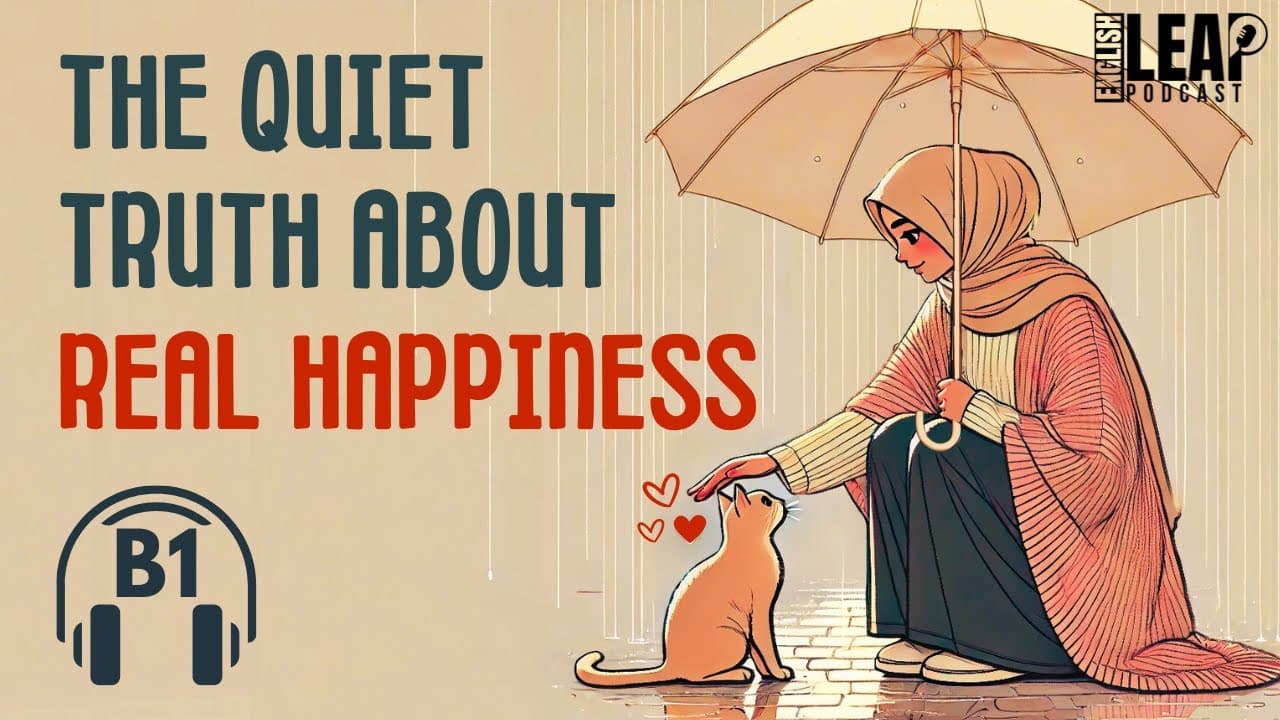
The relationship between money and happiness is complex; wealth doesn't equal contentment or personal worth. True happiness often comes from appreciating small moments and personal connections rather than material success. Additionally, time should be valued as a vital resource, encouraging individuals to reflect on what 'enough' means for their lives.
Transcript
Read and summarize the transcript of this video on Glasp Reader (beta).
Key Insights
- The podcast introduces a new system categorizing episodes by difficulty level, making it easier for listeners to choose content appropriate for their English proficiency.
- Money is not the sole determinant of happiness; personal value and contentment come from within, not from financial status.
- Comfort can be bought with money, but true contentment arises from personal connections and appreciating what one already has.
- Time is a crucial, often overlooked form of wealth; how we choose to spend our time significantly impacts our happiness.
- The podcast encourages listeners to reflect on what 'enough' means to them, suggesting that peace comes from knowing when to stop pursuing more.
- Generosity, even in small acts, can enhance one's sense of purpose and happiness, illustrating the power of giving over receiving.
- The pursuit of status through material possessions can lead to burnout, whereas using resources to create time for meaningful experiences is more fulfilling.
- Real happiness is found in small, everyday moments, which are often overshadowed by the pursuit of larger goals and material success.
Install to Summarize YouTube Videos and Get Transcripts
Explore YouTube Video Summarizer or Get YouTube Transcript Extractor
Questions & Answers
Q: How does the podcast help listeners choose appropriate content?
The podcast has introduced a new system that categorizes episodes by difficulty level—beginner, intermediate, and advanced. This allows listeners to select episodes that match their current English proficiency, ensuring that the content is both challenging and comprehensible, enhancing their learning experience.
Q: What is the main message about the relationship between money and happiness?
The main message is that while money can provide comfort, it does not necessarily lead to happiness. True contentment comes from personal connections, appreciating what one already has, and understanding one's own worth, which is not defined by financial success or material possessions.
Q: Why does the podcast emphasize the concept of 'enough'?
The podcast emphasizes 'enough' to encourage listeners to reflect on their personal definition of sufficiency. It suggests that peace and happiness come from knowing when to stop the pursuit of more, whether in terms of money, success, or possessions, and recognizing what truly brings joy and contentment in life.
Q: How does the podcast suggest listeners handle the concept of time?
The podcast suggests that listeners view time as a precious form of wealth, urging them to spend it wisely. It encourages reflection on how time is spent, advocating for prioritizing meaningful experiences and personal connections over the relentless pursuit of success and material gain.
Q: What role does generosity play in the podcast's discussion?
Generosity is highlighted as a powerful source of happiness and fulfillment. The podcast suggests that small acts of kindness and giving, even when resources are limited, can enhance one's sense of purpose and connection with others, ultimately expanding one's happiness rather than diminishing it.
Q: What is the significance of small, everyday moments according to the podcast?
The podcast underscores the importance of small, everyday moments as the true source of happiness. It encourages listeners to be present and appreciate the simple joys of life, such as a loved one's laughter or a quiet morning, which are often overlooked in the pursuit of larger goals and material success.
Q: How does the podcast address the issue of burnout?
The podcast addresses burnout by cautioning against the relentless pursuit of status and material possessions. It suggests using resources to create time for rest and meaningful experiences, advocating for a balanced approach that prioritizes well-being over the accumulation of wealth and status.
Q: What vocabulary concepts are introduced in the podcast?
The podcast introduces vocabulary concepts such as contentment, worth, restless, clutter, presence, chase, enough, burnout, and drift away. These words are used to help listeners not only improve their English but also gain clarity on their own relationship with money and happiness.
Summary & Key Takeaways
-
This podcast episode, aimed at B1 English learners, explores the nuanced relationship between money and happiness, emphasizing that financial wealth does not equate to personal value or contentment.
-
Listeners are encouraged to consider time as a valuable resource, reflecting on how they spend it and questioning societal norms that equate success with material wealth.
-
The episode highlights the importance of small acts of generosity and finding happiness in everyday moments, rather than constantly seeking more possessions or status.
Read in Other Languages (beta)
Share This Summary 📚
Summarize YouTube Videos and Get Video Transcripts with 1-Click
Try YouTube Summary with ChatGPT & Claude or YouTube Transcript Generator
Explore More Summaries from Speak English With Class 📚






Summarize YouTube Videos and Get Video Transcripts with 1-Click
Try YouTube Summary with ChatGPT & Claude or YouTube Transcript Generator