35. Nucleotide Metabolism 2
TL;DR
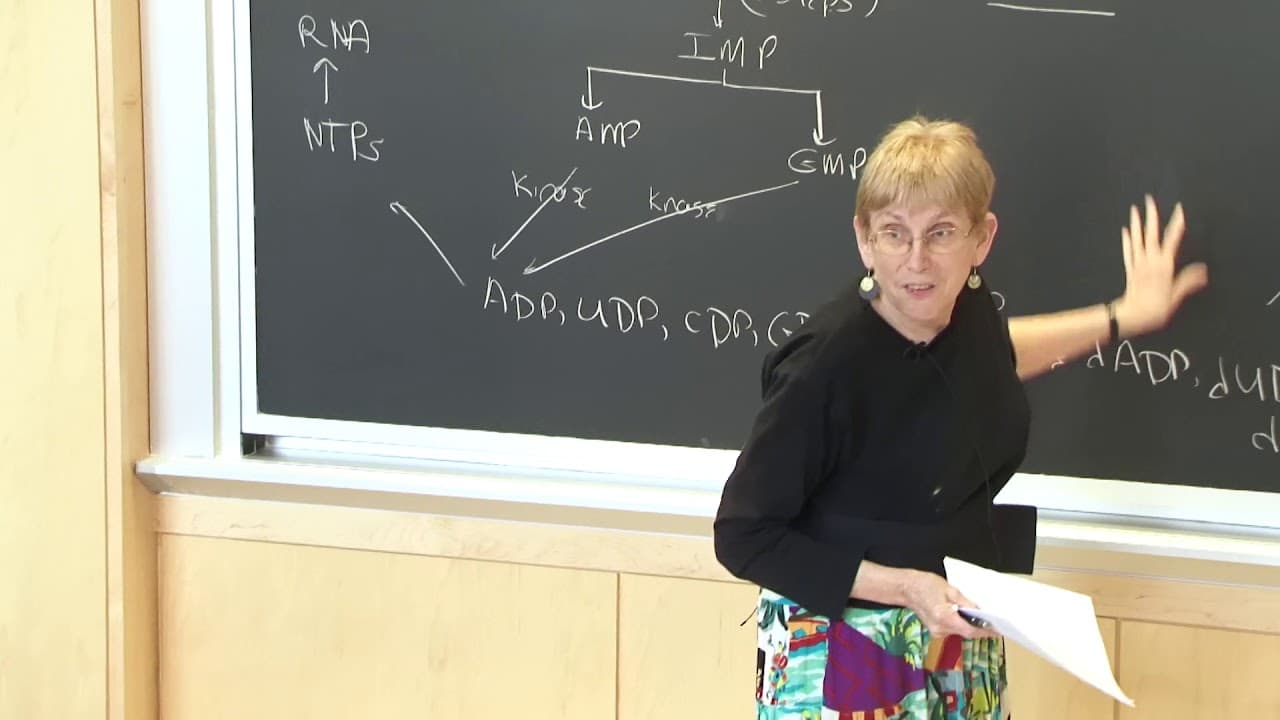
Purine metabolism is a complex pathway involving various enzymes and cofactors to synthesize purine nucleotides, which are essential for DNA and RNA synthesis. The pathway also involves the recycling of purine bases through salvage pathways and the utilization of glutamine as an ammonia donor. The enzymes involved in this pathway exhibit common structural motifs and mechanisms found in other metabolic pathways.
Transcript
NARRATOR: The following content is provided under a Creative Commons license. Your support will help MIT Open Courseware continue to offer high quality educational resources for free. To make a donation or view additional materials from hundreds of MIT courses, visit MIT OpenCourseWare at ocw.mit.edu. JOANNE STUBBE: So what I want to do is finish u... Read More
Key Insights
- ❓ Purine metabolism is a complex pathway that involves the synthesis of purine nucleotides essential for DNA and RNA synthesis.
- 🛟 Glutamine serves as an ammonia donor in purine metabolism, providing the nitrogen required for purine synthesis.
- ❓ Enzymes involved in purine metabolism exhibit common structural motifs and mechanisms found in other metabolic pathways.
- ✋ The channeling of unstable intermediates and the utilization of high-energy intermediates through the ATP grasp family enzymes contribute to the efficiency of purine nucleotide synthesis.
Install to Summarize YouTube Videos and Get Transcripts
Explore YouTube Video Summarizer or Get YouTube Transcript Extractor
Questions & Answers
Q: What is the role of glutamine in purine metabolism?
Glutamine serves as an ammonia donor in purine metabolism, providing the necessary nitrogen for the synthesis of purine nucleotides. The enzyme Pur F utilizes glutamine to generate ammonia, which is then used in the formation of phosphoribosylamine.
Q: How do enzymes in purine metabolism ensure the stability of chemically unstable intermediates?
Enzymes in purine metabolism exhibit channeling of reactive intermediates, allowing for the direct transfer of unstable intermediates between enzymes. This prevents the intermediates from reacting with other molecules or falling apart, ensuring their stability and efficient utilization in the pathway.
Q: What is the significance of the ATP grasp family of enzymes in purine metabolism?
The ATP grasp family of enzymes plays a crucial role in various steps of purine metabolism. These enzymes utilize ATP to phosphorylate substrates and generate high-energy intermediates, facilitating the synthesis of purine nucleotides. The enzymes in this family exhibit common structural motifs and mechanisms, highlighting their evolution and importance in metabolic pathways.
Q: How are purine bases recycled in the purine metabolism pathway?
Purine bases can be recycled through salvage pathways, which involve the conversion of nucleic acid bases or nucleosides into the corresponding nucleotides. This process relies on the enzyme phosphoribosyl pyrophosphate (PRPP) to attach the purine base to the ribose moiety, effectively salvaging the base for nucleotide synthesis.
Summary & Key Takeaways
-
Purine metabolism is a crucial pathway involved in the synthesis of purine nucleotides, which are essential for DNA and RNA synthesis.
-
The pathway involves the utilization of glutamine as an ammonia donor to form phosphoribosylamine, a key intermediate in purine biosynthesis.
-
Enzymes such as amidotransferases and ATP grasp family enzymes play important roles in catalyzing the reactions involved in the pathway.
-
Additionally, the pathway includes salvage pathways for recycling purine bases and the use of folate as a cofactor.
Read in Other Languages (beta)
Share This Summary 📚
Summarize YouTube Videos and Get Video Transcripts with 1-Click
Try YouTube Summary with ChatGPT & Claude or YouTube Transcript Generator
Explore More Summaries from MIT OpenCourseWare 📚


Summarize YouTube Videos and Get Video Transcripts with 1-Click
Try YouTube Summary with ChatGPT & Claude or YouTube Transcript Generator