How News Consumption Affects Mental Health
TL;DR
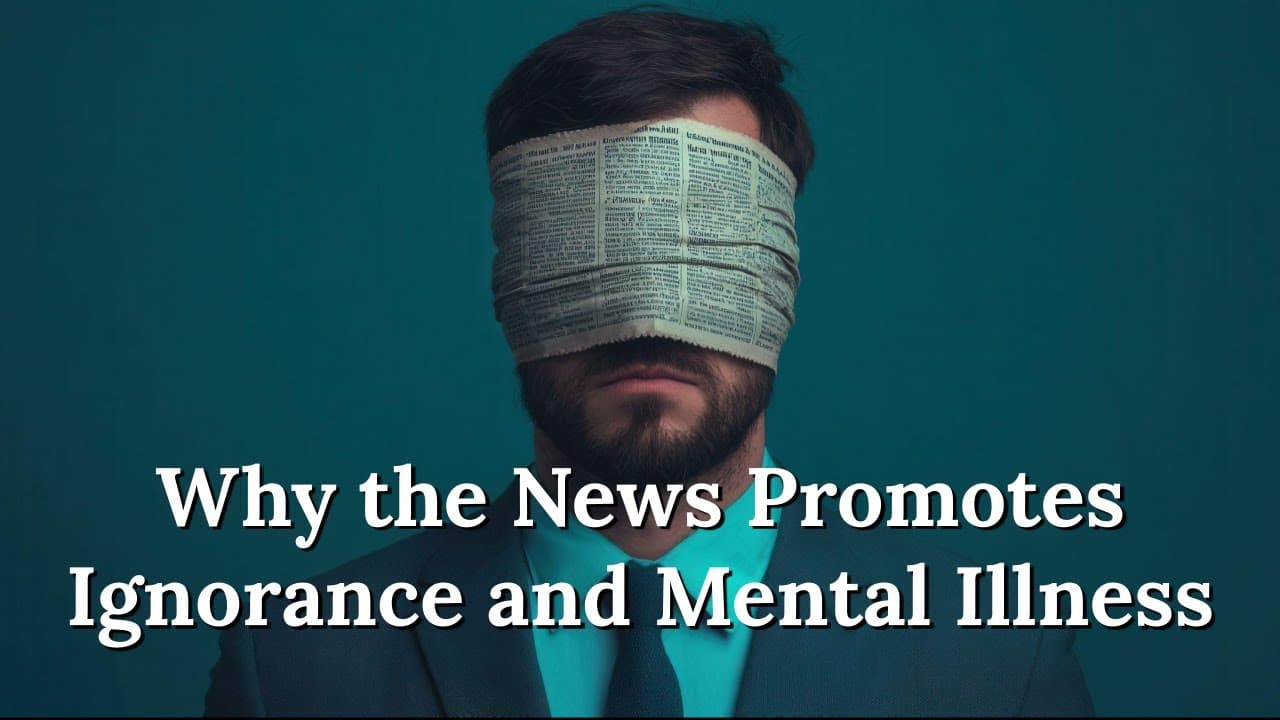
Consuming news regularly can lead to ignorance, stress, and learned helplessness. The news oversimplifies complex issues, promotes biased narratives, and fosters societal polarization. Abstaining from news can improve mental health and decision-making by reducing stress and allowing focus on controllable aspects of life. Long-form content provides a deeper understanding of world events.
Transcript
we post all of our transcripts and galleries of the art we use in the videos at academy of ideas.com news is to the mind what sugar is to the body appetizing easily digestible and extremely damaging most people think that consuming the news makes one an informed citizen who is equipped to form intelligent opinions on social and political issues in ... Read More
Key Insights
- Consuming news fosters ignorance by oversimplifying complex issues and presenting biased narratives.
- News consumption leads to learned helplessness, causing passivity and reduced motivation in personal life.
- The constant stream of negative news increases stress and anxiety, impacting mental and physical health.
- News media often serves the interests of political agendas and corporate advertisers, skewing public perception.
- Abstaining from news can improve concentration, decision-making, and overall quality of life.
- Long-form content like books and documentaries offer more depth and understanding than news outlets.
- The average person consumes 60 news items daily, leading to distraction and decreased attention span.
- Historical social changes occurred without news media, relying instead on books, speeches, and debates.
Install to Summarize YouTube Videos and Get Transcripts
Explore YouTube Video Summarizer or Get YouTube Transcript Extractor
Questions & Answers
Q: How does news consumption affect mental health?
News consumption can negatively impact mental health by increasing stress, anxiety, and learned helplessness. The constant exposure to negative news reports fosters a sense of helplessness and passivity, affecting motivation and emotional well-being. Abstaining from news can help reduce these effects and improve mental clarity.
Q: Why is news consumption said to promote ignorance?
News consumption promotes ignorance by oversimplifying complex issues and presenting them through biased narratives. This reductionist approach fails to capture the intricacies of social, political, and environmental phenomena, leading to a distorted understanding of reality. Consumers are left with a false sense of comprehension.
Q: What is learned helplessness in the context of news consumption?
Learned helplessness in the context of news consumption refers to the passive and demotivated state that arises from constant exposure to distressing news without the ability to effect change. This condition mirrors psychological experiments where subjects, unable to control negative stimuli, become passive and demotivated.
Q: How does the news media's bias affect public perception?
The news media's bias affects public perception by filtering information through political agendas and corporate interests. This manipulation skews public understanding, often presenting a distorted reality that aligns with the interests of those in power, rather than providing unbiased and comprehensive reporting.
Q: Why is abstaining from news consumption recommended?
Abstaining from news consumption is recommended to improve mental well-being, reduce stress, and enhance decision-making. By avoiding the oversimplified and biased narratives of news media, individuals can focus on more meaningful and controllable aspects of life, leading to better mental clarity and understanding.
Q: What alternatives to news consumption are suggested for staying informed?
Alternatives to news consumption include engaging with long-form content such as books, well-researched articles, podcasts, documentaries, and academic journals. These sources provide a more nuanced and in-depth understanding of complex world events, free from the biases and simplifications of traditional news media.
Q: How does news consumption affect attention span and concentration?
News consumption negatively affects attention span and concentration by bombarding individuals with a constant stream of information, leading to perpetual distraction. The overwhelming amount of news items consumed daily diminishes the brain's ability to focus and sustain attention, impacting overall cognitive function.
Q: Can societal change occur without news media?
Yes, societal change can occur without news media, as demonstrated by historical events like the American and French Revolutions. These movements relied on books, speeches, and public debates to inform and inspire change, suggesting that meaningful discourse and action can occur independently of contemporary news outlets.
Summary & Key Takeaways
-
Consuming news can lead to ignorance and mental health issues. It simplifies complex topics, promotes biased views, and fosters societal division. Abstaining from news can improve mental clarity and decision-making. Long-form content provides more depth and understanding.
-
News consumption induces stress and learned helplessness, affecting personal motivation and quality of life. It often serves political and corporate interests, distorting reality. Abstaining from news allows focus on controllable aspects of life, enhancing mental well-being.
-
The news media oversimplifies and biases its reporting, leading to ignorance and societal polarization. Abstaining from news can reduce stress and improve mental health. Long-form content offers a deeper understanding of world events, free from media manipulation.
Read in Other Languages (beta)
Share This Summary 📚
Summarize YouTube Videos and Get Video Transcripts with 1-Click
Try YouTube Summary with ChatGPT & Claude or YouTube Transcript Generator
Explore More Summaries from Academy of Ideas 📚


Summarize YouTube Videos and Get Video Transcripts with 1-Click
Try YouTube Summary with ChatGPT & Claude or YouTube Transcript Generator