How to Implement K Nearest Neighbors Algorithm in Python
TL;DR
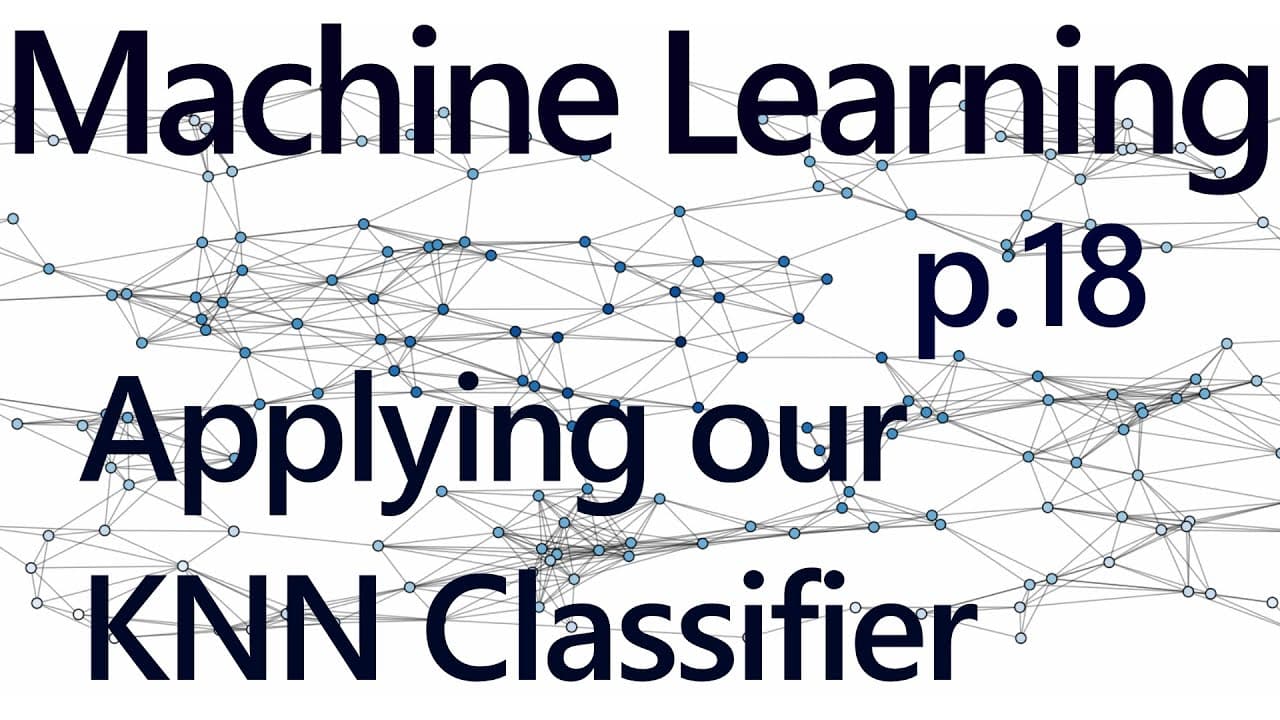
To implement the K Nearest Neighbors (KNN) algorithm in Python, start by cleaning and preparing your dataset, then shuffle and split it into training and test sets. Calculate the accuracy of your KNN implementation and compare it with scikit-learn's results, ensuring your model achieves competitive performance.
Transcript
what is going on everybody Welcome To Part 18 of our machine learning with Python tutorial Series in this tutorial we're going to take the K nearest neighbors algorithm that we wrote it appears to be working and then we're going to be testing it on some real world data and we're going to use that exact same data set that breast cancer data set and ... Read More
Key Insights
- 😉 The K nearest neighbors algorithm is being tested on the breast cancer Wisconsin dataset.
- 💁 The code is cleaned up and unnecessary information is removed.
- 😫 The data is converted to float, shuffled, and split into train and test sets.
- 👌 Dictionaries are populated with the data to prepare for the K nearest neighbors classification.
- ❓ The accuracy of the algorithm is calculated and compared with scikit-learn's accuracy.
- 🏆 The tutorial highlights the need to test custom implementations against established libraries to ensure accuracy.
- 💁 The importance of cleaning up code and removing irrelevant information is emphasized.
Install to Summarize YouTube Videos and Get Transcripts
Explore YouTube Video Summarizer or Get YouTube Transcript Extractor
Questions & Answers
Q: What is the purpose of testing the K nearest neighbors algorithm on real-world data?
The purpose is to evaluate the accuracy of our implementation compared to the scikit-learn library and determine if we get similar results.
Q: Why is it necessary to clean up the code and remove unnecessary information?
Cleaning up the code helps improve readability and removes any clutter that is not relevant to the specific task of testing the algorithm on the breast cancer dataset.
Q: What is the role of the train and test sets in this tutorial?
The train and test sets are used to evaluate the accuracy of the K nearest neighbors algorithm. The algorithm is trained on the train set and then tested on the test set to determine its performance.
Q: How is the accuracy of the K nearest neighbors classifier calculated?
The accuracy is calculated by comparing the predicted class labels from the algorithm with the actual class labels in the test set and calculating the ratio of correct predictions to the total number of predictions.
Summary & Key Takeaways
-
The tutorial focuses on testing the K nearest neighbors algorithm on real-world data, specifically the breast cancer Wisconsin dataset.
-
The code is cleaned up to remove unnecessary information and imported libraries are added.
-
The data is converted to float, shuffled, and split into training and test sets. Dictionaries are then populated with the data.
-
The accuracy of the K nearest neighbors classifier is calculated and compared with scikit-learn's accuracy.
Read in Other Languages (beta)
Share This Summary 📚
Summarize YouTube Videos and Get Video Transcripts with 1-Click
Try YouTube Summary with ChatGPT & Claude or YouTube Transcript Generator
Explore More Summaries from sentdex 📚

Summarize YouTube Videos and Get Video Transcripts with 1-Click
Try YouTube Summary with ChatGPT & Claude or YouTube Transcript Generator