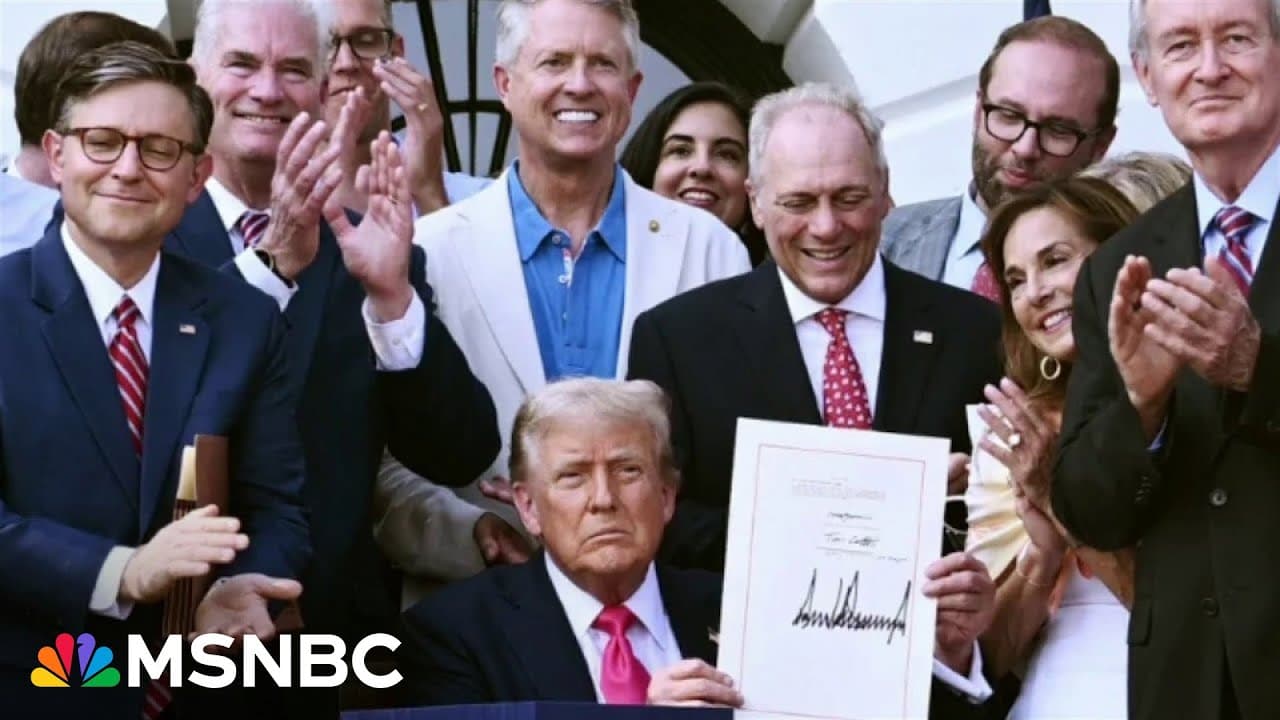
'Deficit reducer'? CBO says Trump-backed bill will BALLOON national debt by $3.4 trillion
TL;DR
CBO estimates Trump's bill will raise debt by $3.4 trillion.
Transcript
Read and summarize the transcript of this video on Glasp Reader (beta).
Key Insights
- The Congressional Budget Office projects Trump's bill will increase the national debt by $3.4 trillion, contradicting its initial portrayal as a deficit reducer.
- The bill could potentially lead to 10 million people losing their health insurance, raising concerns about its impact on public health.
- A CNN poll indicates that 61% of Americans view the bill unfavorably, suggesting significant public disapproval.
- Republicans often criticize the CBO's findings, questioning their accuracy and the real impact of the bill.
- The bill's effects are unlikely to be fully felt until after the 2026 midterm elections, complicating its political ramifications.
- Democrats have been successful in framing the bill negatively, which could influence voter perceptions leading up to the midterms.
- Republicans may face challenges in communicating the bill's benefits, especially since some positive impacts may not be immediately apparent.
- The lapse of extended Obamacare subsidies and potential healthcare premium increases could hurt Republicans in upcoming elections.
Install to Summarize YouTube Videos and Get Transcripts
Explore YouTube Video Summarizer or Get YouTube Transcript Extractor
Questions & Answers
Q: What does the Congressional Budget Office estimate about Trump's bill?
The Congressional Budget Office estimates that Trump's bill will add $3.4 trillion to the national debt. Despite being presented as a deficit reducer, the CBO's analysis suggests a significant increase in debt, which has become a point of contention among policymakers and the public. This estimate challenges the bill's original intent and raises concerns about its long-term fiscal impact.
Q: How might the bill impact health insurance coverage?
The bill could potentially result in 10 million people losing their health insurance. This anticipated outcome has sparked concerns about the bill's implications for public health and access to healthcare services. The loss of coverage could disproportionately affect vulnerable populations, leading to increased scrutiny and criticism from both policymakers and the public.
Q: What is the public perception of the bill according to recent polls?
A recent CNN poll indicates that 61% of Americans view the bill unfavorably. This negative perception suggests widespread public disapproval and poses a challenge for Republicans in terms of garnering support for the bill. The unfavorable view may influence political dynamics and voter behavior in upcoming elections, particularly the 2026 midterms.
Q: How have Republicans responded to the CBO's findings?
Republicans have often criticized the CBO's findings, questioning their accuracy and the true impact of the bill. They argue that the CBO's estimates do not fully account for the potential benefits of the bill, such as extended tax cuts. This skepticism reflects broader debates over fiscal policy and the role of independent analyses in shaping legislative outcomes.
Q: What role might the bill play in the 2026 midterm elections?
The bill's effects are unlikely to be fully realized until after the 2026 midterm elections, creating a complex political landscape. Democrats have been successful in framing the bill negatively, which could influence voter perceptions and electoral outcomes. The timing of the bill's impacts presents both challenges and opportunities for political messaging and strategy.
Q: What challenges do Republicans face in communicating the bill's benefits?
Republicans face the challenge of effectively communicating the bill's benefits, as some positive impacts, such as maintaining current tax rates, may not be immediately apparent to the public. This communication gap could hinder their ability to counteract negative perceptions and garner support. Successfully conveying the bill's advantages is crucial for shaping public opinion and electoral prospects.
Q: What are the potential consequences of the lapse of extended Obamacare subsidies?
The lapse of extended Obamacare subsidies could result in a 15% rise in healthcare premiums, which may negatively affect public perception of the bill. This increase in costs could hurt Republicans in upcoming elections, as voters may associate the bill with higher healthcare expenses. Addressing these concerns is essential for mitigating potential electoral fallout.
Q: How might the bill's timing affect voter behavior?
The timing of the bill's impacts, with some negative effects occurring after the 2026 midterms, could influence voter behavior. Voters may base their decisions on immediate outcomes, such as healthcare premium increases, rather than potential long-term benefits. This dynamic underscores the importance of timely and effective communication in shaping public perception and electoral results.
Summary & Key Takeaways
-
The Congressional Budget Office estimates that Trump's recently passed bill will add $3.4 trillion to the national debt, despite being advertised as a deficit reducer. This has raised concerns among deficit hawks who supported it. The bill also risks causing 10 million people to lose their health insurance, adding to public discontent.
-
A CNN poll reveals that 61% of Americans view the bill unfavorably, creating a political challenge for Republicans. The bill's effects are not expected to be fully realized until after the 2026 midterm elections, allowing Democrats to capitalize on public dissatisfaction and potentially sway voter opinions.
-
While some benefits of the bill, like maintaining current tax rates, may not be immediately noticeable, negative impacts such as rising healthcare premiums could influence voter behavior. Republicans face the task of effectively communicating the bill's advantages to mitigate its unfavorable perception and potential electoral consequences.
Read in Other Languages (beta)
Share This Summary 📚
Summarize YouTube Videos and Get Video Transcripts with 1-Click
Try YouTube Summary with ChatGPT & Claude or YouTube Transcript Generator
Explore More Summaries from MSNBC 📚


Summarize YouTube Videos and Get Video Transcripts with 1-Click
Try YouTube Summary with ChatGPT & Claude or YouTube Transcript Generator