What Mindset Do 99% of Successful People Share?
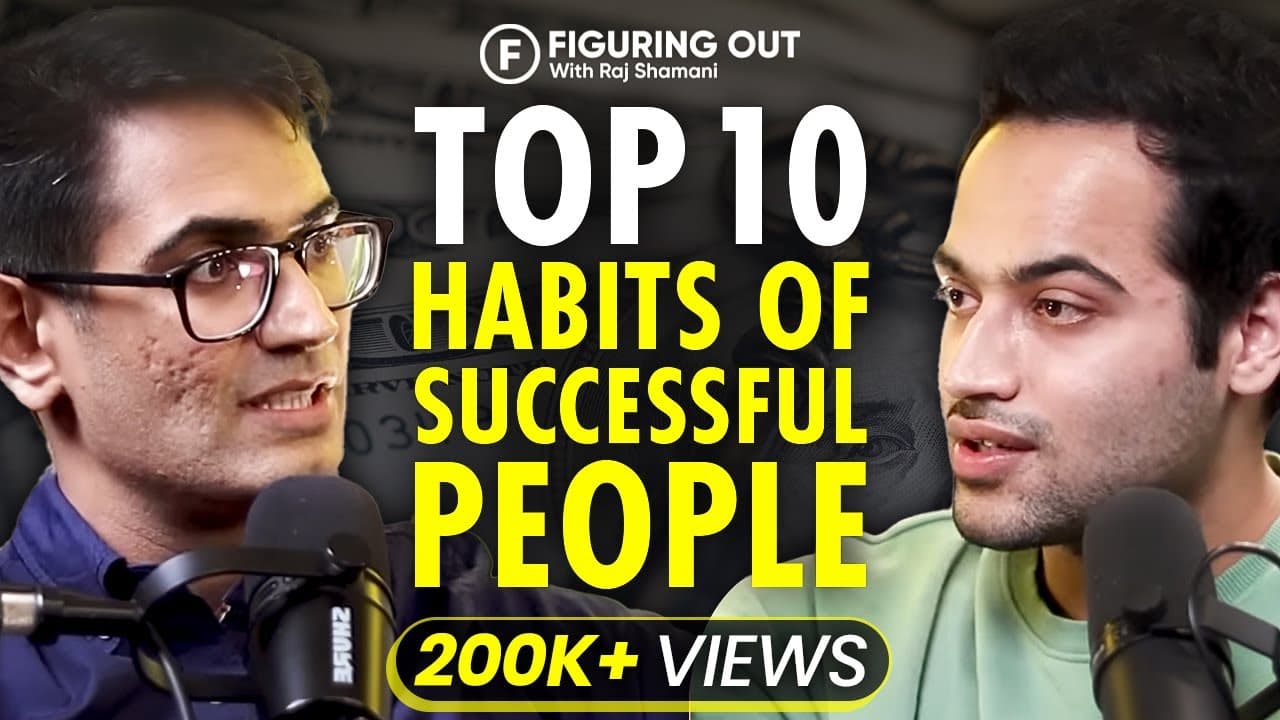
TL;DR
The mindset of successful individuals often centers around the understanding that true wealth is not just monetary, but the freedom to pursue passions without financial constraints. They believe in the concept of wealth creation through entrepreneurship and understand the importance of trust in financial relationships, which can significantly influence their wealth management and growth.
Transcript
one percent of people in this country own one third of the wealth of this country see what do the really wealthy really smart people know they know what they want to do with their time but why there are certain people who are able to make wealth and certain people are not wealthy i was reading on your website the first thing it says that 50 000 cro... Read More
Key Insights
- ♿ The concentration of wealth in India poses questions about economic equity and access to opportunities for wealth creation among the broader population.
- 📼 Wealth is increasingly redefined as the ability to pursue personal passions rather than mere accumulation of physical assets or income.
- ❓ Trust in financial relationships can significantly influence wealth management decisions, encouraging individuals to seek out partners and experts they can rely on.
- 🇮🇳 The evolution from income management to wealth creation signifies a developing economic landscape in India that promises greater entrepreneurial opportunities.
- 💗 Interest in generational wealth is growing, prompting younger individuals to explore unique career paths away from traditional employment frameworks.
- ❓ Understanding and navigating uncertainty is critical for success in wealth accumulation and management, requiring a shift in mindset.
- 🤔 Compounding and the long-term perspective are vital in both financial investments and professional growth, with an emphasis on patience and forward-thinking.
Install to Summarize YouTube Videos and Get Transcripts
Explore YouTube Video Summarizer or Get YouTube Transcript Extractor
Questions & Answers
Q: What does wealth truly represent according to the discussion?
Wealth is defined not just in terms of material possessions like houses and cars but fundamentally represents the freedom to engage in activities that one enjoys and values. It's about being able to spend time meaningfully rather than being tied down by obligatory work, highlighting a more holistic view of what it means to be wealthy.
Q: What are the phases of wealth management discussed in the content?
The discussion outlines three phases of wealth in India: firstly, income management, where individuals live paycheck to paycheck; secondly, wealth management, where savings are made with the intention of returns; and finally, the aspirational wealth creation phase, where individuals focus on creating wealth and entrepreneurial opportunities for broader economic growth.
Q: How does the concept of trust factor into wealth management?
Trust is a pivotal element in wealth management. Wealthy individuals often prioritize finding trustworthy advisors or partners rather than solely seeking expertise in terms of financial strategies. This trust allows them to relinquish micromanagement of their wealth, focusing on broader goals and relationships.
Q: Why do people have a desire to retire early according to the content?
The desire to retire early reflects a broader wish to escape obligations of work, allowing individuals to pursue their passions. However, it is suggested that what they truly desire is the freedom to engage in activities of their choosing, rather than the cessation of work altogether.
Q: How does the discussion differentiate between concentrated and diversified wealth creation?
Concentrated wealth creation involves making high-stakes investments in a few ventures believed to have significant potential returns, while diversified wealth creation entails investing in a broader range of opportunities to mitigate risk. Both approaches can be effective but serve different investor profiles and risk tolerances.
Q: What was mentioned about the generational change in mindset toward wealth?
The conversation highlights a shift in mindset among younger generations, who are increasingly questioning traditional paths to job security and wealth accumulation. This generational change encourages entrepreneurial thinking and a reevaluation of settled norms that previously defined success and financial stability.
Q: What role does storytelling play in wealth creation?
Storytelling is pivotal in wealth creation as it communicates vision and potential future outcomes in a relatable way. Strong narratives about products or business models can inspire investment and commitment, making storytelling a crucial skill for entrepreneurs aiming to attract resources for growth.
Summary & Key Takeaways
-
The discussion articulates how a small percentage of the population controls a significant portion of wealth in India, raising concerns about equity and accessibility.
-
True wealth is characterized by the freedom to pursue personal passions, rather than merely accumulating material possessions, challenging traditional views of wealth.
-
The conversation emphasizes the need for a cultural shift towards wealth creation through entrepreneurial endeavors and the importance of trusting relationships in managing financial resources.
Read in Other Languages (beta)
Share This Summary 📚
Summarize YouTube Videos and Get Video Transcripts with 1-Click
Try YouTube Summary with ChatGPT & Claude or YouTube Transcript Generator
Explore More Summaries from Figuring Out With Raj Shamani 📚

Summarize YouTube Videos and Get Video Transcripts with 1-Click
Try YouTube Summary with ChatGPT & Claude or YouTube Transcript Generator