Which Kanji Are Taught in Tobira Lesson 3 Video 3?
TL;DR
This lesson covers 19 kanji, including characters that mean 'other,' 'both,' 'help,' 'voice,' and 'offer.' It focuses on their readings, both onyomi and kunyomi, while providing practical examples and memory aids to enhance understanding. Understanding the radicals that compose these kanji is crucial for grasping their meanings.
Transcript
Dewa, daisanka no kanji. Ee, daisanka no kanji wa korera no juukyuu no kanji wo shoukai shimasu. Mazu saishou no kanji desu. Kono kanji desu keredomo, imi wa other to iu imi ga arimasu. Sore de desu ne, ee kochira no part, minna mo yoku shittemasu yo ne, kore, person no imi desu. Ee sorekara kono migi gawa nandesu keredomo, kore ma it looks like ya... Read More
Key Insights
- 👹 Kanji characters have various readings, including onyomi (Chinese readings) and kunyomi (Japanese readings).
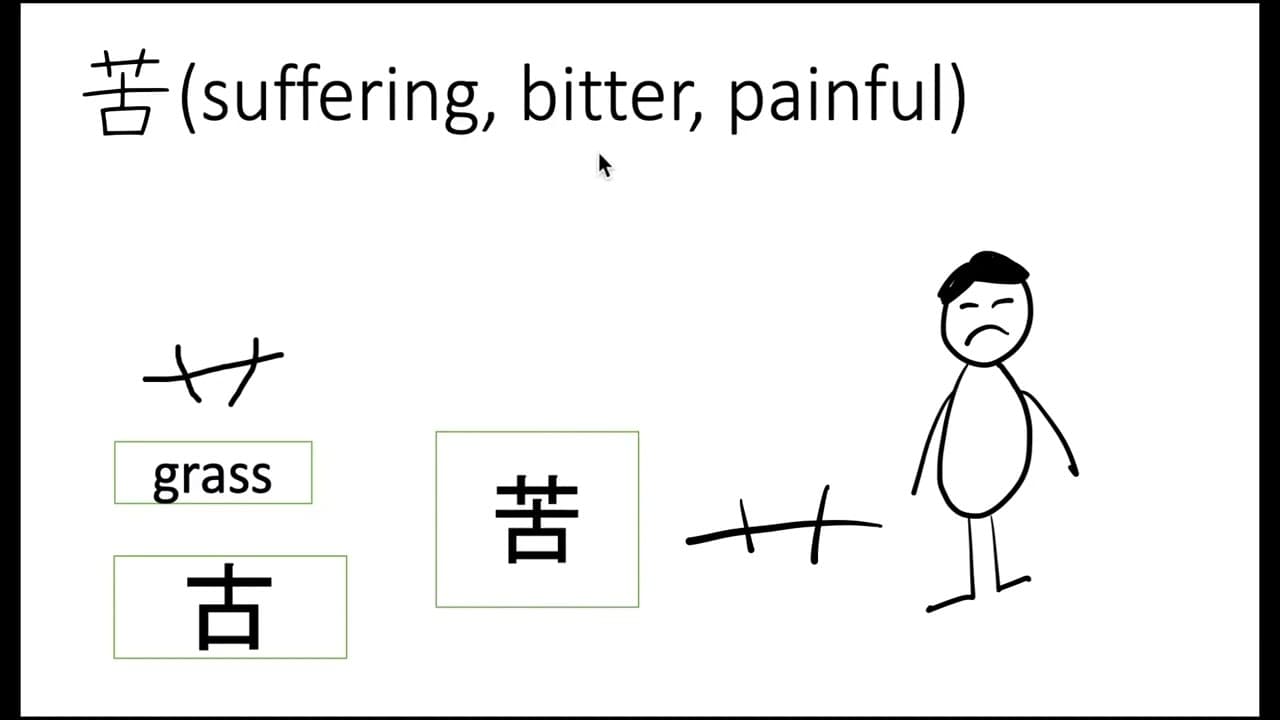
- 🥳 Understanding the radicals and parts that make up kanji characters can help in memorizing their meanings.
- 🧡 Kanji characters have diverse meanings, ranging from simple concepts like "other" and "both" to more complex concepts like "thought" and "help."
- 🫠 Intransitive and transitive pairs of kanji characters have different readings and usage, with examples such as "tokasu" (to melt) and "tokeru" (to melt, intransitive).
- 💁 Kanji characters can be used in combination to form compound words with unique meanings, such as "shudankansen" (outbreak) and "sanrenkyuu" (consecutive holidays).
Install to Summarize YouTube Videos and Get Transcripts
Explore YouTube Video Summarizer or Get YouTube Transcript Extractor
Questions & Answers
Q: What kanji are taught in Video 3 of Tobira Lesson 3?
The lesson introduces 19 kanji in total. The excerpt explains characters meaning “other,” “both,” “present” or “hit,” “help,” “voice,” and “offer” or “accompany,” then begins a character meaning “call” or “invite.”
Q: How is the kanji meaning “other” read and used?
Its on’yomi is ta, and the lesson gives no kun’yomi. Examples include tannin for “stranger” or “other people,” haitatekina for “exclusive,” and sonota for “other” or “etc.”
Q: How is the kanji meaning “both” read and remembered?
Its on’yomi is ryou, and it has no kun’yomi in the lesson. It can be remembered as a scale with both sides balanced, and appears in ryoushin, ryougawa, ryoute, and ryougae suru.
Q: What readings and examples are given for the kanji meaning “present” or “hit”?
Its on’yomi is tou, as in toujitsu, touji, hontou, bentou, and tousensuru. Its kun’yomi is ataru, used in takarakuji ni ataru for winning the lottery; the lesson also gives hiatari, atarimae, and teate suru.
Q: How is the kanji meaning “help,” “rescue,” or “assistance” used?
Its on’yomi is jo, appearing in joshu, jokyouju, jokantoku, jogensuru, enjosuru, and kyuujosuru. These examples cover meanings such as assistant, assistant professor, assistant director, advising, aiding, supporting, and rescuing.
Q: What is the difference between tasukeru and tasukaru?
Tasukeru is transitive and takes an object, as in boku no tomodachi wo tasukete kudasai. Tasukaru is intransitive and means “to be safe” or “to be saved,” as in hontoni tasukarimashita.
Q: How is the kanji for “voice” read and used?
Its on’yomi is sei, used in onsei for “voice” or “sound,” mensei for “fame,” and giseigo for onomatopoeia. Its main kun’yomi is koe, while oogoe means a loud voice.
Q: What readings and words are taught for the kanji meaning “offer” or “accompany”?
Its on’yomi readings include kyou and ku, with examples such as teikyousuru, kyoukyuusuru, and kuyou suru. Its kun’yomi usages include kodomo, otomosuru, and sonaeru, as in offering flowers to the Buddha.
Summary & Key Takeaways
-
The video introduces and explains the meanings and readings of several kanji characters, including "other," "both," "voice," "help," "call," "suffer," "thought," "start," "laugh," and "collect."
-
The content discusses the onyomi and kunyomi readings of these kanji characters and provides examples of their usage in different words and phrases.
-
The video also highlights the importance of understanding the radicals and parts that make up the kanji characters to better grasp their meanings.
Read in Other Languages (beta)
Share This Summary 📚
Summarize YouTube Videos and Get Video Transcripts with 1-Click
Try YouTube Summary with ChatGPT & Claude or YouTube Transcript Generator
Explore More Summaries from MIT OpenCourseWare 📚


Summarize YouTube Videos and Get Video Transcripts with 1-Click
Try YouTube Summary with ChatGPT & Claude or YouTube Transcript Generator