How to De-escalate Conflicts Effectively
TL;DR
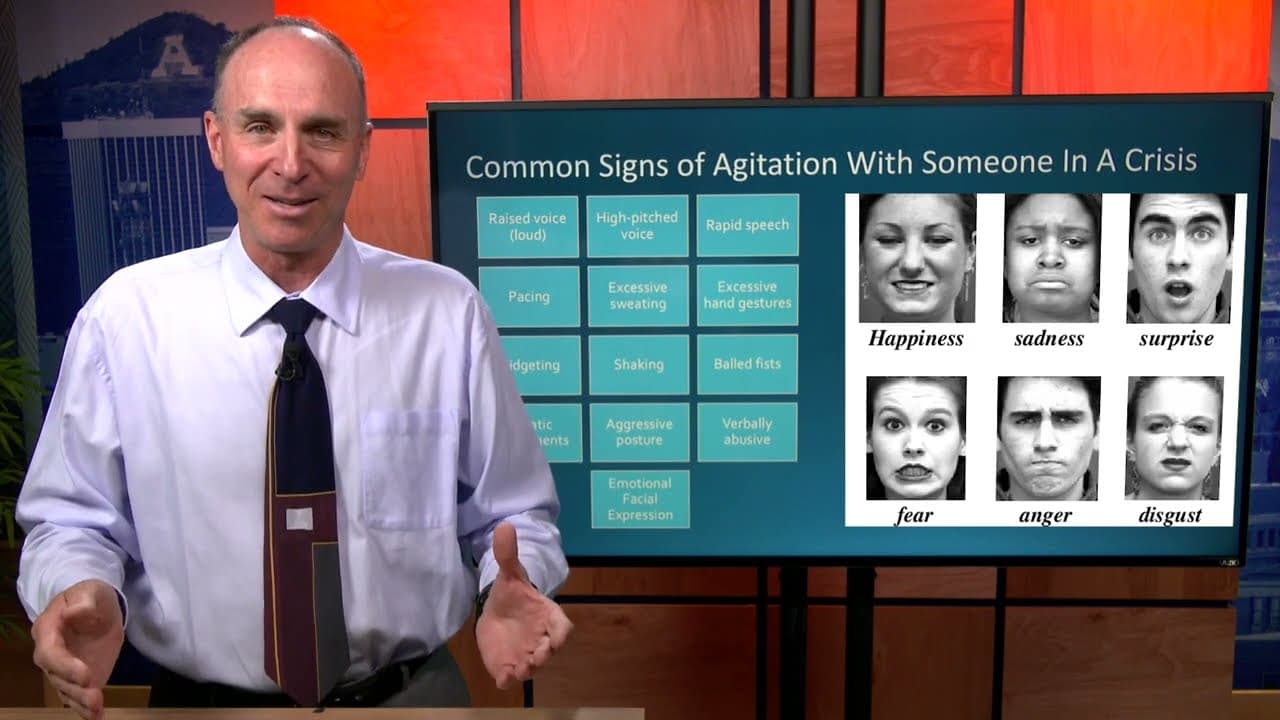
Conflict de-escalation involves managing your own emotions and using specific tactics to reduce tension in heated interactions. Key strategies include maintaining a calm demeanor, actively listening, and validating the other person's feelings. The goal is not to win the argument but to create a safe environment and prevent escalation to physical violence.
Transcript
foreign Hello friends and neighbors! Thank you so much for joining me today! My name is Chris Segrin from the University of Arizona Department of communication and as you can see from this slide, our topic today is going to be conflict de-escalation tactics. What we're going to talk about today is how you turn down the heat when you find yourse... Read More
Key Insights
- Conflict de-escalation focuses on reducing tension rather than winning an argument.
- Emotional fitness is crucial; control your own emotions first.
- Active listening involves paraphrasing and validating the other person's feelings.
- Time is an ally; slowing down interactions can help de-escalate conflicts.
- Perspective-taking is essential; understand the other person's needs and frustrations.
- Non-verbal cues, such as eye contact and nodding, can convey empathy and understanding.
- Avoid judgmental comments and 'why' questions to prevent escalation.
- Maintaining a safe distance and non-threatening body language is important.
Install to Summarize YouTube Videos and Get Transcripts
Explore YouTube Video Summarizer or Get YouTube Transcript Extractor
Questions & Answers
Q: How to effectively de-escalate a conflict?
To effectively de-escalate a conflict, focus on managing your own emotions and using active listening techniques. Validate the other person's feelings, maintain a calm demeanor, and use non-verbal cues like eye contact and nodding to convey empathy. The goal is to reduce tension and create a safe environment, not to win the argument.
Q: What is the role of emotional fitness in conflict de-escalation?
Emotional fitness is crucial in conflict de-escalation as it involves controlling your own emotions before addressing the other person's behavior. By staying calm and composed, you can effectively reduce tension and prevent escalation. Emotional fitness helps you maintain control over your reactions and focus on de-escalation strategies.
Q: Why is active listening important in conflict de-escalation?
Active listening is important in conflict de-escalation because it shows the other person that you are engaged and empathetic. Techniques like paraphrasing and validating feelings help the other person feel understood and respected, reducing their defensiveness. Active listening fosters a collaborative atmosphere, essential for calming heated interactions.
Q: How can time be used as an ally in de-escalating conflicts?
Time can be an ally in de-escalating conflicts by allowing you to slow down interactions and process information more effectively. Taking pauses and avoiding rushed responses can prevent compromised decision-making. By giving yourself and the other person time to think, you create space for calm and rational communication, reducing conflict intensity.
Q: What non-verbal cues are effective in conflict de-escalation?
Effective non-verbal cues in conflict de-escalation include maintaining eye contact, nodding, and using open body language. These cues convey attention, empathy, and understanding, helping to calm the other person. A non-threatening stance and deliberate movements also contribute to a safe and supportive environment, essential for reducing tension.
Q: Why should 'why' questions be avoided in conflict de-escalation?
'Why' questions should be avoided in conflict de-escalation because they can imply judgment or blame, which may escalate tension. Instead, focus on understanding the other person's perspective and validating their feelings without probing or analyzing their actions. This approach fosters a non-confrontational atmosphere, crucial for calming heated interactions.
Q: What are the do's and don'ts in conflict de-escalation techniques?
In conflict de-escalation, do intervene early, show genuine concern, and speak calmly. Control your emotions and maintain a safe distance. Avoid being passive, judgmental, or using 'why' questions. Don't touch or come too close to the person, and refrain from making judgmental comments. Focus on reducing tension and ensuring safety.
Q: How does perspective-taking aid in conflict de-escalation?
Perspective-taking aids in conflict de-escalation by helping you understand the other person's needs, frustrations, and goals. By seeing the situation through their eyes, you can tailor your approach to address their concerns and reduce tension. This empathetic understanding fosters a collaborative atmosphere, essential for calming heated interactions.
Summary & Key Takeaways
-
Conflict de-escalation is about managing your emotions and using specific tactics to reduce tension in heated interactions. Techniques include active listening, validating feelings, and maintaining a calm demeanor. The focus is on creating a safe environment and preventing escalation to physical violence.
-
Key strategies for de-escalation include emotional fitness, perspective-taking, and using time as an ally. By controlling your own emotions and understanding the other person's needs, you can effectively reduce conflict intensity.
-
Non-verbal communication, such as eye contact and nodding, plays a vital role in de-escalation. Avoid judgmental comments and maintain a safe distance to foster a non-threatening atmosphere. The goal is to turn down the heat and ensure safety for everyone involved.
Read in Other Languages (beta)
Share This Summary 📚
Summarize YouTube Videos and Get Video Transcripts with 1-Click
Try YouTube Summary with ChatGPT & Claude or YouTube Transcript Generator
Explore More Summaries from collegeofsbs 📚
Summarize YouTube Videos and Get Video Transcripts with 1-Click
Try YouTube Summary with ChatGPT & Claude or YouTube Transcript Generator