How Social Media Algorithms Influence Language
TL;DR
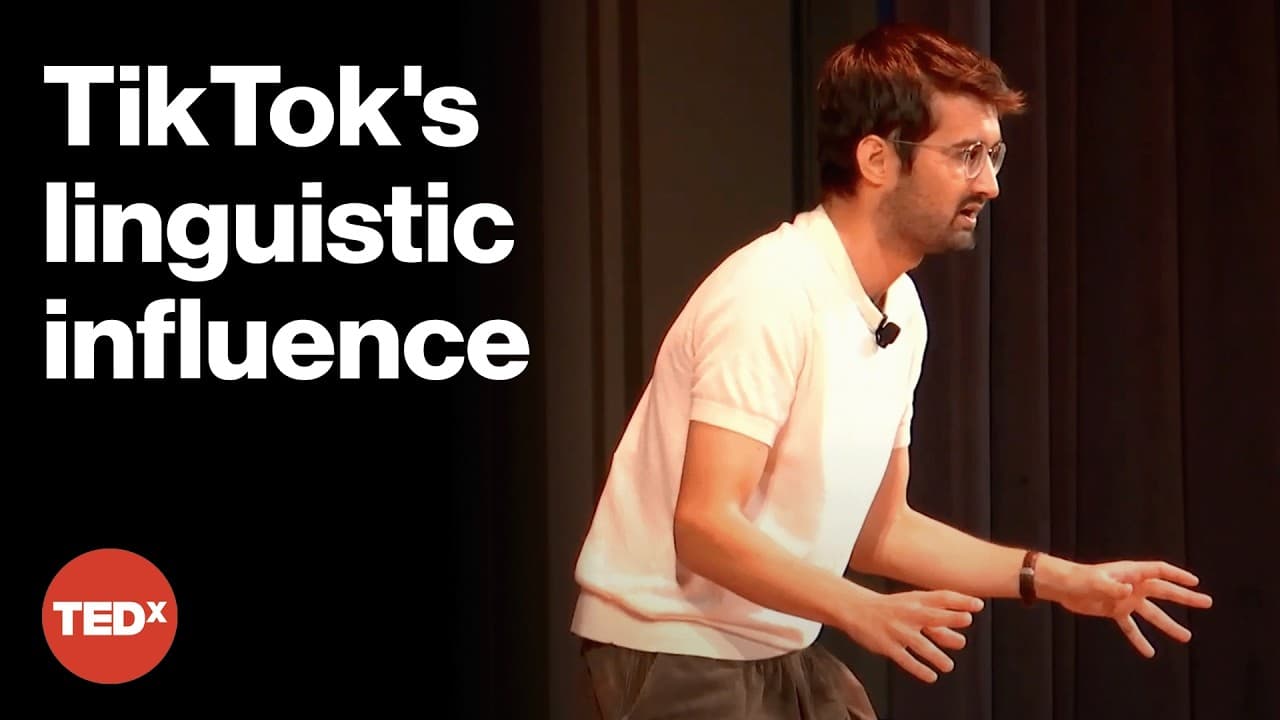
Social media algorithms are reshaping language by introducing new words and altering word usage due to platform censorship and trends. Words like 'unalive' emerge to bypass content restrictions, while viral content popularizes slang rapidly. This process affects identity and cultural expression, often commercializing and diluting original meanings.
Transcript
[Applause] how many of you are familiar with the word un alive as a synonym of kill show of hands okay like 80% of you great now follow-up question how many of you have heard the word on alive being used in person okay I'm getting like 40 50% great those of you that said no clearly aren't Middle School teachers if you spend enough time around seven... Read More
Key Insights
- Social media algorithms drive language change by promoting certain words and phrases.
- Words like 'unalive' arise to circumvent content restrictions on platforms like TikTok.
- Viral content accelerates the spread of slang, making words popular quickly.
- Algorithms encourage hyper-specific identities, like 'cottagecore', to target content and ads.
- The appropriation of slang from marginalized communities, like African-American English, is accelerated by social media.
- Some slang terms, such as 'pilled', have origins in extremist ideologies, yet spread in humorous contexts.
- Language evolves through shared interests and needs within communities, often influenced by digital platforms.
- Awareness of etymology and algorithmic influence helps users understand language's impact on identity and culture.
Install to Summarize YouTube Videos and Get Transcripts
Explore YouTube Video Summarizer or Get YouTube Transcript Extractor
Questions & Answers
Q: How do social media algorithms influence language change?
Social media algorithms influence language change by prioritizing content that drives engagement, leading to the rapid spread of new words and phrases. Algorithms can promote certain slang terms by rewarding repetition and interaction, causing these words to gain popularity quickly. This process alters how language evolves, often commercializing and diluting cultural expressions.
Q: What is the significance of the word 'unalive' on social media?
The word 'unalive' is significant on social media because it emerged as a euphemism to bypass content restrictions on platforms like TikTok, where words like 'kill' might trigger censorship. This adaptation highlights how users creatively navigate platform algorithms, influencing language by introducing new terms that maintain communication while adhering to community guidelines.
Q: Why do viral memes and songs impact language evolution?
Viral memes and songs impact language evolution by rapidly disseminating new slang and phrases to a wide audience. When content becomes popular, algorithms push it to more users, increasing exposure and adoption of the associated language. This process accelerates the spread of terms, embedding them into everyday language and influencing cultural trends and identities.
Q: How does social media commercialization affect language?
Social media commercialization affects language by encouraging the creation of hyper-specific identities, like 'cottagecore', which platforms target with tailored content and ads. This commercial influence can lead to the commodification of cultural expressions, where language becomes a tool for marketing, potentially diluting the original meanings and significance of words and phrases.
Q: What role do marginalized communities play in modern slang?
Marginalized communities, such as African-American and queer cultures, play a crucial role in modern slang by creating terms that reflect their unique experiences and identities. These words often gain popularity online but can be appropriated and commercialized by broader audiences, sometimes losing their original context and significance in the process.
Q: How does the term 'pilled' illustrate language appropriation?
The term 'pilled' illustrates language appropriation by showing how words with extremist origins, like 'blackpilled', become mainstream through humorous or meme contexts. As these terms spread, their original meanings may be obscured, allowing potentially harmful ideologies to infiltrate everyday language under the guise of slang, highlighting the complex dynamics of language evolution.
Q: Why is etymology awareness important in the digital age?
Etymology awareness is important in the digital age because it helps users understand the origins and implications of the words they use, allowing them to recognize the influence of algorithms and commercialization on language. This awareness fosters critical thinking about how language shapes identity and culture, promoting more informed and intentional communication.
Q: What is the future of language in the context of social media?
The future of language in the context of social media involves rapid evolution driven by algorithms and digital trends. While this process can lead to the commercialization and appropriation of cultural expressions, it also reflects the dynamic nature of language change. Users must remain aware of these influences to navigate language's impact on identity and culture responsibly.
Summary & Key Takeaways
-
Social media is a powerful force in changing language, creating new words and altering usage patterns. Algorithms prioritize content that drives engagement, leading to the rapid spread of slang. This process can commercialize identities and dilute cultural expressions, but it also reflects the dynamic nature of language evolution.
-
Words like 'unalive' showcase how language adapts to platform censorship, while viral memes popularize terms like 'Riz' and 'cottagecore'. These trends are not new, echoing historical patterns of language change, but the speed and scale are unprecedented due to digital platforms.
-
While social media can propagate harmful ideologies through language, it also fosters creative expression and community identity. Users should be conscious of how algorithms shape their language and remain aware of the origins and implications of the words they use in digital spaces.
Read in Other Languages (beta)
Share This Summary 📚
Summarize YouTube Videos and Get Video Transcripts with 1-Click
Try YouTube Summary with ChatGPT & Claude or YouTube Transcript Generator
Explore More Summaries from TEDx Talks 📚
Summarize YouTube Videos and Get Video Transcripts with 1-Click
Try YouTube Summary with ChatGPT & Claude or YouTube Transcript Generator