How to Project Standard Deviations in Trading
TL;DR
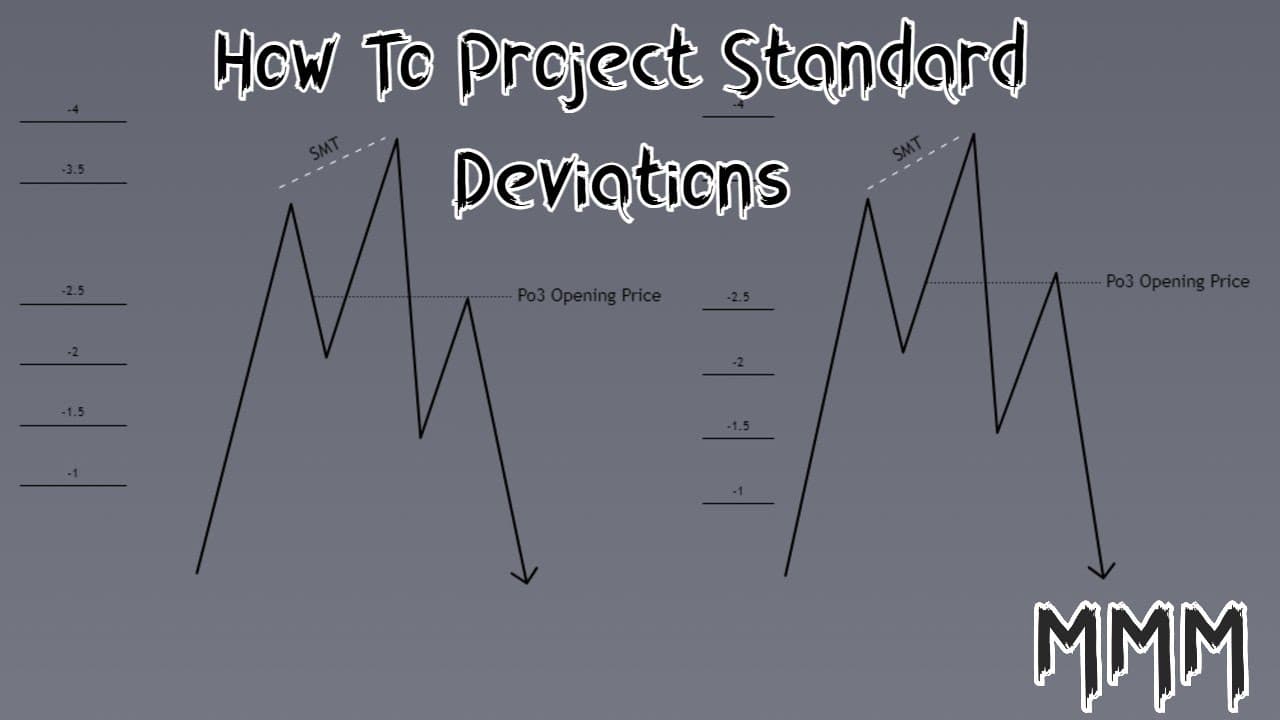
Projecting standard deviations involves identifying the power of three, understanding the last manipulation leg, and aligning time frames. Focus on the opening price within the power of three, and ensure the highs and lows align across time frames. Patience is key; wait for clear projections and validate using back testing for confidence.
Transcript
All right, welcome back everyone. Um, it's been a while since I've uploaded, but most of you all know as I take a break, I come back with a banger every time. And yeah, I just don't want to flood the YouTube channel with just random uploads. I try to keep it quality on here. Um, and yeah, so I mean throughout all platforms, I mean, I think the most... Read More
Key Insights
- Projecting involves using the power of three, which is crucial for identifying valid highs and lows.
- The two main projection methods are the last manipulation leg and the first distribution leg.
- Time frame alignment is essential; ensure projections align across different time frames for accuracy.
- Patience is crucial; wait for clear projections to form instead of rushing into trades.
- High probability projections occur when price reacts from standard deviation levels of a previous swing.
- The first distribution leg is often used when there is no last manipulation leg available.
- Successful projections require focusing on the opening price of the power of three.
- Back testing is vital for building confidence in the projection model and understanding price behavior.
Install to Summarize YouTube Videos and Get Transcripts
Explore YouTube Video Summarizer or Get YouTube Transcript Extractor
Questions & Answers
Q: How to project using the power of three?
To project using the power of three, identify the opening price and ensure that the highs and lows you are projecting are within the same power of three. This involves understanding the last manipulation leg or the first distribution leg. Align these projections across different time frames for accuracy.
Q: What is the importance of time frame alignment in projections?
Time frame alignment ensures that the highs and lows used for projections align across different time frames, such as 5-minute, hourly, and daily charts. This alignment increases the accuracy of projections and helps validate the chosen projection method, whether it's the last manipulation leg or the first distribution leg.
Q: Why is patience important in projecting standard deviations?
Patience is crucial because traders must wait for clear projections to form rather than rushing into trades. This involves waiting for the market to show its hand and for valid swings to develop. Impatience can lead to inaccurate projections and increased risk in trading decisions.
Q: How does back testing build confidence in trading projections?
Back testing builds confidence by allowing traders to validate their projection model against historical data. It provides statistical evidence to support the effectiveness of the model, helping traders understand potential outcomes and develop trust in their ability to accurately project and trade based on standard deviations.
Q: What are the two main methods for projecting standard deviations?
The two main methods for projecting standard deviations are using the last manipulation leg and the first distribution leg. The choice between these methods depends on the presence of a last manipulation leg and the alignment of projections within the power of three. Both methods aim to identify valid highs and lows for accurate projections.
Q: How do standard deviation levels affect projections?
Standard deviation levels serve as key reference points for projecting price movements. High probability projections occur when price reacts from these levels, indicating potential reversals or continuations. Traders use these levels to determine entry and exit points, aligning them with the power of three and time frame alignment for accuracy.
Q: When should the first distribution leg be used in projections?
The first distribution leg should be used when there is no last manipulation leg available. This method involves projecting the initial distribution of price within the power of three, ensuring that the highs and lows are within the same power of three and aligned across different time frames for accuracy.
Q: What role does the opening price play in projections?
The opening price within the power of three is crucial for determining valid highs and lows for projections. It serves as a reference point for identifying the last manipulation leg or the first distribution leg. Focusing on the opening price helps traders align projections across different time frames and increases the accuracy of their trading decisions.
Summary & Key Takeaways
-
Projecting standard deviations requires understanding the power of three and aligning time frames. By focusing on the opening price within the power of three, traders can identify valid highs and lows for projections. Patience and back testing are crucial for developing confidence in the model and ensuring accurate projections.
-
There are two main methods for projecting: the last manipulation leg and the first distribution leg. High probability projections occur when price reacts from standard deviation levels of a previous swing. Aligning projections across different time frames is essential for accuracy and success.
-
Confidence in projecting standard deviations comes from back testing, not forward testing. Patience is key; traders must wait for clear projections to form instead of rushing into trades. The first distribution leg is used when no last manipulation leg is available, and focusing on the power of three's opening price is crucial.
Read in Other Languages (beta)
Share This Summary 📚
Summarize YouTube Videos and Get Video Transcripts with 1-Click
Try YouTube Summary with ChatGPT & Claude or YouTube Transcript Generator