Why Are Equities Rallying While the Fed Keeps Raising Interest Rates?
TL;DR
Equities are rallying despite hawkish Fed policy because extreme bearishness created a contrarian setup, investors expect slower rate increases, and earnings are beating lowered expectations. Peter Boockvar cautions that this may be a bear-market hope rally, especially with quantitative tightening set to rise to $95 billion per month on September 1. Read on to understand how rates and balance-sheet shrinkage could affect markets and the economy.
Transcript
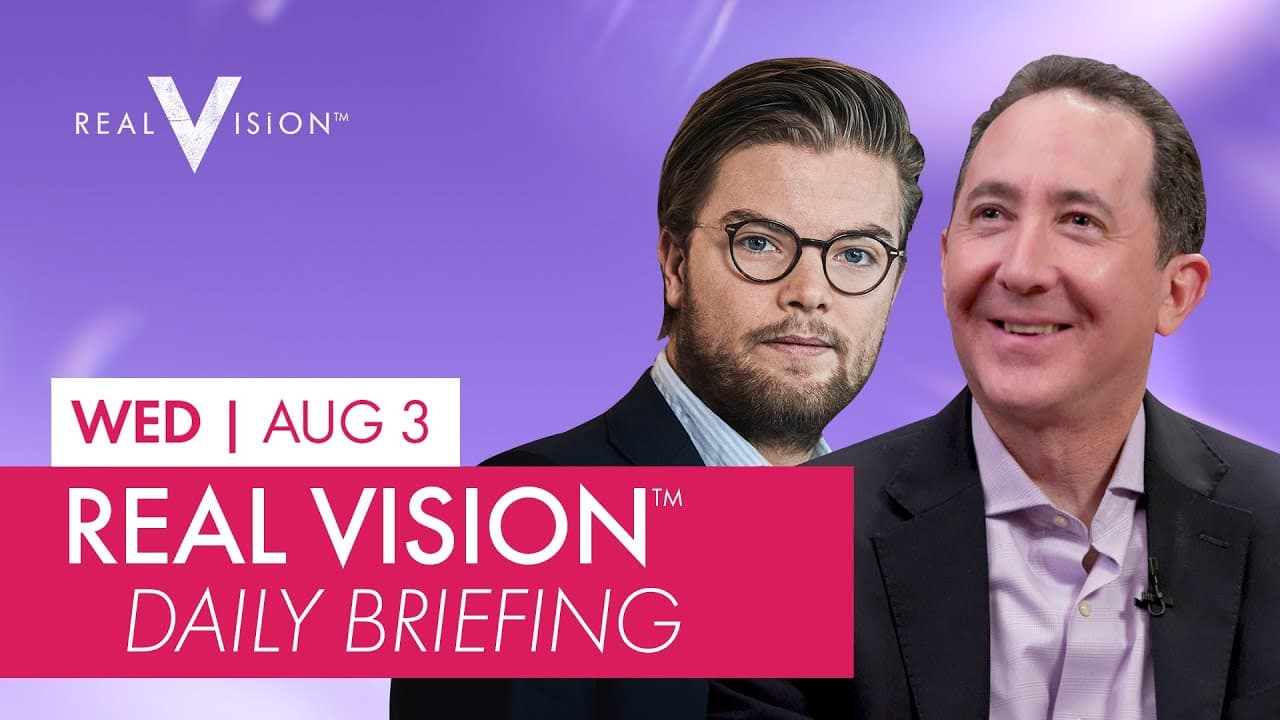
hi everyone and welcome to the real vision daily briefing i'm andrea steiner larsen sending to you live from copenhagen denmark wednesday august 3rd it's been another crazy day in markets we have equities rallying once again and i am pleased to be joined by peter buchwa the cio of bleakley advisory group peter it's good to have you back on the show... Read More
Key Insights
- 😮 The Fed's recent hawkish stance has led to a rise in interest rates, which may impact market sentiment and future economic growth.
- ☠️ The rally in equities is attributed to contrarian factors, such as extreme bearishness and the expectation of a slowdown in rate increases.
- 📼 The balance sheet shrinkage from the Fed may have a significant impact on asset markets.
- ❓ The divergence between the bond market's recession concerns and equity market's optimism creates uncertainty about the future direction of the markets.
- 🧑🏭 Factors such as inflation, jobless claims, and inventory buildup contribute to the economic outlook, suggesting a potential downturn.
- ☠️ The impact of interest rate differentials on the dollar and gold prices may shift as other central banks catch up to the Fed's rate hikes.
Install to Summarize YouTube Videos and Get Transcripts
Explore YouTube Video Summarizer or Get YouTube Transcript Extractor
Questions & Answers
Q: Why are equities rallying while the Federal Reserve remains hawkish?
Peter Boockvar attributes the rally to extreme bearishness across sentiment gauges, expectations that the Fed will slow its rate increases, and earnings beating lowered expectations. He also says investors hope that any recession will be mild, but he still considers the move a bear-market hope rally.
Q: What does “no more candy” mean for markets and Fed policy?
The phrase describes how the Fed repeatedly supported markets in prior decades when investors demanded help. High inflation now limits that support, even if inflation is peaking and beginning to slow, because the Fed remains intent on raising interest rates.
Q: How did recent Fed comments affect interest rates?
The comments produced a sharp rise in rates across the curve, particularly at the short end. The two-year rate increased by about 15 basis points as markets were reminded that the Fed was not finished raising rates.
Q: What fed funds rate did James Bullard want by the end of the year?
Bullard said he wanted a fed funds rate above 3.5% by year-end. His position reinforced the message that the Fed intended to continue raising interest rates.
Q: Why does Boockvar expect the Fed to slow the pace of rate increases?
He says the Fed will most likely raise rates by 50 basis points in September after accelerating to 75-basis-point increases over the prior two meetings. Expectations of that slower pace helped support the equity rally.
Q: Why does Boockvar doubt that the worst of the bear market is over?
He says bear markets can contain hope rallies driven by the belief that the worst has passed. He points to the Nasdaq rallying into a downtrend line extending from its January peak and warns investors not to be lulled by the move.
Q: How could quantitative tightening affect stocks?
Boockvar says quantitative easing was intended to ease financial conditions and lift stock prices, so quantitative tightening should work in the opposite direction. He warns that the Fed’s balance-sheet reduction was scheduled to double to $95 billion per month on September 1, which could get the market’s attention.
Q: Do interest rates and quantitative tightening affect markets in the same way?
Boockvar says balance-sheet policy has a direct effect on stocks, while changes in the fed funds rate more directly affect economic activity. Rate changes influence housing, autos, credit spreads, stock valuations, and the broader cost of capital.
Summary & Key Takeaways
-
The Fed's comments have caused interest rates to rise, signaling that rate hikes are not yet over and market expectations for more "candy" may not be met.
-
Despite bearish sentiment and the Fed's hawkish stance, equities have rallied due to contrarian factors, such as extreme bearishness and the expectation of slowed rate increases.
-
The balance sheet shrinkage from the Fed may have a significant impact on asset markets, potentially more than the discussion of interest rates.
Read in Other Languages (beta)
Share This Summary 📚
Summarize YouTube Videos and Get Video Transcripts with 1-Click
Try YouTube Summary with ChatGPT & Claude or YouTube Transcript Generator
Explore More Summaries from Real Vision Daily Briefing 📚

Summarize YouTube Videos and Get Video Transcripts with 1-Click
Try YouTube Summary with ChatGPT & Claude or YouTube Transcript Generator