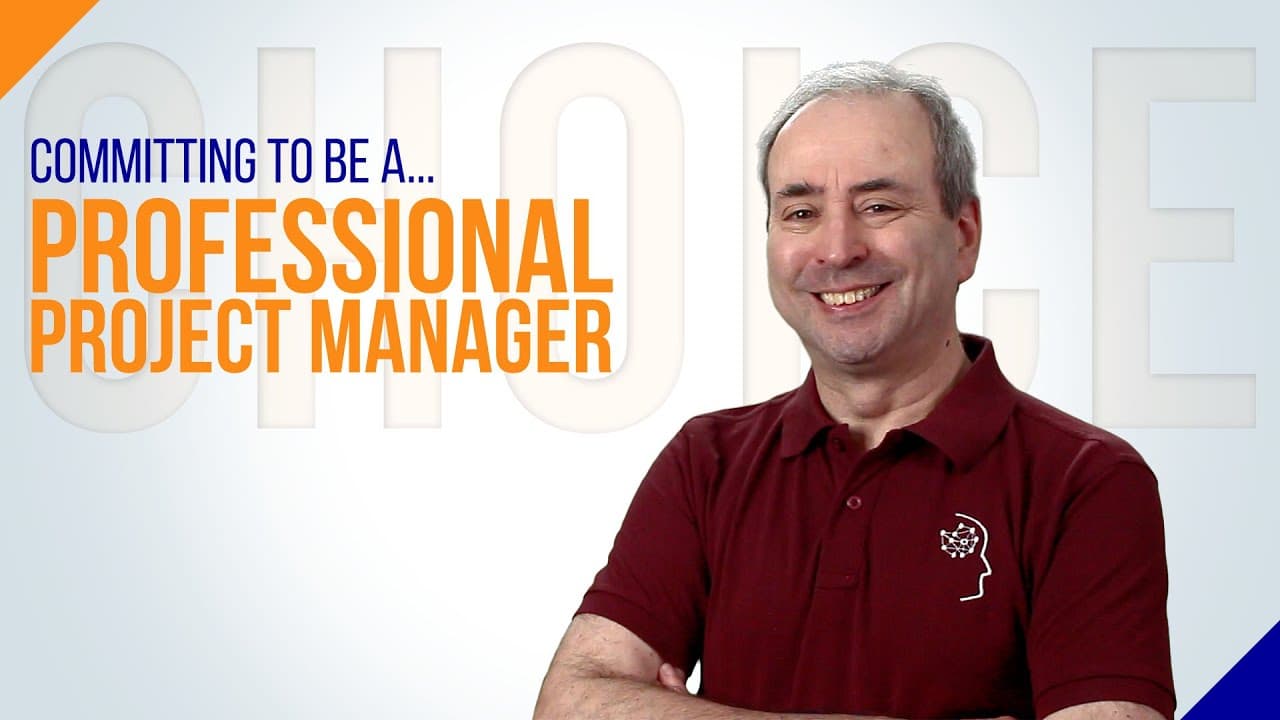
Committing to Be a Professional Project Manager
TL;DR
Becoming a professional project manager involves adopting a professional mindset, which includes continuous learning, deeper thinking, and taking a longer-term view.
Transcript
at what point do you become a professional project manager that's something i was wondering when i was talking with a client and thinking about some of the people in their organization and i want to share some of my conclusions with you let's start with an easier question what do we mean by professionalism now it may not be easy to define in a shor... Read More
Key Insights
- 📽️ Professionalism in project management involves ethical behavior, consistency, and expertise.
- 📽️ Choosing to adopt a professional mindset is what distinguishes a professional project manager.
- 🤔 Professionals prioritize continuous learning and mastery, deeper thinking, and a longer-term view.
- ❓ They see setbacks as steps on the journey and prioritize understanding over blame.
- 🧑🏭 Professionals understand the complex factors that contribute to success and avoid taking it for granted.
- 🌱 Building infrastructure, capabilities, and plans are crucial for long-term success.
- 🇨🇫 Continuous learning is a central part of the professional mindset, with professionals constantly seeking feedback.
Install to Summarize YouTube Videos and Get Transcripts
Explore YouTube Video Summarizer or Get YouTube Transcript Extractor
Questions & Answers
Q: What distinguishes a professional project manager from an amateur?
A professional project manager distinguishes themselves by adopting a mindset focused on continuous learning, seeking feedback, and treating failure as a learning opportunity. They also engage in deeper thinking, understanding the complexity of situations, and recognizing the various factors that contribute to success or failure. Additionally, they take a longer-term view, prioritizing the end result and building capabilities for future success.
Q: How does a professional project manager approach setbacks and progress?
A professional project manager sees setbacks as part of the journey and addresses them before getting back on track. They understand that progress is conditional upon future events and take a patient and strategic approach to building infrastructure, capabilities, and plans. They prioritize understanding and long-term success over being right or making immediate progress.
Q: What role does continuous learning play in the professional mindset?
Continuous learning is a fundamental aspect of the professional mindset. Professionals never settle for being good enough but constantly strive to expand their knowledge, skills, and mastery. They seek feedback, embrace failure as a learning opportunity, and see learning as a starting point for further honing their craft.
Q: How does a professional project manager approach success and credit?
Unlike amateurs who often attribute their successes solely to their actions, professionals have a deeper understanding of success. They acknowledge the complex interaction of factors, including preparation and fortune, that contribute to success. Professionals are more humble about their role and recognize the interplay of various elements beyond their control.
Summary & Key Takeaways
-
Professionalism in project management is characterized by ethical behavior, diligence, consistency, thoroughness, and expertise.
-
Becoming a professional project manager is a choice to adopt the mindset of a professional, distinguishing oneself from an amateur.
-
Three key aspects of a professional mindset include continuous learning and mastery, deeper thinking, and taking a longer-term view.
Read in Other Languages (beta)
Share This Summary 📚
Summarize YouTube Videos and Get Video Transcripts with 1-Click
Try YouTube Summary with ChatGPT & Claude or YouTube Transcript Generator
Explore More Summaries from Online PM Courses - Mike Clayton 📚




Summarize YouTube Videos and Get Video Transcripts with 1-Click
Try YouTube Summary with ChatGPT & Claude or YouTube Transcript Generator