What Was the Spanish Empire's Impact on the Philippines?
TL;DR
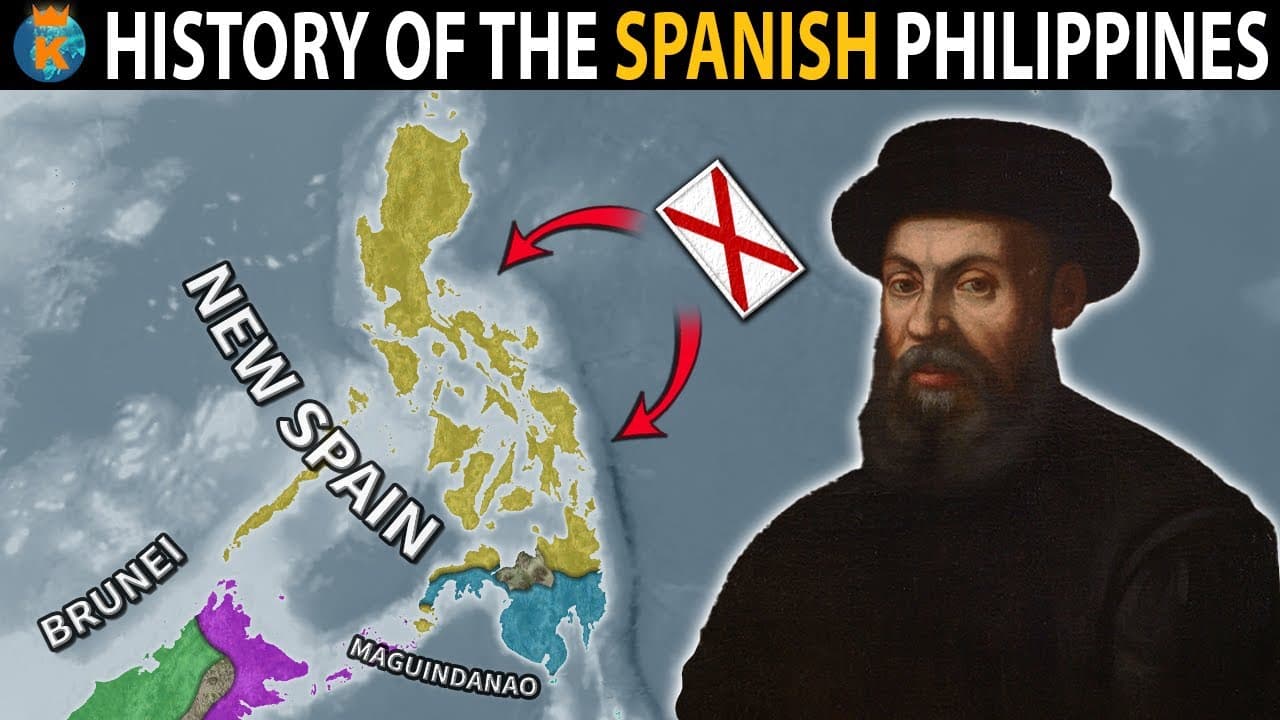
The Spanish colonization of the Philippines began in 1564 and lasted until 1899, significantly influencing its culture, religion, and governance. Despite resistance from local leaders and external forces, Spain maintained control, integrating the Philippines into its global empire. The period ended with the Philippine Revolution and the subsequent American intervention, leading to the Philippines becoming a U.S. territory.
Transcript
After the disastrous experience of Magellan in the Philippines, the Spanish did not make another attempt to colonize until 1542. This expedition was led by Ruy López de Villalobos. He set out from Mexico with six ships and approximately 400 people. Against his navigator’s advice, he landed in Mindanao, but far from any of the Chinese or Malay t... Read More
Key Insights
- The Spanish colonization of the Philippines began with Miguel López de Legazpi's expedition in 1564.
- Spain used the Philippines as a strategic location, integrating it into the Viceroyalty of New Spain.
- The encomienda system was imposed, focusing on cash crops like tobacco and sugar.
- Catholic missionaries played a significant role in cultural assimilation, building schools and hospitals.
- Local resistance and external threats, including from the Dutch and British, challenged Spanish rule.
- The Propaganda Movement sought civil rights and equal status for Filipinos under Spanish law.
- The Philippine Revolution of 1898 aimed for independence but was overshadowed by the Spanish-American War.
- The U.S. intervention led to the Philippines becoming an unofficial U.S. territory until 1946.
Install to Summarize YouTube Videos and Get Transcripts
Explore YouTube Video Summarizer or Get YouTube Transcript Extractor
Questions & Answers
Q: How did the Spanish colonization of the Philippines begin?
The Spanish colonization of the Philippines began in 1564 with an expedition led by Miguel López de Legazpi. Departing from Mexico, Legazpi's fleet reached the central Philippine island of Cebu in 1565, marking the establishment of the first Spanish colony. Despite initial resistance from local populations, the Spanish expanded their control over the archipelago, setting the stage for over three centuries of colonial rule.
Q: What role did Catholic missionaries play in the Spanish colonization of the Philippines?
Catholic missionaries were crucial in the Spanish colonization of the Philippines, serving as agents of cultural assimilation. They established schools and hospitals alongside churches, facilitating the spread of Catholicism and European education. This religious and educational influence helped integrate local populations into the Spanish colonial system, although it also faced resistance from indigenous leaders who sought to preserve their cultural heritage.
Q: What was the encomienda system in the Philippines?
The encomienda system was a form of colonial agriculture imposed by the Spanish in the Philippines, where land was considered the property of the Spanish Crown. Local inhabitants were required to work the land and pay a portion of their harvest as tribute to Spanish encomenderos. This system focused on cash crops such as tobacco, sugar, and indigo, and was a means of exploiting local labor for the benefit of the Spanish Empire.
Q: How did the Philippines become involved in the Spanish-American War?
The Philippines became involved in the Spanish-American War as part of a broader conflict between Spain and its colonies, including Cuba. Filipino revolutionaries were already fighting for independence when the U.S. entered the war against Spain. The Battle of Manila Bay on May 1, 1898, saw the U.S. defeat the Spanish fleet, leading to American control over the Philippines and marking the end of Spanish colonial rule in the archipelago.
Q: What was the Propaganda Movement in the Philippines?
The Propaganda Movement in the Philippines was a late 19th-century campaign led by Filipino intellectuals seeking reforms and greater rights under Spanish rule. They advocated for equal status for Filipinos and Spaniards, representation in the Spanish Parliament, and secular control over the clergy. Although the movement ended with the arrest of its leader José Rizal, it laid the groundwork for the subsequent Philippine Revolution.
Q: What challenges did the Spanish face from external forces during their rule in the Philippines?
During their rule in the Philippines, the Spanish faced challenges from several external forces, including Portuguese, Chinese pirates, and nearby Muslim states. The Dutch were a significant threat due to ongoing European conflicts, particularly the Eighty Years' War. Additionally, the British temporarily occupied Manila during the Seven Years' War, highlighting the strategic importance of the archipelago in global colonial rivalries.
Q: How did the Philippine Revolution begin and what were its goals?
The Philippine Revolution began in August 1898, led by the revolutionary group Katipunan, with the goal of achieving independence from Spanish colonial rule. The revolutionaries sought to establish a sovereign nation, initially experiencing success in rural areas but struggling to capture Manila. The revolution coincided with the Spanish-American War, which ultimately shifted the balance of power in favor of the United States.
Q: What were the consequences of the U.S. intervention in the Philippines after the Spanish-American War?
The U.S. intervention in the Philippines after the Spanish-American War resulted in the archipelago becoming an unofficial U.S. territory. Despite the establishment of the First Philippine Republic in 1899, the U.S. did not recognize its independence, leading to the Philippine-American War. The U.S. maintained control until 1946, influencing the Philippines' political and economic systems and leaving a lasting impact on its development.
Summary & Key Takeaways
-
The Spanish Empire's colonization of the Philippines began in 1564, marking a significant cultural and religious transformation. Despite local resistance and external conflicts, Spain maintained control until the late 19th century. The period ended with the Philippine Revolution and the Spanish-American War, leading to U.S. intervention and the eventual establishment of the First Philippine Republic.
-
Spain's strategic use of the Philippines integrated it into the Viceroyalty of New Spain, imposing systems like the encomienda. Catholic missionaries were instrumental in cultural assimilation, and local leaders occasionally resisted Spanish rule. The Propaganda Movement and subsequent revolutionary efforts highlighted the growing desire for independence.
-
The Philippine Revolution in 1898 was a pivotal moment in the archipelago's history, with Emilio Aguinaldo leading the charge for independence. However, the U.S. intervention shifted control, resulting in the Philippines becoming a U.S. territory until 1946. This period marked the end of Spanish colonial rule and the beginning of a new era under American influence.
Read in Other Languages (beta)
Share This Summary 📚
Summarize YouTube Videos and Get Video Transcripts with 1-Click
Try YouTube Summary with ChatGPT & Claude or YouTube Transcript Generator
Explore More Summaries from Knowledgia 📚

Summarize YouTube Videos and Get Video Transcripts with 1-Click
Try YouTube Summary with ChatGPT & Claude or YouTube Transcript Generator