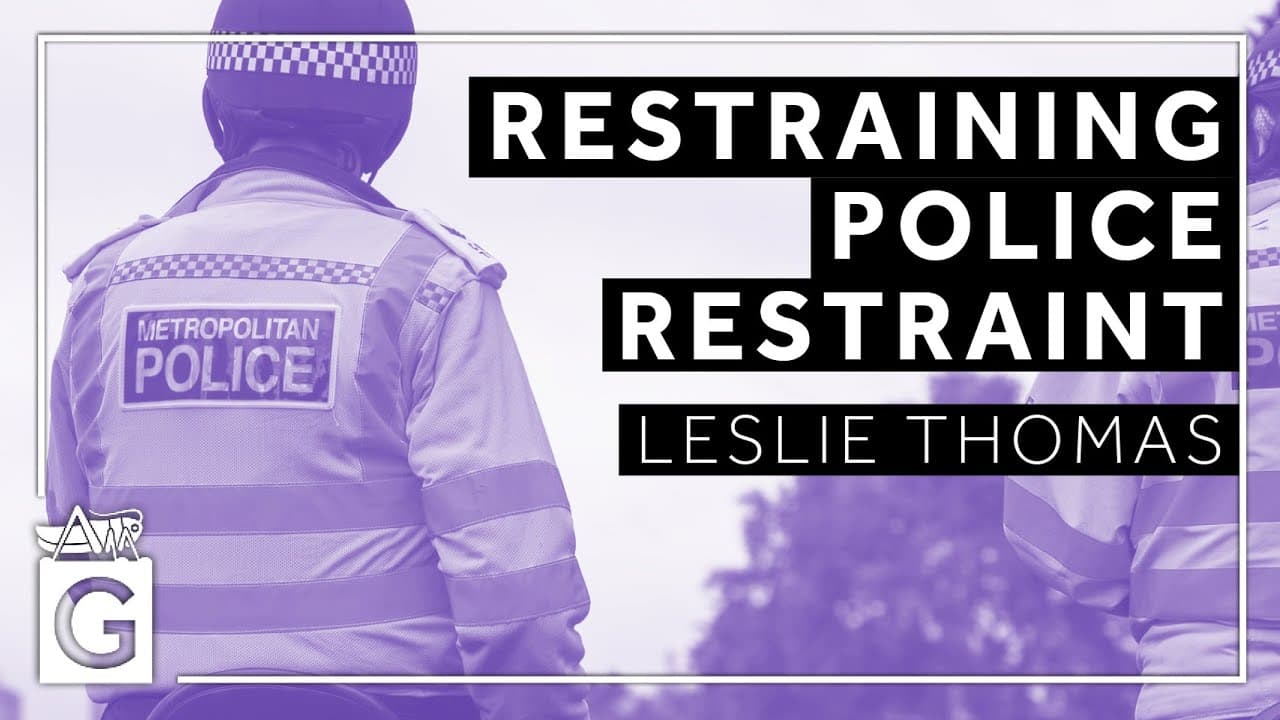
Restraining Police Restraint
TL;DR
Restraint-related deaths in police custody, particularly among black individuals and those with mental health problems, require urgent attention and systemic change.
Transcript
- Good evening everyone. Thank you for joining us in the fourth of this series of lectures in relation to human rights and the state. Tonight's lecture is in relation to police restraint and deaths in custody. I'm pleased to say that I have two guests joining me. First, Dr. Nat Cary and eminent forensic pathologists with more than three decades of ... Read More
Key Insights
- 👨⚕️ Restraint-related deaths in police custody disproportionately affect black men and individuals experiencing mental health crises.
- 🧑⚕️ Positional asphyxia is a significant risk factor in restraint-related deaths, particularly when combined with exhaustion and existing health issues.
- 😒 Structural racism and discriminatory practices contribute to the disproportionate use of force against racialized individuals and a lack of accountability for these deaths.
- 🧑⚕️ Redirecting resources from policing towards community-based mental health services and addressing systemic racism are vital for preventing restraint-related deaths.
Install to Summarize YouTube Videos and Get Transcripts
Explore YouTube Video Summarizer or Get YouTube Transcript Extractor
Questions & Answers
Q: What is positional asphyxia, and how does it contribute to deaths in custody?
Positional asphyxia occurs when a person's breathing is restricted due to the position of their body during restraint. It can lead to suffocation and death, particularly when combined with other factors such as exhaustion and existing health issues.
Q: How does structural racism contribute to restraint-related deaths?
Structural racism plays a significant role in restraint-related deaths, as black individuals are more likely to be subjected to excessive force and discrimination by state agents. Racial biases and stereotypes contribute to the use of force and a lack of accountability for these deaths.
Q: What changes need to be made to prevent restraint-related deaths?
Redirecting resources from policing towards community-based mental health services, crisis intervention teams, and de-escalation training for professionals could help prevent restraint-related deaths. Additionally, addressing systemic racism and discrimination within institutions is crucial for ensuring accountability and cultural change.
Q: Why is the inquest process important in addressing deaths in custody?
The inquest process is often the only public forum where deaths in custody can be scrutinized and systemic failings can be exposed. It allows families to participate and advocate for change, highlighting issues of negligence, discrimination, and excessive use of force.
Summary & Key Takeaways
-
Deaths in custody following police restraint disproportionately affect black men and individuals experiencing mental health crises.
-
The use of restraint, particularly in the prone position, puts individuals at risk of positional asphyxia and can lead to suffocation, exacerbating existing health issues.
-
Despite recommendations and calls for change, there has been limited accountability for deaths in custody and a lack of progress in addressing systemic issues.
Read in Other Languages (beta)
Share This Summary 📚
Summarize YouTube Videos and Get Video Transcripts with 1-Click
Try YouTube Summary with ChatGPT & Claude or YouTube Transcript Generator
Explore More Summaries from Gresham College 📚


Summarize YouTube Videos and Get Video Transcripts with 1-Click
Try YouTube Summary with ChatGPT & Claude or YouTube Transcript Generator