How to Use MPI4py for Supercomputing with Python
TL;DR
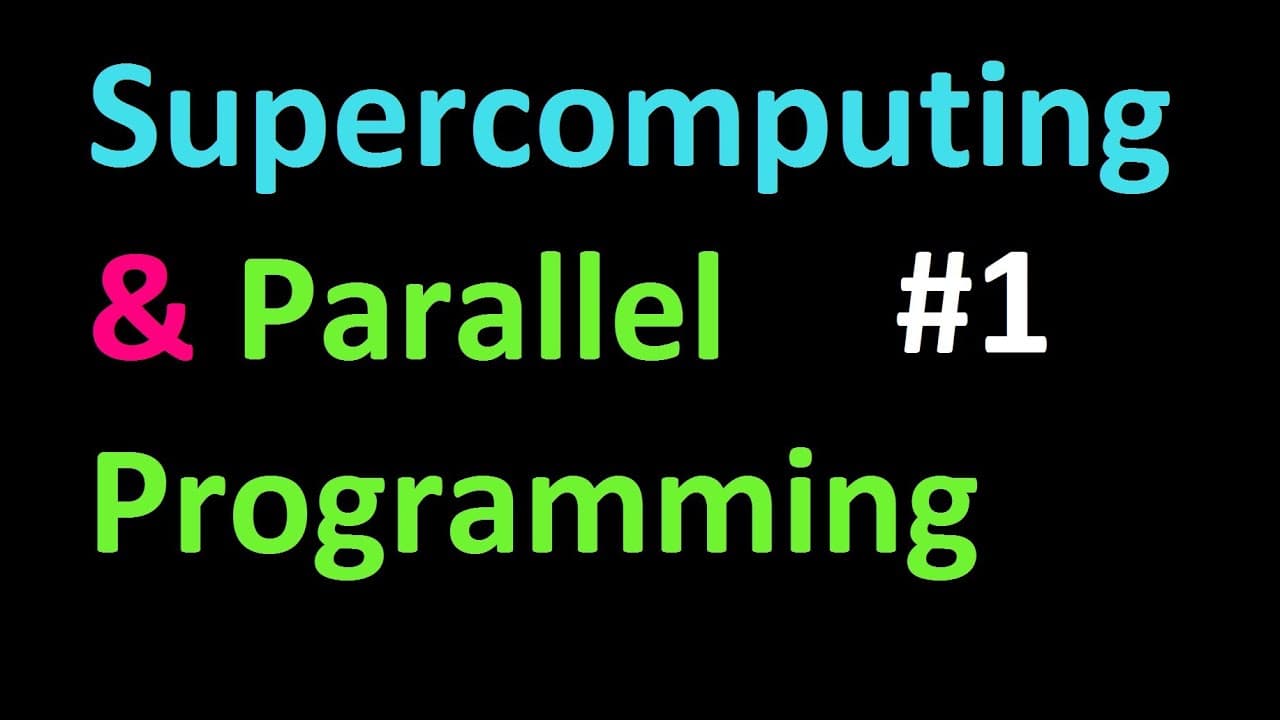
To use MPI4py for supercomputing in Python, install MPI4py on your Raspberry Pi nodes, ensuring Python is already set up. Create a machine file to list the IP addresses of your nodes, and run a simple script like 'hello.py' to test the installation. This setup enables message passing in distributed computing, making Python a flexible choice for parallel programming.
Transcript
hello and welcome to the next step in supercomputing SLP parallel programming slh high performance Computing uh in the previous videos I showed you all how you could build your own extremely cheap supercomputer out of raspberry pies to do these videos you won't have to have built that same supercomputer so this is just going to be super Computing w... Read More
Key Insights
- ❓ Python is a popular programming language for supercomputing due to its simplicity and flexibility.
- 👻 NPI for Pi is a Python implementation of the MPI standard, allowing for message passing in distributed computing systems.
- 🏛️ Building a supercomputer using Raspberry Pi nodes is a cost-effective and accessible option.
- ♓ The installation process for NPI for Pi on Raspberry Pi is similar to that of NPIc and Fortran.
- 🧑⚕️ A machine file is required to specify the IP addresses of the master and worker nodes in the supercomputer.
- 🧭 The "hello.py" script can be used to test the NPI for Pi installation and message passing capabilities.
- 💳 The next step in the tutorial series will involve scripting Python scripts for more advanced supercomputing tasks.
Install to Summarize YouTube Videos and Get Transcripts
Explore YouTube Video Summarizer or Get YouTube Transcript Extractor
Questions & Answers
Q: What is the advantage of using Python over C++ or Fortran for supercomputing?
Python is a user-friendly language that does not require in-depth knowledge of lower-level programming. It offers more flexibility and capability compared to Fortran, making it easier to implement complex algorithms for scientific calculations.
Q: Can a supercomputer be built using only one node?
Yes, it is possible to build a pseudo-supercomputer using a single node. However, the true power of supercomputing lies in parallel processing with multiple nodes, allowing for faster and more efficient computation.
Q: How does NPI for Pi differ from NPIc and Fortran for supercomputing?
NPI for Pi is a Python implementation of the message passing interface (MPI) standard, enabling message passing between different nodes in a distributed computing system. It offers similar functionality to NPIc and Fortran but with the simplicity and ease of use of the Python language.
Q: What is the purpose of the "hello.py" script mentioned in the video?
The "hello.py" script serves as a test to ensure that the NPI for Pi installation is successful. It demonstrates a basic message passing operation between two nodes in the supercomputer.
Summary & Key Takeaways
-
This video provides an introduction to using Python and NPI for Pi on a Raspberry Pi to create a supercomputer.
-
The video explains the need for a programming language and highlights the advantages of using Python for supercomputing.
-
The installation process for NPI for Pi is demonstrated on both the master and worker nodes of the supercomputer.
Read in Other Languages (beta)
Share This Summary 📚
Summarize YouTube Videos and Get Video Transcripts with 1-Click
Try YouTube Summary with ChatGPT & Claude or YouTube Transcript Generator
Explore More Summaries from sentdex 📚


Summarize YouTube Videos and Get Video Transcripts with 1-Click
Try YouTube Summary with ChatGPT & Claude or YouTube Transcript Generator