How to Draw Better Tree Trunks and Branches

TL;DR
Learn to draw dynamic tree trunks and branches effectively.
Transcript
Read and summarize the transcript of this video on Glasp Reader (beta).
Key Insights
- Understanding tree motion is crucial; consider both wind effects and growth patterns for realistic depictions.
- Tree trunks are not perfectly circular; they often resemble twisted ropes due to spiraling growth.
- Branches typically grow at consistent angles, which can be observed in the tree's leaves and veins.
- Utilize the root system to determine branching patterns, adding depth by considering forward and backward movement.
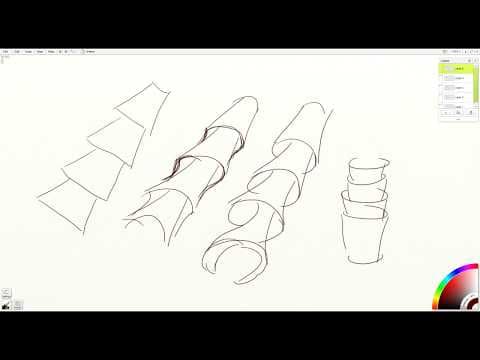
- Drawing cylinders is an essential skill; use it to represent tree trunks and branches in various directions.
- Establish an armature as a foundational guide before adding cylinders to define the tree's structure.
- Gesture sketches can serve as a preliminary framework, enhancing the final landscape drawing's clarity.
- The more detailed and informed your approach, the more realistic and engaging your tree drawings will be.
Install to Summarize YouTube Videos and Get Transcripts
Explore YouTube Video Summarizer or Get YouTube Transcript Extractor
Questions & Answers
Q: How can understanding tree motion improve drawing accuracy?
Understanding tree motion helps artists capture the dynamic nature of trees by considering both the effects of wind and the tree's natural growth patterns. This knowledge aids in creating more realistic and lively depictions, as artists can depict how trees bend towards light and exhibit spiraling growth over time.
Q: What is the significance of spiraling growth in tree drawing?
Spiraling growth is significant because it reflects the tree's natural development and movement, adding realism to drawings. By observing and exaggerating these spirals in the bark, artists can create more dynamic and interesting tree representations, enhancing the overall sophistication of their landscape artworks.
Q: Why is it important to consider branching angles when drawing trees?
Branching angles are important because they tend to be consistent across a tree's structure, including its leaves and veins. Recognizing these angles helps artists maintain proportion and balance in their drawings, ensuring that branches appear natural and cohesive within the overall composition.
Q: How does the root system influence tree branch depiction?
The root system influences branch depiction by providing a foundational guide for how branches should extend and divide. By analyzing root growth, artists can determine where branches might naturally emerge, adding depth and realism to their drawings by considering both forward and backward movement of branches.
Q: What role do cylinders play in drawing tree structures?
Cylinders play a crucial role in representing tree structures as they provide a basic form for depicting trunks and branches. By mastering cylinder drawing, artists can effectively illustrate the various directions and changes in a tree's growth, contributing to a more lifelike and three-dimensional appearance in their art.
Q: How can an armature assist in tree drawing?
An armature serves as a foundational guide or framework that artists can build upon when drawing trees. By establishing an armature first, artists can define the tree's overall shape and direction, ensuring that the subsequent addition of cylinders and details aligns with the intended composition and flow.
Q: What is the benefit of using gesture sketches in tree drawing?
Gesture sketches provide a preliminary framework that helps artists quickly capture the essence and movement of a tree. This approach allows for experimentation with composition and structure before committing to detailed drawing, resulting in more dynamic and expressive tree illustrations in the final artwork.
Q: How can artists enhance the realism of their tree drawings?
Artists can enhance realism by applying techniques such as understanding tree motion, recognizing spiraling growth, and maintaining consistent branching angles. Practicing cylinder drawing and using gesture sketches for foundational planning also contribute to creating more lifelike and engaging tree depictions in landscape art.
Summary & Key Takeaways
-
The video provides insights into drawing tree trunks and branches, emphasizing the importance of understanding their natural motion and growth patterns. It highlights the significance of spiraling growth and consistent branching angles to create realistic tree depictions.
-
Artists are encouraged to view tree trunks as twisted ropes and use the root system to guide branching patterns. The tutorial stresses using cylinders to represent tree structures and suggests establishing an armature for better composition.
-
By applying these techniques, artists can enhance the realism and depth of their landscape drawings. The video also recommends practicing gesture sketches and understanding cylinder drawing to achieve more dynamic and lifelike tree illustrations.
Read in Other Languages (beta)
Share This Summary 📚
Summarize YouTube Videos and Get Video Transcripts with 1-Click
Try YouTube Summary with ChatGPT & Claude or YouTube Transcript Generator
Explore More Summaries from Mead McLean 📚
Summarize YouTube Videos and Get Video Transcripts with 1-Click
Try YouTube Summary with ChatGPT & Claude or YouTube Transcript Generator