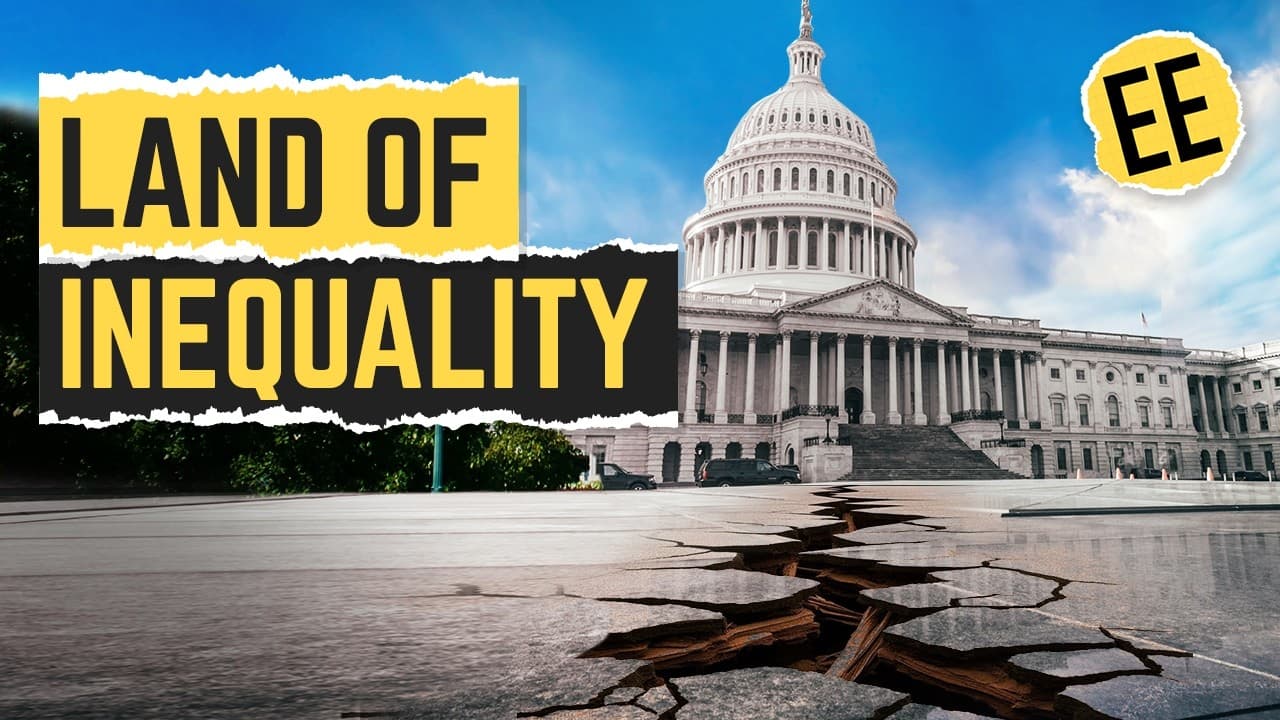
Why Is Washington DC's Economy So Unequal?
TL;DR
Washington DC's economy is highly productive but also marked by extreme inequality. Its unique status as a federal district contributes to skewed economic measurements, making it appear wealthier than it is. The lack of statehood limits its autonomy, affecting its ability to address economic disparities effectively.
Transcript
This is Washington DC, a federal district that is the capital city of the largest and most powerful economy to have ever existed. Hopefully everybody watching already knew that, but what is interesting is that this special zone which is not quite a city, not quite a state and not quite a municipality is home to technically one of the most productiv... Read More
Key Insights
- Washington DC is technically one of the most productive local economies in the world, with a GDP per capita higher than Monaco.
- The district's unique status as a federal entity means it lacks full control over its budget and legislation, leading to economic challenges.
- GDP per capita metrics are skewed by the high number of commuters who contribute to the economy but are not counted in the population.
- DC hosts numerous federal agencies, foreign embassies, and lobbying firms, making it a hub for political and economic influence.
- Despite its high GDP, DC experiences significant wealth inequality, with stark contrasts in income and opportunities among its residents.
- Efforts to grant DC statehood have been largely unsuccessful, limiting its ability to enact policies to address local issues.
- Tourism is a significant contributor to DC's economy, with millions visiting its museums and monuments annually.
- The presence of high-paying tech and government jobs masks the underlying economic disparities within the district.
Install to Summarize YouTube Videos and Get Transcripts
Explore YouTube Video Summarizer or Get YouTube Transcript Extractor
Questions & Answers
Q: How does Washington DC's unique status affect its economy?
Washington DC's status as a federal district means it lacks full control over its budget and legislative powers, as Congress retains significant authority. This limitation affects its ability to address local economic issues and contributes to the district's wealth inequality, despite its high GDP per capita.
Q: Why is Washington DC's GDP per capita so high?
DC's GDP per capita is high due to the significant economic output generated by federal agencies, lobbying firms, and multinational companies headquartered there. However, the metric is skewed because many commuters who contribute to this output are not counted in the population, inflating the GDP per capita figure.
Q: What role do federal agencies play in DC's economy?
Federal agencies play a crucial role in DC's economy by providing high-paying jobs and attracting significant investment from industries seeking influence in federal decision-making. This concentration of agencies makes DC a hub for political and economic activity, contributing to its high GDP.
Q: How does tourism impact Washington DC's economy?
Tourism significantly impacts DC's economy, with millions of visitors attracted to its iconic museums, monuments, and cultural sites. This influx of tourists supports local businesses and contributes to the district's GDP, making tourism a vital industry even after the pandemic.
Q: What are the main challenges facing Washington DC's economy?
The main challenges include significant wealth inequality, limited autonomy due to its federal status, and skewed economic measurements that mask underlying disparities. These challenges make it difficult for DC to address local needs and manage its economic resources effectively.
Q: Why is there a push for Washington DC to become a state?
The push for DC statehood stems from the desire for greater autonomy and representation. As a state, DC would have more control over its budget and legislation, enabling it to address local economic issues more effectively and provide its residents with representation in Congress.
Q: How does Washington DC's economy compare to other regions?
While DC's economy is highly productive, with a GDP comparable to small countries, it faces significant internal disparities. Compared to other regions, DC's wealth is concentrated among a few, with many residents experiencing economic challenges despite the district's overall prosperity.
Q: What is the impact of lobbying on Washington DC's economy?
Lobbying has a substantial impact on DC's economy, as numerous firms and foreign governments invest heavily to influence federal policies. This influx of money supports local jobs and contributes to the district's GDP, but also highlights the role of money in politics and its economic implications.
Summary & Key Takeaways
-
Washington DC is a unique federal district with a highly productive economy, boasting a GDP per capita higher than many countries. However, this productivity is accompanied by significant inequality, as many residents face economic challenges despite the district's wealth.
-
The lack of statehood for Washington DC limits its autonomy, affecting its ability to manage its budget and enact local legislation. This contributes to economic disparities and challenges in addressing the needs of its residents.
-
DC's economy is heavily influenced by its role as the nation's capital, hosting federal agencies, embassies, and lobbying firms. While this brings wealth and high-paying jobs, it also skews economic measurements and highlights the region's inequality.
Read in Other Languages (beta)
Share This Summary 📚
Summarize YouTube Videos and Get Video Transcripts with 1-Click
Try YouTube Summary with ChatGPT & Claude or YouTube Transcript Generator
Explore More Summaries from Economics Explained 📚



Summarize YouTube Videos and Get Video Transcripts with 1-Click
Try YouTube Summary with ChatGPT & Claude or YouTube Transcript Generator