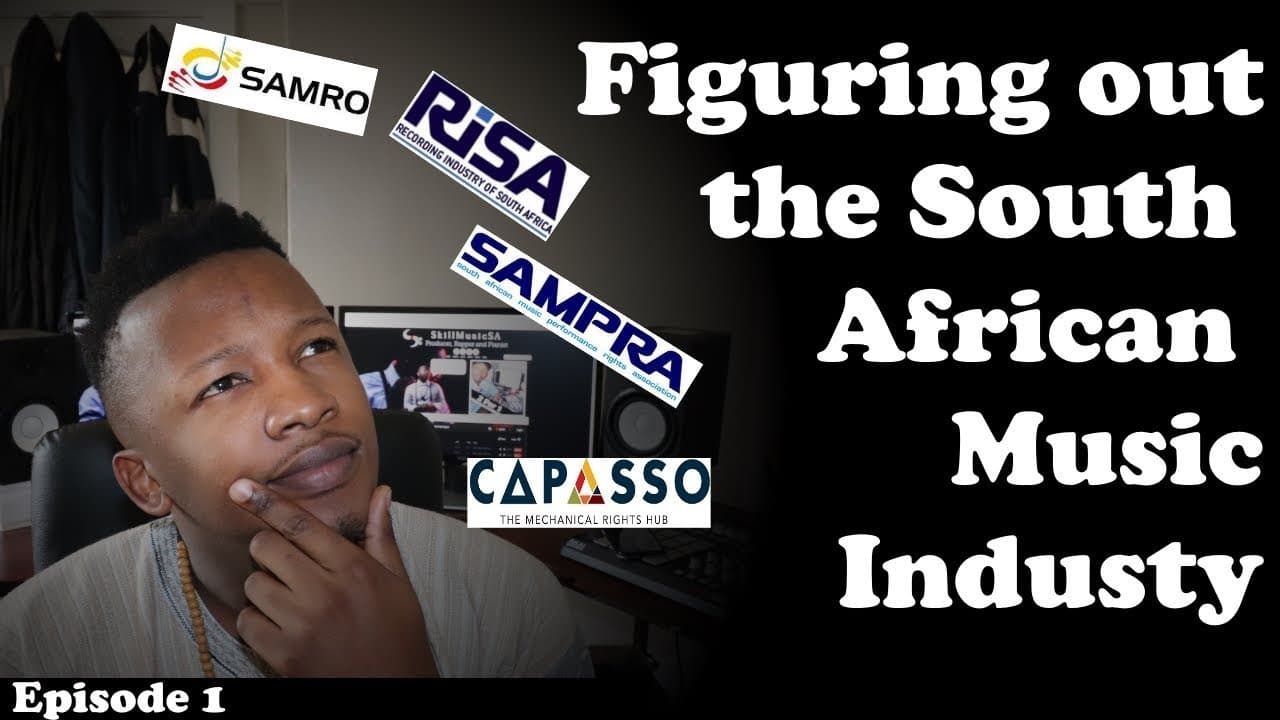
SAMRO, Risa and Capasso Royalties | Figuring Out The South African Music Industry | Episode 1
TL;DR
Demystifying South African music royalties for independent musicians.
Transcript
Read and summarize the transcript of this video on Glasp Reader (beta).
Key Insights
- The video aims to clarify the differences between SAMRO, SAMPRA, Risa, and Capasso, and their roles in collecting music royalties for South African musicians.
- There are three primary types of royalties in South Africa: performance, mechanical, and needle time, each with distinct criteria for collection.
- Performance royalties are earned when music is publicly performed, including on radio, TV, and online platforms like YouTube.
- Mechanical royalties are collected when music is reproduced for public use, such as streaming on platforms like Spotify.
- Needle time royalties are for performers and musicians who contribute to a sound recording, distinct from performance royalties which are for writers and composers.
- Musicians can collect all three types of royalties if they are the original writer and performer of a song.
- Registering with SAMRO involves filling out forms and following up regularly, with membership tiers affecting the benefits and influence within the organization.
- The video is part of a series aimed at educating independent South African musicians on navigating the music industry and maximizing royalty collections.
Install to Summarize YouTube Videos and Get Transcripts
Explore YouTube Video Summarizer or Get YouTube Transcript Extractor
Questions & Answers
Q: What are the main types of royalties available in South Africa?
In South Africa, musicians can collect three main types of royalties: performance royalties, mechanical royalties, and needle time royalties. Performance royalties are earned from public performances of music, mechanical royalties from reproductions of music for public use, and needle time royalties for performers who contribute to sound recordings.
Q: How can musicians collect performance royalties?
Musicians can collect performance royalties when their music is played publicly, such as on radio, TV, and online platforms like YouTube. These royalties are collected by Performance Rights Organizations (PROs) like SAMRO, which manage the distribution of royalties to registered musicians based on public performances.
Q: What is the process for registering with SAMRO?
To register with SAMRO, musicians need to download and fill out the registration forms available on the SAMRO website. After submitting the forms via email, it's crucial to follow up regularly with the SAMRO call center to ensure the forms are received and processed, as registration times can vary significantly.
Q: What are the membership tiers in SAMRO?
SAMRO has four membership tiers: prospective, ordinary, associate, and full member. Prospective members do not earn royalties immediately. Ordinary members receive royalties and can vote in organizational matters. Associate members have more influence, and full members can direct the organization's course, with each tier having specific thresholds for advancement.
Q: How do mechanical royalties differ from performance royalties?
Mechanical royalties are earned when music is reproduced for public use, such as being streamed or synced to a movie, while performance royalties are earned from public performances of music. The two royalties cater to different aspects of music distribution and usage, providing distinct revenue streams for musicians.
Q: What is the needle time right?
The needle time right is a type of royalty paid to performers and musicians who contribute to a sound recording. It is distinct from performance royalties, which are for writers and composers. Needle time royalties recognize the contributions of musicians in the actual recording process of a song.
Q: Why is it important for musicians to understand these royalties?
Understanding these royalties is crucial for musicians because it enables them to maximize their earnings from their music. By knowing how to collect performance, mechanical, and needle time royalties, musicians can ensure they receive the financial benefits they are entitled to, supporting their careers and creative endeavors.
Q: How does the video series aim to support South African musicians?
The video series aims to support South African musicians by demystifying the music industry's complexities, particularly around royalty collection. It provides practical guidance on registering with organizations like SAMRO and understanding different types of royalties, empowering musicians to navigate the industry effectively and enhance their financial prospects.
Summary & Key Takeaways
-
This video series aims to educate South African musicians about the differences between SAMRO, SAMPRA, Risa, and Capasso, focusing on how these organizations help collect music royalties. The content explains the types of royalties available and the process for registration, emphasizing the importance of understanding and maximizing these revenue streams.
-
The video explains the three main types of royalties in South Africa: performance, mechanical, and needle time. It provides scenarios illustrating how musicians can earn these royalties, depending on their role in creating and performing music. The focus is on empowering musicians with knowledge to effectively collect royalties.
-
Registration with SAMRO is detailed, highlighting the need for consistent follow-up to ensure successful membership. The video outlines the different membership tiers and associated benefits, encouraging musicians to engage with these processes to gain financial and organizational advantages in the South African music industry.
Read in Other Languages (beta)
Share This Summary 📚
Summarize YouTube Videos and Get Video Transcripts with 1-Click
Try YouTube Summary with ChatGPT & Claude or YouTube Transcript Generator
Explore More Summaries from SkillMusicSA 📚



Summarize YouTube Videos and Get Video Transcripts with 1-Click
Try YouTube Summary with ChatGPT & Claude or YouTube Transcript Generator