What is SARS-CoV-2 and Its Impact?
TL;DR
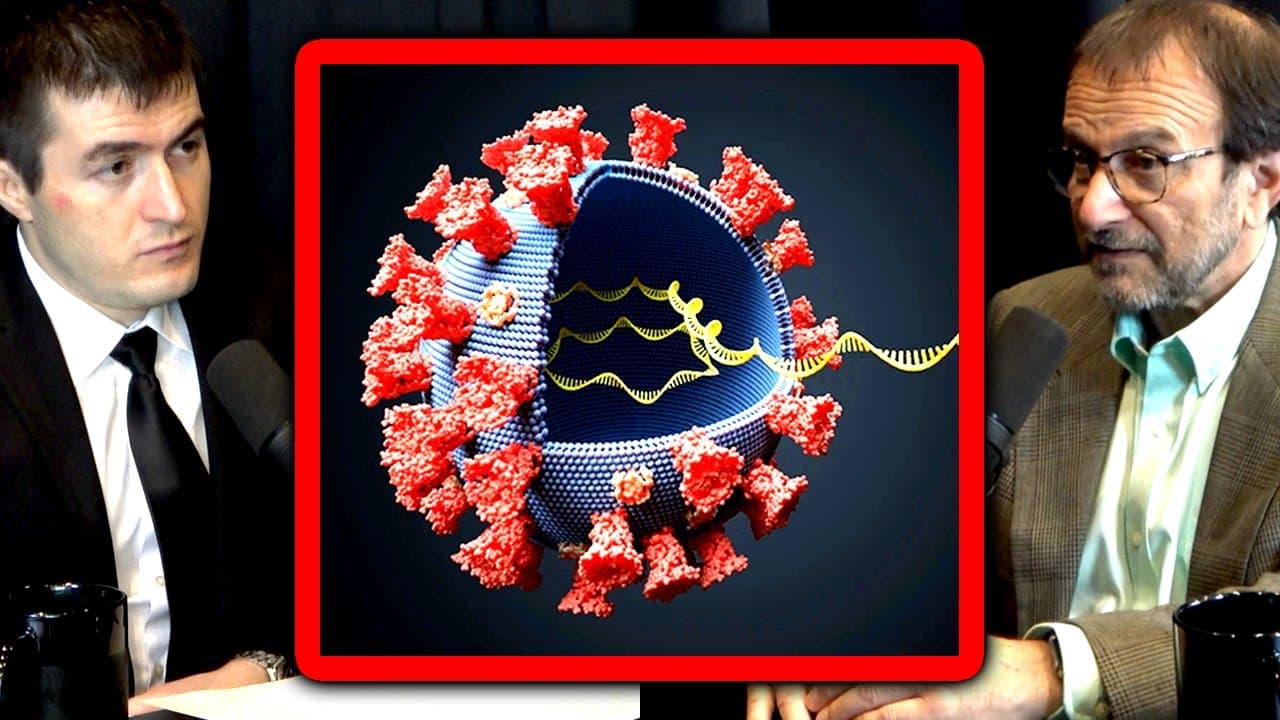
SARS-CoV-2, the virus behind COVID-19, is a member of the coronavirus family known for its spike proteins and lengthy RNA genome. The missed opportunities in developing vaccines and treatments before the pandemic highlight the importance of preparedness in the face of emerging infectious diseases.
Transcript
can we zoom in and talk about covid-19 virus sure I don't know what your preferred name is but well right the virus is SARS cov2 which is hard it's long right and then covid-19 is the disease so you could say the virus of covid-19 that's fine it's a virus of cover 19. but for the purpose of this conversation well every once in a while just say covi... Read More
Key Insights
- ❓ Coronaviruses, including SARS-CoV-2, have distinctive structural characteristics with spike proteins and membranes.
- 🛀 SARS-CoV-1 and MERS-CoV were previous epidemic coronaviruses originating from animals and bats.
- 🎟️ The delayed response in developing antivirals and vaccines for SARS-CoV-2 highlights missed opportunities in preparedness.
- 🥼 Reverse transcription enables the modification and study of RNA viruses like SARS-CoV-2 in the lab.
- 😣 Animal models have limitations in replicating severe respiratory disease seen in humans, hindering comprehensive understanding.
- 💖 The COVID-19 pandemic has sparked increased interest and funding for researching antivirals and vaccines.
- 🏑 Coronaviruses' complex mechanisms and effectiveness can inspire advancements in other fields, such as computer science and bioengineering.
Install to Summarize YouTube Videos and Get Transcripts
Explore YouTube Video Summarizer or Get YouTube Transcript Extractor
Questions & Answers
Q: How are coronaviruses classified and what distinguishes them?
Coronaviruses are classified based on their structural characteristics, including the presence of membranes, spike proteins, and long RNA genomes. They are named after the solar corona due to their appearance under electron microscopes.
Q: Why did the research on antivirals and vaccines for SARS-CoV-2 lag behind?
Before the pandemic, there was limited funding and interest in studying coronaviruses as they caused only mild colds in humans. The absence of a circulating virus resulted in limited research and vaccine development.
Q: How can scientists modify and study RNA viruses like SARS-CoV-2?
By reverse transcription, RNA viruses can be converted into DNA, which can be modified and inserted into cells to understand viral gene functions. This approach has been pivotal for studying influenza and other RNA viruses.
Q: Why is it difficult to study the properties of SARS-CoV-2 in animal models?
Animal models, such as mice, ferrets, and non-human primates, have limitations in mimicking severe respiratory disease seen in humans. While these models can help study transmission, the lack of a suitable animal model for severe disease hampers deeper insights.
Summary & Key Takeaways
-
The COVID-19 virus, SARS-CoV-2, belongs to the coronavirus family, characterized by spike proteins that attach to cells and a long RNA genome.
-
The first epidemic coronavirus was SARS-CoV-1, which caused severe respiratory disease in 2003, followed by MERS-CoV in 2012. Both originated from animals and bats.
-
Research on vaccines and antivirals for SARS-CoV-2 was limited before the pandemic, highlighting missed opportunities.
Read in Other Languages (beta)
Share This Summary 📚
Summarize YouTube Videos and Get Video Transcripts with 1-Click
Try YouTube Summary with ChatGPT & Claude or YouTube Transcript Generator
Explore More Summaries from Lex Clips 📚






Summarize YouTube Videos and Get Video Transcripts with 1-Click
Try YouTube Summary with ChatGPT & Claude or YouTube Transcript Generator