Can Science Explain the Big Bang Origins?
TL;DR
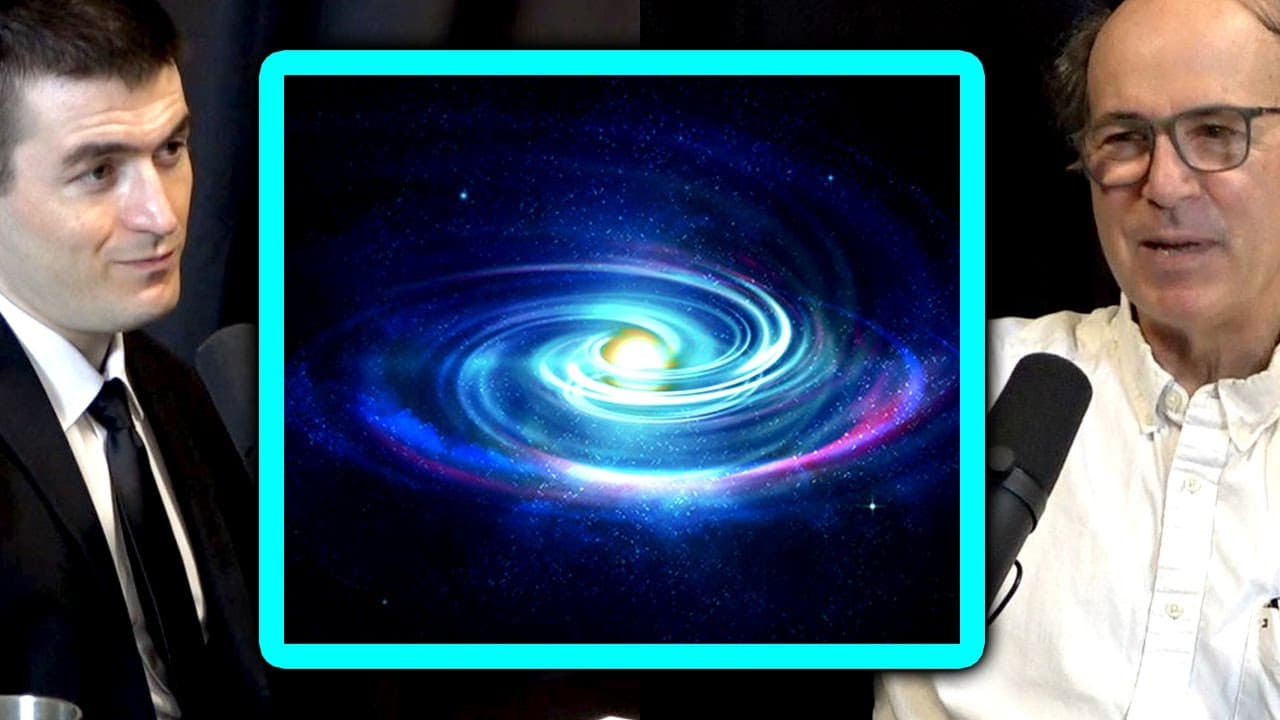
The Big Bang describes the early universe as a hot, dense state of matter rather than a traditional explosion. While we seek to understand the universe's beginnings, emerging tools like gravitational wave detectors may soon enable us to probe its earliest moments and gain deeper insights into cosmic origins.
Transcript
i can ask you about the big bang uh so we talked about the space and time are really big but then and we humans give a lot of meaning to the word space and time in our in our like daily lives but then can we talk about this moment of beginning and how we're supposed to think about it that at the moment the big bang everything was uh what like infin... Read More
Key Insights
- 😅 The Big Bang is not an explosion but a hot and dense state of matter in the early universe.
- ❓ Understanding the early universe requires sophisticated instruments and techniques.
- 💨 Gravitational waves and the microwave background radiation offer potential ways to observe the early universe.
- 👋 Detecting gravitational waves from the early universe could require larger and more precise instruments.
- ❓ Advancements in measuring and observing techniques can improve our understanding of the very early universe.
- 🏑 The study of the early universe combines knowledge from various fields, showcasing our understanding and curiosity.
- 🤯 Constructing and utilizing advanced tools demonstrates the impressive abilities of the human mind and engineering.
Install to Summarize YouTube Videos and Get Transcripts
Explore YouTube Video Summarizer or Get YouTube Transcript Extractor
Questions & Answers
Q: What is the Big Bang?
The Big Bang is not an explosion, but a time when matter in the universe came together in a hot and dense state. It is supported by evidence, although we cannot fully understand what happened before it.
Q: Can we understand what happened before the Big Bang?
Currently, we lack the appropriate equations to address the very earliest moments. However, through advancements in measuring and observing techniques, we may eventually gain insight into the moments before the Big Bang.
Q: How can we observe the extremely early universe?
Gravitational waves, which interact weakly with matter, can provide a minimally processed signal from the early universe. Additionally, studying the microwave background radiation and its possible imprint of gravitational waves could offer indirect observations.
Q: What efforts are being made to detect gravitational waves from the early universe?
Projects like LIGO are already detecting gravitational waves but might not be sensitive enough for those from the early universe. There are plans to place lasers in different parts of the solar system or study the imprint on the microwave background radiation to detect these waves.
Summary & Key Takeaways
-
The Big Bang is not an explosion but a period when matter in the universe came together in a very hot and dense state.
-
We have limited information about the early universe and need advanced techniques and instruments to understand it better.
-
Gravitational waves and the microwave background radiation offer potential opportunities to observe the early universe.
Read in Other Languages (beta)
Share This Summary 📚
Summarize YouTube Videos and Get Video Transcripts with 1-Click
Try YouTube Summary with ChatGPT & Claude or YouTube Transcript Generator
Explore More Summaries from Lex Clips 📚






Summarize YouTube Videos and Get Video Transcripts with 1-Click
Try YouTube Summary with ChatGPT & Claude or YouTube Transcript Generator