Converting Relay Logic to PLC for beginners, Step by Step Guide
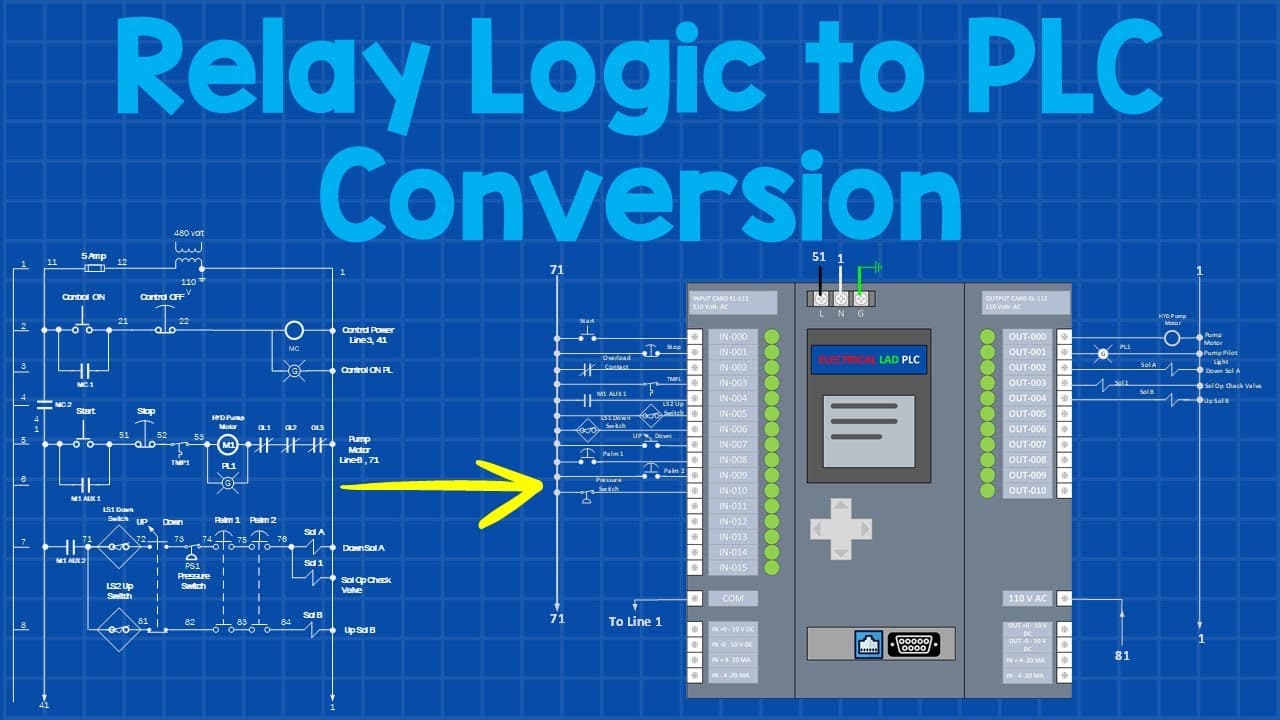
TL;DR
Learn to convert relay logic into PLC programs step-by-step.
Transcript
Read and summarize the transcript of this video on Glasp Reader (beta).
Key Insights
- The video provides a beginner-friendly tutorial on converting relay logic to PLC programs, emphasizing a step-by-step approach for clarity.
- It covers fundamental concepts such as relay logic, contactors, relays, and control circuits, crucial for understanding industrial automation systems.
- Viewers will learn to read and interpret relay logic diagrams, schematics, and wiring diagrams, which are essential skills for electrical control systems.
- The tutorial explains the components and functioning of PLCs, offering insights into their role in modern automated manufacturing equipment.
- A detailed process of translating relay logic into PLC ladder logic is provided, including programming concepts like coils, contacts, timers, and counters.
- Best practices for writing efficient PLC code are shared, along with tips on avoiding common programming errors in automation systems.
- The video introduces PLC hardware components such as I/O modules, power supplies, and CPU processors, vital for understanding PLC architecture.
- Practical advice is given on optimizing control panel wiring, troubleshooting faults, and improving the reliability of automation systems.
Install to Summarize YouTube Videos and Get Transcripts
Explore YouTube Video Summarizer or Get YouTube Transcript Extractor
Questions & Answers
Q: What is the primary focus of this tutorial?
The primary focus of this tutorial is to guide beginners through the process of converting relay logic into PLC programs. It offers a step-by-step approach to understanding and implementing ladder logic, making it accessible for non-electrical engineers, electricians, and technicians seeking to enhance their skills in industrial automation.
Q: Who is the intended audience for this video?
The intended audience includes non-electrical engineers, electricians, technicians, maintenance personnel, and tradespeople interested in learning about PLC programming, ladder diagrams, and automation systems. The tutorial is particularly beneficial for those transitioning from traditional relay logic to modern PLC-based control systems.
Q: What are some key topics covered in the tutorial?
Key topics include the basics of relay logic, contactors, relays, control circuits, reading and interpreting relay logic diagrams, understanding PLC components, converting relay logic to ladder logic, programming concepts like coils and timers, and best practices for efficient PLC coding. It also covers PLC hardware and troubleshooting tips.
Q: How does the tutorial help in understanding PLC components?
The tutorial provides a comprehensive overview of PLC components, including I/O modules, power supplies, and CPU processors. It explains their roles and functioning within PLC systems, helping viewers understand how these components work together to automate manufacturing equipment and improve the efficiency of control systems.
Q: What programming concepts are emphasized in the video?
The video emphasizes programming concepts such as ladder logic, including the use of coils, contacts, timers, and counters. It guides viewers through the process of translating relay logic into PLC ladder logic, focusing on writing efficient and error-free code to optimize automation processes and enhance system reliability.
Q: What practical tips are provided for optimizing control systems?
Practical tips include optimizing control panel wiring, troubleshooting faults, and improving system reliability. The tutorial advises on avoiding common programming errors, ensuring efficient PLC code, and transitioning from hardwired control circuits to software-based automation, ultimately enhancing the performance and reliability of industrial automation systems.
Q: What common mistakes in PLC programming does the tutorial address?
The tutorial addresses common mistakes such as inefficient code writing, misinterpretation of relay logic diagrams, and improper use of programming concepts like timers and counters. It provides guidance on avoiding these errors by following best practices and ensuring a clear understanding of ladder logic and PLC components.
Q: How does this tutorial benefit those in industrial automation?
This tutorial benefits individuals in industrial automation by providing foundational knowledge of converting relay logic to PLC systems. It equips them with skills to read and interpret diagrams, understand PLC components, and write efficient code, thereby enhancing their ability to design, implement, and maintain modern automation systems effectively.
Summary & Key Takeaways
-
This tutorial is designed for beginners looking to understand the conversion of relay logic to PLC programs. It covers the basics of relay logic, interpreting diagrams, and programming PLCs using ladder logic, making it suitable for non-electrical engineers and technicians.
-
The video provides insights into PLC components and their operation, guiding viewers through the process of converting traditional relay logic into software-based automation. It emphasizes programming concepts and best practices to enhance efficiency and reliability.
-
Practical tips on optimizing control panel wiring, troubleshooting, and avoiding common mistakes are included. This comprehensive guide is ideal for those involved in industrial automation, manufacturing, and electrical engineering, aiming to master PLC systems.
Read in Other Languages (beta)
Share This Summary 📚
Summarize YouTube Videos and Get Video Transcripts with 1-Click
Try YouTube Summary with ChatGPT & Claude or YouTube Transcript Generator
Explore More Summaries from ELECTRICAL LAD 📚
Summarize YouTube Videos and Get Video Transcripts with 1-Click
Try YouTube Summary with ChatGPT & Claude or YouTube Transcript Generator