What Is Gluconeogenesis and Why Is It Important?
TL;DR
Gluconeogenesis is the synthesis of glucose from noncarbohydrate precursors such as lactate, amino acids, and glycerol, primarily in the liver and renal cortex. This process is vital for providing glucose to organs that depend on it for fuel, ensuring a stable energy supply, especially during fasting when glucose levels drop.
Transcript
The following content is provided under a Creative Commons license. Your support will help MIT OpenCourseWare continue to offer high-quality educational resources for free. To make a donation or view additional materials from hundreds of MIT courses, visit MIT OpenCourseWare at ocw.mit.edu. JOHN ESSIGMANN: The second carbohydrate biosynthetic pathw... Read More
Key Insights
- 😪 Gluconeogenesis is a crucial process for providing glucose to glucose-dependent organs like the brain, red blood cells, and renal medulla.
- 🚚 The liver and renal cortex serve as specialized manufacturing centers for producing and exporting glucose.
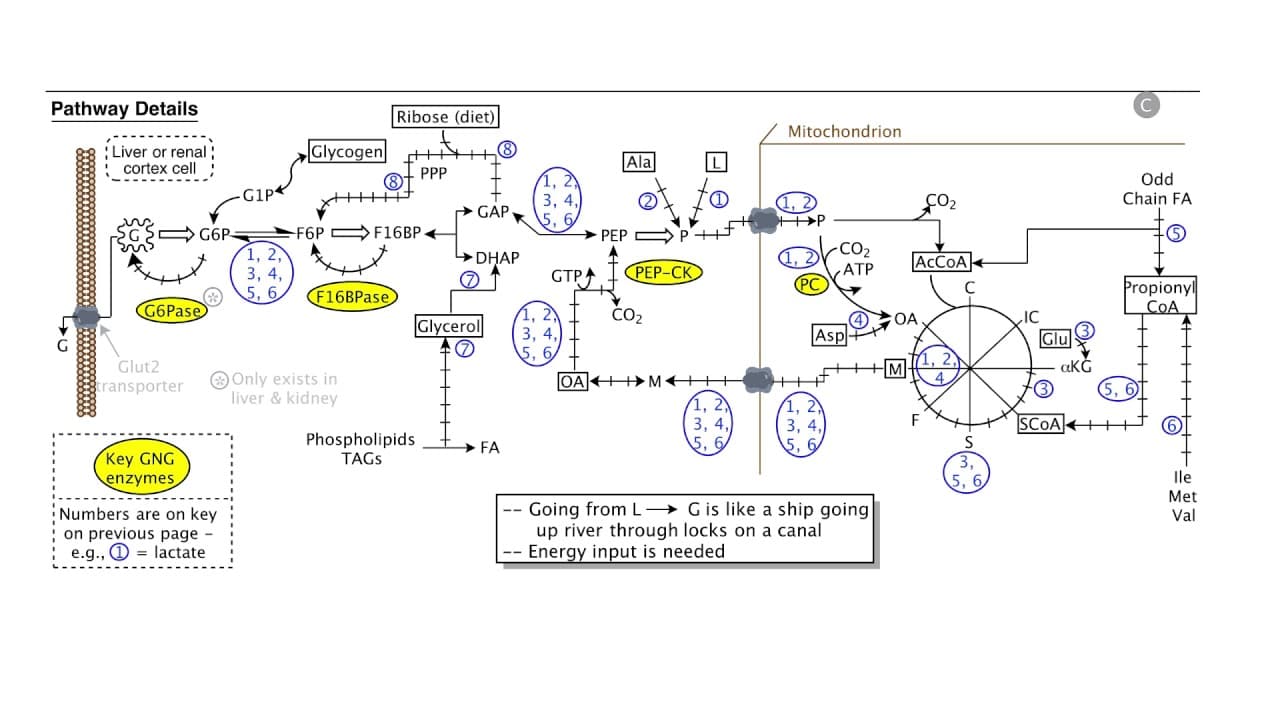
- ❓ Gluconeogenesis involves the conversion of lactate, amino acids, fatty acids, glycerol, and ribose into glucose.
- ❓ Specific enzymes, including glucose 6-phosphatase, fructose 1,6-bisphosphatase, pyruvate carboxylase, and phosphoenolpyruvate carboxykinase, are used to bypass irreversible steps in glycolysis.
- 🤔 Gluconeogenesis can be thought of as glycolysis running in reverse, with energy input required to convert pyruvate back to glucose.
- 👻 The pathway of gluconeogenesis allows for the conversion of various noncarbohydrate precursors into glucose to maintain energy balance in the body.
Install to Summarize YouTube Videos and Get Transcripts
Explore YouTube Video Summarizer or Get YouTube Transcript Extractor
Questions & Answers
Q: What is gluconeogenesis?
Gluconeogenesis is the synthesis of glucose from noncarbohydrate precursors in organs like the liver and renal cortex.
Q: Why is gluconeogenesis necessary?
Gluconeogenesis is necessary because certain organs, such as the brain and red blood cells, rely on glucose as their main source of energy but do not have the ability to produce it.
Q: What are the precursors used in gluconeogenesis?
Precursors for gluconeogenesis include lactate, amino acids, odd-chain fatty acids, glycerol, ribose, and specific organic acids.
Q: How does gluconeogenesis bypass the irreversible steps of glycolysis?
Gluconeogenesis uses specific enzymes to bypass irreversible steps, such as glucose 6-phosphatase, fructose 1,6-bisphosphatase, pyruvate carboxylase, and phosphoenolpyruvate carboxykinase.
Summary & Key Takeaways
-
Gluconeogenesis is the production of glucose from noncarbohydrate compounds in organs that require glucose as their primary fuel source.
-
The liver and renal cortex act as specialized manufacturing centers to produce and export glucose using precursors such as lactate, amino acids, and fatty acids.
-
Gluconeogenesis involves bypassing the irreversible steps of glycolysis through the use of specific enzymes to convert precursors into glucose.
Read in Other Languages (beta)
Share This Summary 📚
Summarize YouTube Videos and Get Video Transcripts with 1-Click
Try YouTube Summary with ChatGPT & Claude or YouTube Transcript Generator
Explore More Summaries from MIT OpenCourseWare 📚


Summarize YouTube Videos and Get Video Transcripts with 1-Click
Try YouTube Summary with ChatGPT & Claude or YouTube Transcript Generator