What Happens During a Recession and How to Prepare
TL;DR
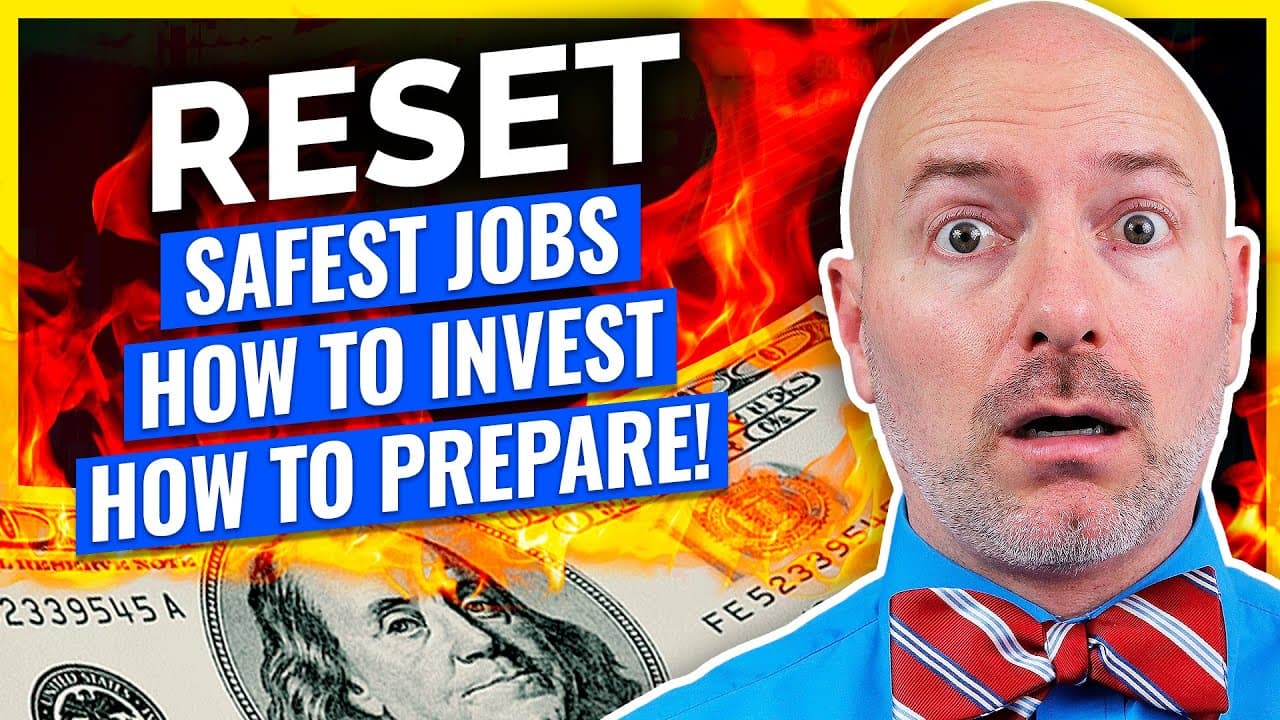
A recession is defined as a significant decline in economic activity lasting more than a few months, driven by factors like policy mistakes, oil shocks, and financial bubbles. It can lead to job losses, particularly in vulnerable industries, and typically results in a GDP drop of around 2.1%. Preparing for a recession involves assessing job security, creating an emergency fund, and strategically investing in stable sectors.
Transcript
hey bowtie nation joseph hoger and whether the government wants to admit it or not we could be in a recession right now we're about to see data released on the economy that could mean six months of a slowing economy has already passed putting us deep into a recession in this video i'll give you a complete guide to what happens in a recession from t... Read More
Key Insights
- ❓ The definition of a recession is complex, involving a significant decline in economic activity for an extended period.
- 🔰 Recessions are officially identified by the National Bureau of Economic Research, but the determination often happens after the recession has already begun.
- 🖐️ The Federal Reserve's economic policy decisions can play a significant role in causing or mitigating recessions.
- 🌸 Recessions impact various sectors differently, with some industries experiencing more significant job losses than others.
- 🍧 The severity and duration of recessions can vary, with some lasting longer and having a more significant impact on the economy.
- ☠️ Home prices and mortgage rates tend to decrease during recessions, presenting potential opportunities for homebuyers.
- 💐 Investing during a recession requires considering sectors with more stable cash flows and earnings, as well as anticipating the eventual economic recovery.
Install to Summarize YouTube Videos and Get Transcripts
Explore YouTube Video Summarizer or Get YouTube Transcript Extractor
Questions & Answers
Q: What is the official definition of a recession?
The National Bureau of Economic Research defines a recession as a significant decline in economic activity spread across the economy, lasting for more than a few months and affecting various indicators such as GDP, income, employment, and production.
Q: What are the main causes of recessions?
Three main causes of recessions over the last 70 years are economic policy mistakes by the Federal Reserve, oil price shocks, and financial bubbles. The Federal Reserve's actions in balancing employment and inflation through interest rate adjustments can often lead to economic downturns.
Q: How do recessions impact jobs and income?
Recessions can result in job losses, with industries such as mining, manufacturing, and construction being the hardest hit. Unemployment rates rise during recessions, and those with lower education levels often face higher unemployment rates. Job losses and income decline can significantly impact individuals and families during a recession.
Q: How long do recessions usually last?
The average duration of recessions is 11 months, but there can be significant variation. Some recessions, such as the ones in 1973, 1981, and 2007, lasted around a year and a half. The length and severity of recessions depend on various factors.
Q: Should I buy a house during a recession?
In general, recessions are associated with falling home prices, making it potentially a good time to buy a house. Mortgage interest rates may also decrease during this time. However, tighter lending requirements from banks may make it harder to secure a mortgage during a recession.
Q: How should I invest during a recession?
During recessions, it is wise to consider investing in sectors that are more resistant to economic downturns, such as consumer staples, utilities, and healthcare. These sectors tend to have more stable cash flows and earnings. As the economy recovers, shifting investments to economically sensitive sectors like consumer discretionary, technology, and financials may be beneficial.
Summary & Key Takeaways
-
A recession is a significant decline in economic activity that lasts for more than a few months and affects various aspects such as GDP, income, employment, and production.
-
The three main causes of recessions are economic policy mistakes by the Federal Reserve, oil price shocks, and financial bubbles.
-
Recessions can lead to job losses, with certain industries being more vulnerable than others. Those with lower education levels are at a higher risk of unemployment during a recession.
-
The severity and duration of a recession can vary. While the average recession lasts 11 months, some can be shorter while others may last longer and have a more significant impact on the economy.
-
Recessions can result in a decline in the economy, with average falls of 2.1% in GDP. However, specific recessions may have a more significant or less severe impact on the economy and job market.
Read in Other Languages (beta)
Share This Summary 📚
Summarize YouTube Videos and Get Video Transcripts with 1-Click
Try YouTube Summary with ChatGPT & Claude or YouTube Transcript Generator
Explore More Summaries from Let's Talk Money! with Joseph Hogue, CFA 📚

Summarize YouTube Videos and Get Video Transcripts with 1-Click
Try YouTube Summary with ChatGPT & Claude or YouTube Transcript Generator