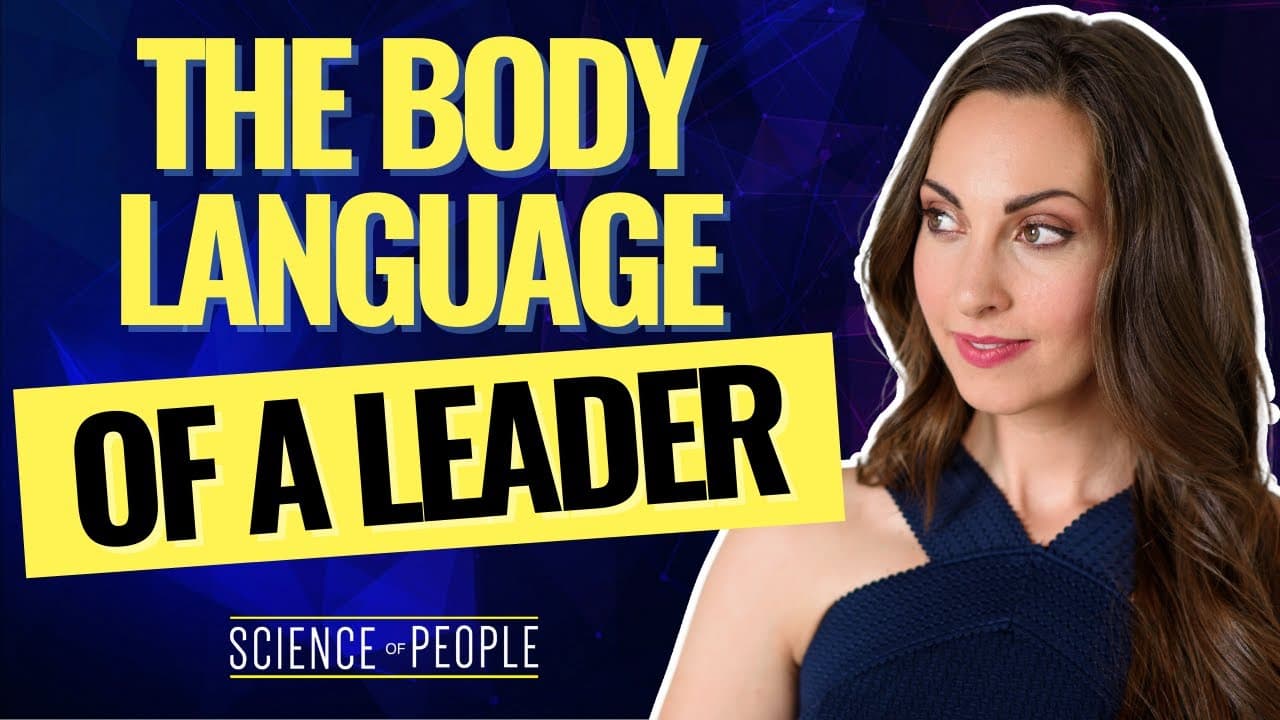
Body Language of Leaders
TL;DR
Leaders exhibit distinct body language to convey power and charisma.
Transcript
Read and summarize the transcript of this video on Glasp Reader (beta).
Key Insights
- Leaders often exhibit a natural charisma, drawing attention when they enter a room, which is partly due to their body language.
- Studies suggest that people can identify successful leaders, like Fortune 500 CEOs, based on their body language alone.
- Contrary to popular belief, leaders tend to smile less, as smiling is often perceived as a subordinate behavior.
- Leaders frequently interrupt in conversations because their presence naturally commands attention, often without them realizing it.
- When speaking, leaders maintain eye contact to build trust, but they may look away when listening to others.
- Leaders tend to stand still and move purposefully, conserving energy and projecting power, unlike subordinates who may pace.
- Nodding while speaking is seen as a subordinate gesture; leaders often hold their head still to project authority.
- Understanding these body language cues can help individuals appear more powerful and improve both personal and professional relationships.
Install to Summarize YouTube Videos and Get Transcripts
Explore YouTube Video Summarizer or Get YouTube Transcript Extractor
Questions & Answers
Q: What role does smiling play in leadership body language?
Smiling is often perceived as a subordinate behavior in leadership body language. Leaders tend to smile less because smiling can be seen as an appeasement gesture. Instead, they project authority by maintaining a more neutral expression, which helps them appear more powerful and in control.
Q: How do leaders use eye contact differently?
Leaders use eye contact strategically to build trust and convey confidence. When speaking, they maintain strong eye contact to engage their audience, but they may look away when listening to others. This behavior can signal dominance and authority, as it suggests they are in control of the interaction.
Q: Why do leaders often interrupt in conversations?
Leaders often interrupt because their presence naturally commands attention, and they may not even realize they are doing it. Their vocal power and confidence draw the focus of the room, allowing them to take control of conversations. This behavior is a reflection of their high status and authority.
Q: What is the significance of standing still for leaders?
Standing still and moving purposefully are significant behaviors for leaders because they project power and confidence. Unlike subordinates who may pace or move around, leaders conserve energy and maintain a strong, stable presence. This behavior is akin to a grizzly bear, which stands still to observe and assert dominance.
Q: How does nodding affect perceptions of leadership?
Nodding while speaking is perceived as a subordinate gesture, as it can suggest agreement or appeasement. Leaders often hold their heads still to project authority and confidence. By minimizing nodding, leaders maintain a strong and commanding presence, reinforcing their position of power.
Q: Can people identify leaders based on body language alone?
Yes, people can often identify leaders based on body language alone. Studies have shown that individuals can pick out successful leaders, such as Fortune 500 CEOs, by observing their body language. This ability suggests that certain nonverbal cues are universally associated with leadership and authority.
Q: How can understanding body language improve personal relationships?
Understanding body language can improve personal relationships by allowing individuals to project confidence, build trust, and effectively communicate. By adopting leadership cues, such as maintaining eye contact and standing still, individuals can enhance their presence and influence, leading to more successful interactions and relationships.
Q: What is the benefit of recognizing leadership body language in others?
Recognizing leadership body language in others can help individuals navigate social and professional environments more effectively. By understanding these cues, individuals can identify who holds authority in a group, adjust their own behavior accordingly, and engage more successfully with leaders, ultimately improving collaboration and communication.
Summary & Key Takeaways
-
Leaders possess a natural charisma that can be recognized through their distinct body language. They often smile less, interrupt more, and maintain strong eye contact when speaking, all of which contribute to their authoritative presence.
-
Leadership body language includes standing still and moving purposefully, which projects power and confidence. Nodding while speaking is minimized as it can be perceived as a subordinate behavior.
-
Recognizing and adopting these body language cues can help individuals enhance their own leadership presence, improve interpersonal relationships, and increase their effectiveness in both personal and professional settings.
Read in Other Languages (beta)
Share This Summary 📚
Summarize YouTube Videos and Get Video Transcripts with 1-Click
Try YouTube Summary with ChatGPT & Claude or YouTube Transcript Generator
Explore More Summaries from Vanessa Van Edwards 📚




Summarize YouTube Videos and Get Video Transcripts with 1-Click
Try YouTube Summary with ChatGPT & Claude or YouTube Transcript Generator