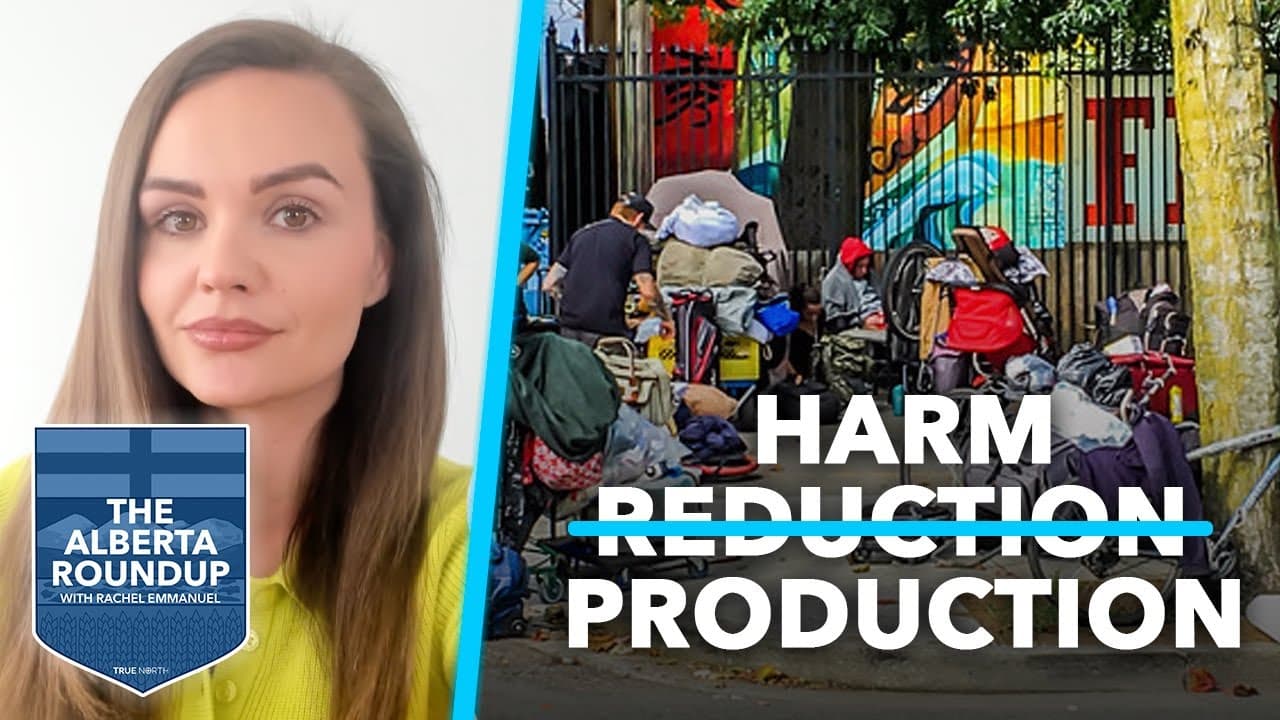
Alberta minister slams "harm production" approach to drugs
TL;DR
Alberta Mental Health and Addictions Minister Dan Williams argues that drug policy should steer people toward treatment and recovery rather than remove consequences or provide high-powered opioids. He contrasts Alberta’s recovery-focused model with British Columbia’s decriminalization pilot, which allowed adults to carry two and a half grams for personal use, and its federally funded safer-supply policy. Read on for his distinctions between decriminalization, safer supply, and recovery.
Transcript
Rachel uel brings news hey everyone welcome back to the Alberta Roundup I'm your host Rachel Emanuel today I am joined For the First Time by Alberta's mental health and addictions Minister Dan Williams Minister Williams thank you so much for joining us today thanks Rachel Minister Williams and I have actually gotten to know each other a little bit ... Read More
Key Insights
- 😒 Alberta's approach to addiction favors recovery over decriminalization, reflecting a belief in necessary consequences for drug use.
- 🧑⚕️ The province is concerned about the flow of drugs from BC affecting their community's safety and health.
- 🍉 Investment in recovery facilities highlights Alberta's commitment to long-term rehabilitation for addicts as opposed to harm reduction.
- 🧑⚕️ COVID-19 has intensified addiction crises, as isolation exacerbates many underlying mental health issues.
- 🧑⚕️ Alberta's distinct strategy includes the establishment of a dedicated ministry to address addiction and mental health, aiming for a comprehensive community approach.
- 🧑⚕️ The role of the federal government is crucial, as their policies can have wide-reaching impacts on provincial health crises.
- 🫷 There is a push for evidence-based practices in addiction treatment to ensure that resources are directed effectively.
Install to Summarize YouTube Videos and Get Transcripts
Explore YouTube Video Summarizer or Get YouTube Transcript Extractor
Questions & Answers
Q: Why does Alberta’s mental health and addictions minister oppose drug decriminalization?
Dan Williams argues that removing criminal, administrative, and drug-seizure consequences allows harmful drug use to spread. He says governments, families, and communities should intervene and help people move toward treatment and recovery.
Q: What did British Columbia’s drug decriminalization pilot allow?
The pilot allowed adults to carry two and a half grams of drugs for personal use without criminal charges. Health Canada enabled the policy through an exemption under the Controlled Drugs and Substances Act.
Q: Why did British Columbia seek to change its decriminalization exemption?
Premier David Eby asked to recriminalize drug use in public spaces such as hospitals and restaurants. Williams describes that reversal as beneficial for Canada and Alberta.
Q: How does Williams distinguish decriminalization from safer supply?
He describes decriminalization as removing consequences for drug use, including public use that may endanger others. He describes safer supply as a separate policy under which the government provides high-powered opioids, including hydromorphone.
Q: What does Williams say British Columbia misunderstood about Portugal’s drug policy?
Williams says Portugal paired decriminalization with heavy administrative consequences and mandatory dissuasion commissions. He argues that applying a simplified version of Portugal’s model ignores major differences in legal systems, culture, and the drug environment.
Q: What recovery-focused alternative does Williams support?
Williams supports intervention that directs people away from addiction and into treatment and recovery. He characterizes recovery as a path toward health, hope, and a second lease on life.
Q: Why is Alberta concerned about British Columbia’s drug policies?
Alberta officials are concerned that drugs distributed or used under British Columbia’s policies could flow into Alberta. Premier Danielle Smith involved the RCMP, while Alberta also asked the federal government to add chemical tracers to drugs distributed in British Columbia.
Q: What role does the federal government play in the safer-supply debate?
Williams says the federal government funds safer-supply programs and rejected Alberta’s request for chemical tracers. Without those tracers, Alberta cannot specifically track which drugs may be entering the province from British Columbia.
Summary & Key Takeaways
-
Alberta's Minister of Mental Health and Addictions, Dan Williams, discusses the implications of British Columbia's decriminalization of drugs and its potential impacts on Alberta's drug crisis.
-
Williams argues that decriminalization lacks necessary consequences for drug use, leading to increased addiction rates and potential harm, contrasting with Alberta's emphasis on recovery-oriented care.
-
The government has invested significantly in recovery communities, aiming to provide treatment and support for addiction, while highlighting the federal government's role in policies impacting drug access.
Read in Other Languages (beta)
Share This Summary 📚
Summarize YouTube Videos and Get Video Transcripts with 1-Click
Try YouTube Summary with ChatGPT & Claude or YouTube Transcript Generator
Explore More Summaries from True North 📚


Summarize YouTube Videos and Get Video Transcripts with 1-Click
Try YouTube Summary with ChatGPT & Claude or YouTube Transcript Generator